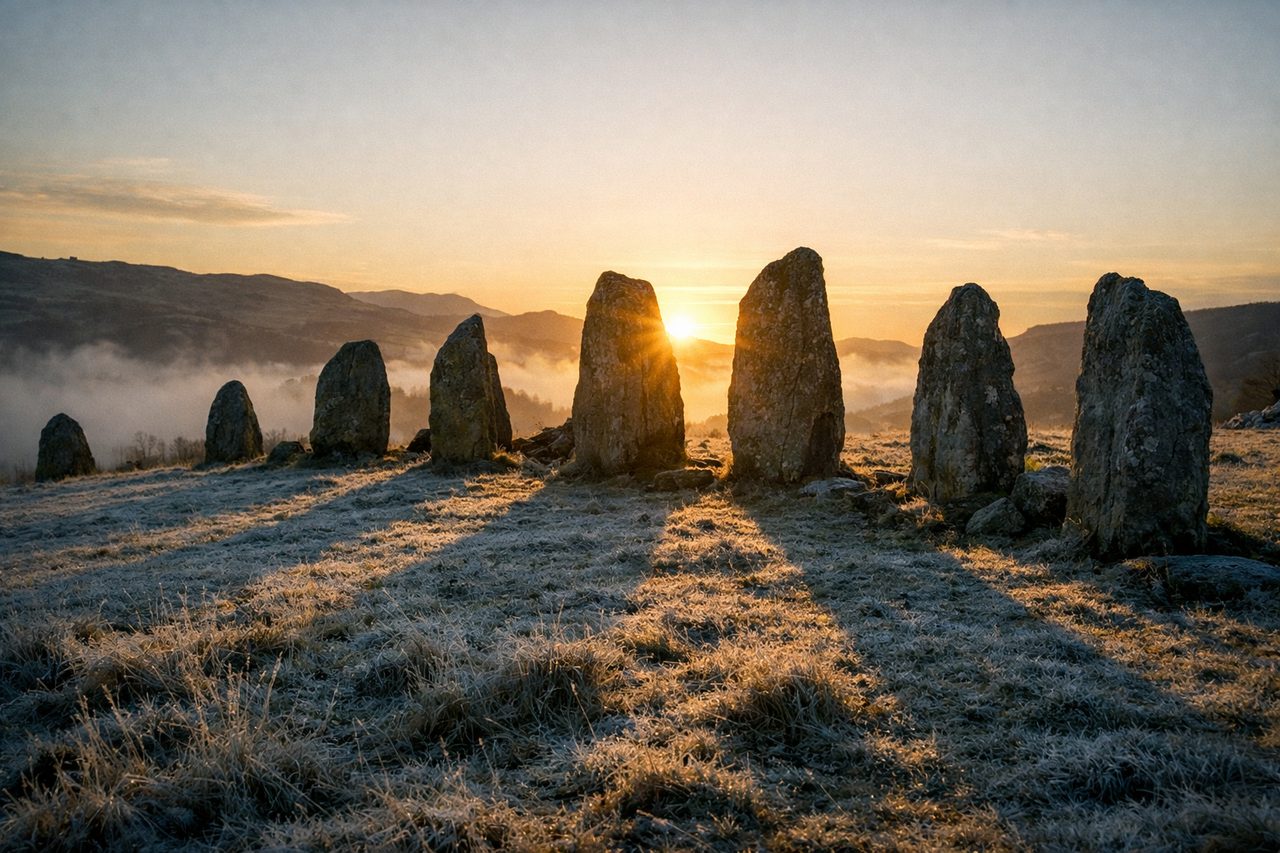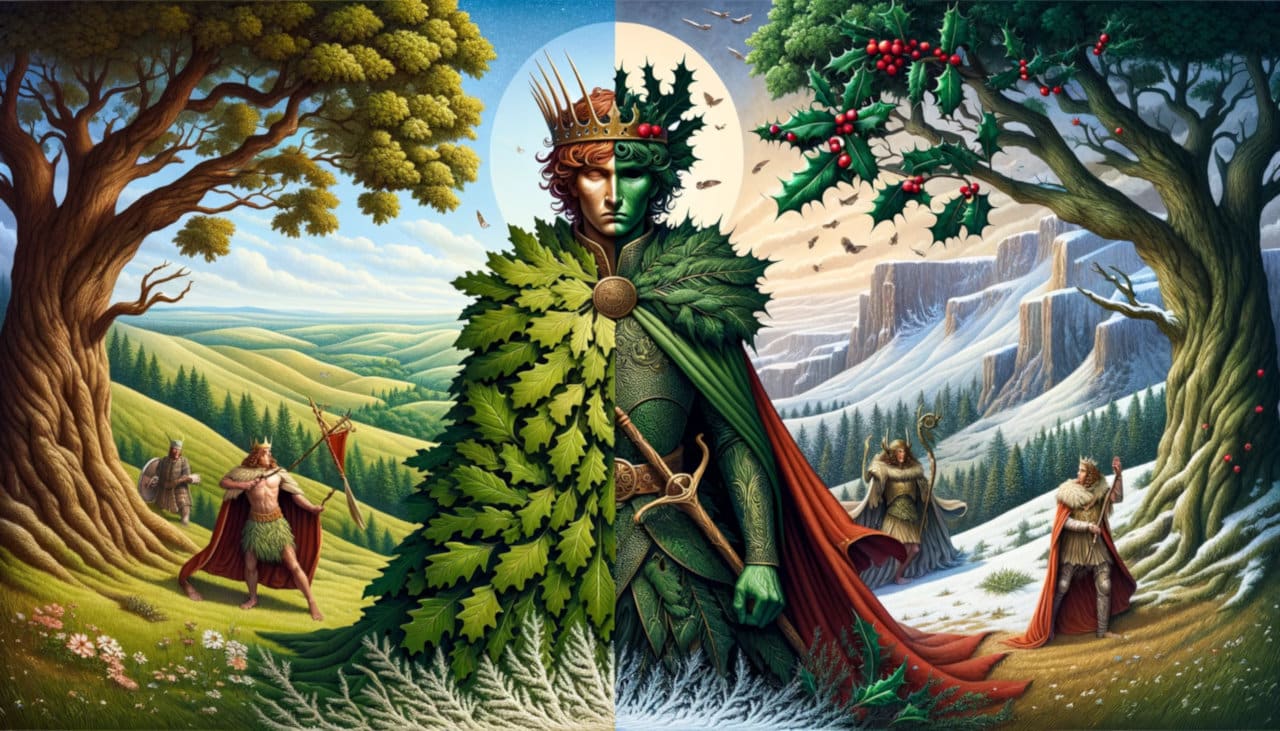
The Holly King and the Oak King are two mythic kings, often called twin brothers, who battle for rule of the year as the seasons turn. The Oak King brings the growing light of spring and summer; the Holly King brings the waning light of autumn and winter. Each wins in turn, and neither ever wins for good.
People everywhere have told stories about the changing of the seasons, and this is one of the best loved in modern Wicca and paganism. It's especially popular at Yule and Litha, the two solstices, when one king hands the crown to the other.
Quick answer: when do the Holly King and the Oak King battle? In the most common version, the Oak King defeats the Holly King at Yule, the winter solstice, as the days begin to lengthen. The Holly King wins it back at Litha, the summer solstice, as the days begin to shorten. Some traditions place the battles at the equinoxes instead.
The Holly King and the Oak King in Wicca
Many Wiccans follow the year through the Triple Goddess: Maiden in spring, when nature is fresh and fertile; Mother through summer and the harvest, when the land bears fruit; and Crone in late autumn and winter, when nature rests and dies back before beginning again.
The Holly King and the Oak King tell the other half of the story: the journey of the sun and the God. Many Wiccans see them as two faces of the Horned God, the Sun God, one for the light half of the year and one for the dark. Together the Goddess and the two kings move around the Wheel of the Year, each playing their part.
Where Does the Story Come From?
The story as Wiccans tell it today is modern, though it draws on older ideas. The poet Robert Graves wrote about an oak king and a holly king in The White Goddess (1948), linking them to old British myths. Janet and Stewart Farrar then made the two kings part of their Wiccan sabbat rituals in Eight Sabbats for Witches (1981), and from there the story spread through the pagan community. Folk customs like holly and ivy carols and battles between summer and winter in old seasonal plays helped shape it too.
When Does Each King Rule?
There are two popular ways to place the kings on the Wheel of the Year. Neither is more correct than the other; pick the one that makes sense to you.
| Sabbat | Solstice version (most common) | Equinox version |
|---|---|---|
| Yule (winter solstice) | The Oak King defeats the Holly King; the light begins to return | The Holly King is at the height of his power |
| Imbolc | The Oak King grows in strength | The Holly King rules, but his strength is fading |
| Ostara (spring equinox) | The Oak King rules as light and dark balance | The Oak King defeats the Holly King and takes the crown |
| Beltane | The Oak King rules over the blossoming land | The Oak King grows in strength |
| Litha (summer solstice) | The Holly King defeats the Oak King; the days begin to shorten | The Oak King is at the height of his power |
| Lughnasadh | The Holly King grows in strength | The Oak King rules, but his strength is fading |
| Mabon (autumn equinox) | The Holly King rules as light and dark balance | The Holly King defeats the Oak King and takes the crown |
| Samhain | The Holly King rules the dark half of the year | The Holly King grows in strength |
In the solstice version, each king wins at the moment of his greatest strength, but that's also the moment his season begins to turn. It's a beautiful reminder that light is born in the darkest night, and darkness begins on the brightest day.
The Legend of the Two Kings
There are many retellings of the story. Here's one, in the version many Wiccans tell around the fire.
The Darkness and the Light
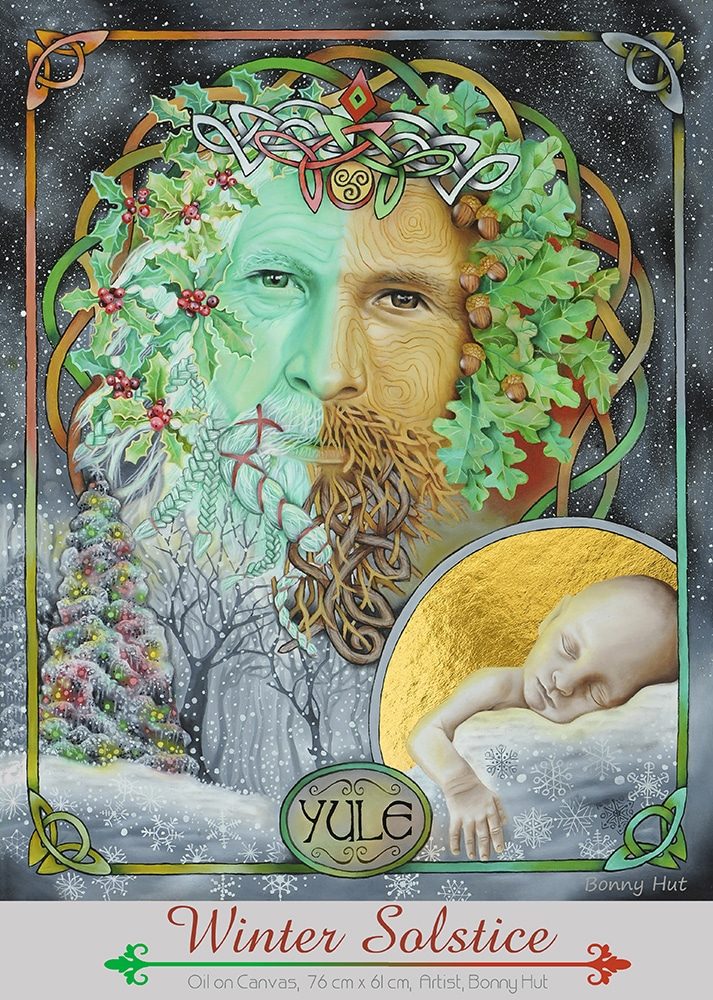
Long ago there were two kings. Some say they were twins, others simply brothers, but they were as different as day and night. The Holly King wore a crown of holly and ruled the cold, the long nights and the resting earth. The Oak King wore a crown of oak leaves and ruled the light, the warmth and everything green and growing.
The brothers did not get along. The Oak King wanted the sun to shine forever; the Holly King loved the quiet dark. And both of them loved the same Lady, the Goddess, and each wanted to please her in his own way. A battle between them was bound to come.
The Battle
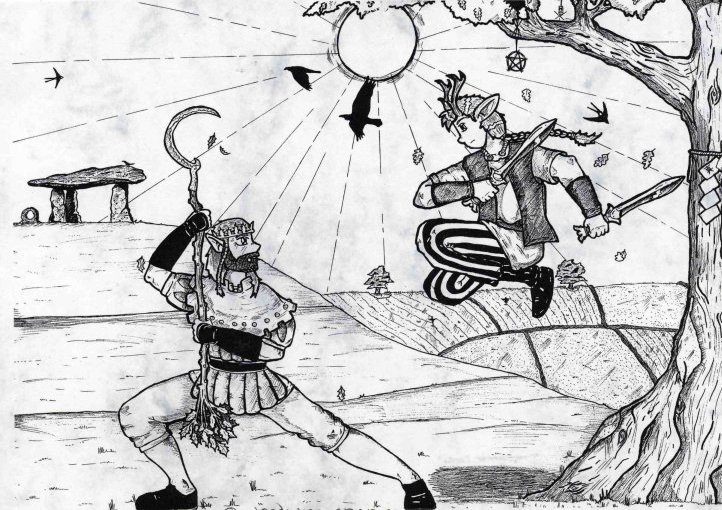
Before they fought, the Lady begged them for peace. "Share the year," she said. "Let each of you rule one half." But the brothers were too proud to listen. They drew their swords on the longest day of the year, when the Oak King's light was at its height.
The fight was long and hard. At last the Holly King struck the Oak King down, and the lord of light and warmth fell. At once the Holly King regretted it. The Lady carried his brother's body away and said, "Now you must rule. The whole land is yours."
The Return of the Oak King
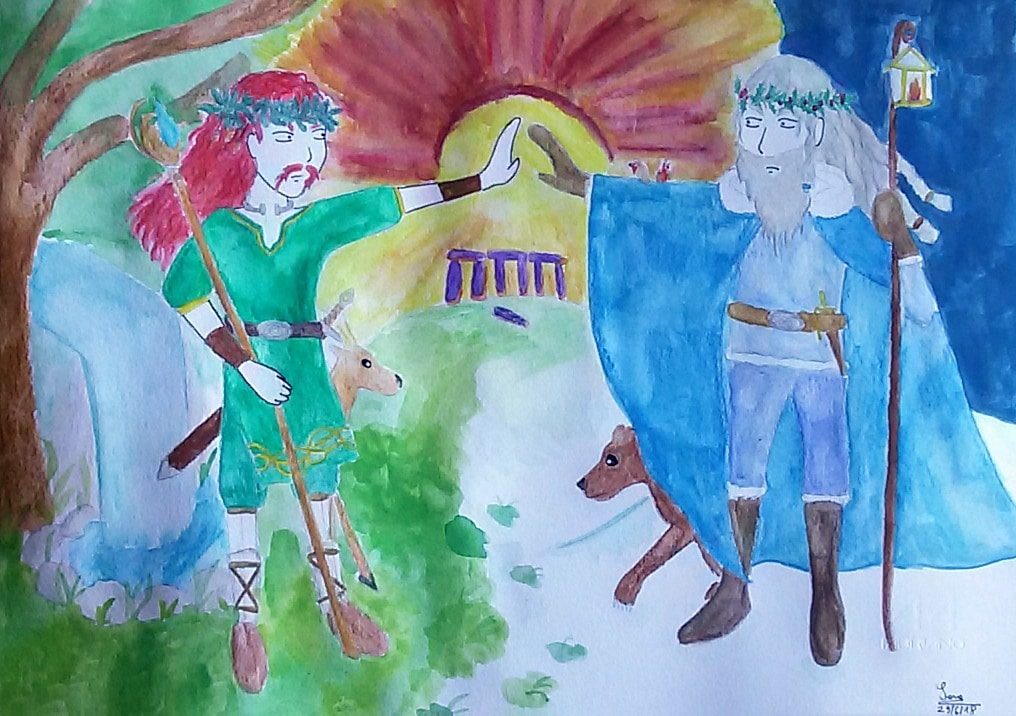
Under the Holly King, the days grew shorter and the nights longer, and the cold crept over the land. Though he had won, the Holly King grieved for his brother. As the longest night came, it seemed the sun would never rise again.
Then the Lady returned. "Your brother is not dead," she told him. "The Oak King lives, and he has come to take his turn." There stood the Oak King, no longer the tired warrior of midsummer but young and full of life. The Holly King, overjoyed, gave up his throne. The days grew long, the sun shone warm, and the land came back to life. From then on, the brothers shared the year, just as the Lady had wished.
Parallels in Other Myths
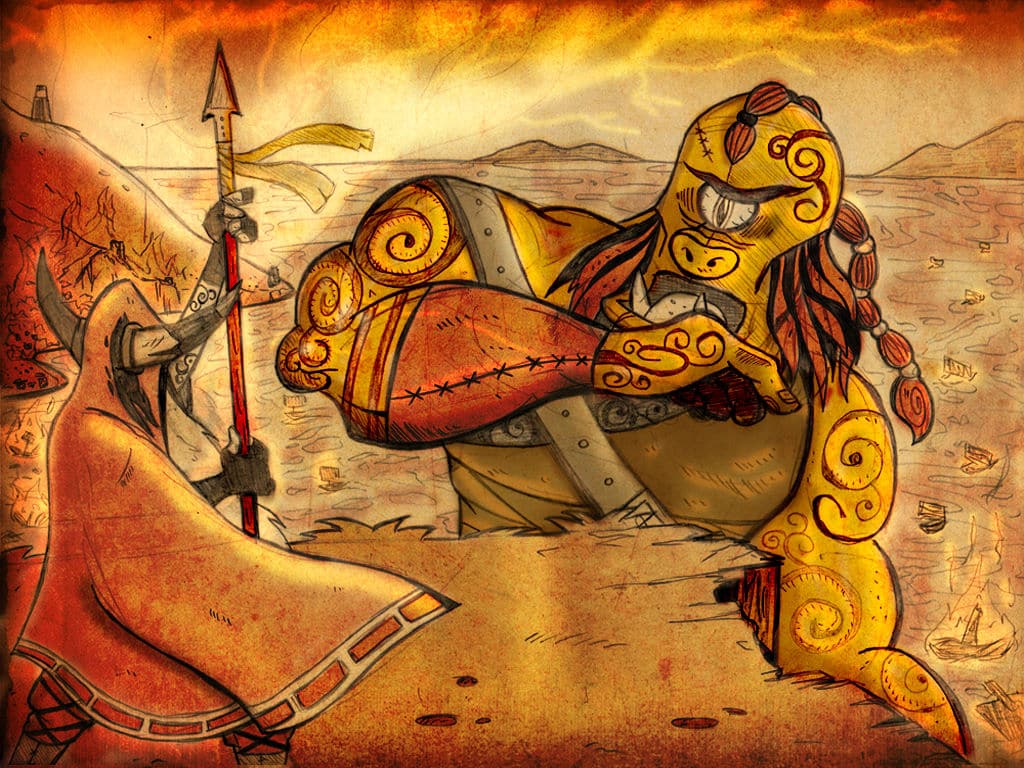
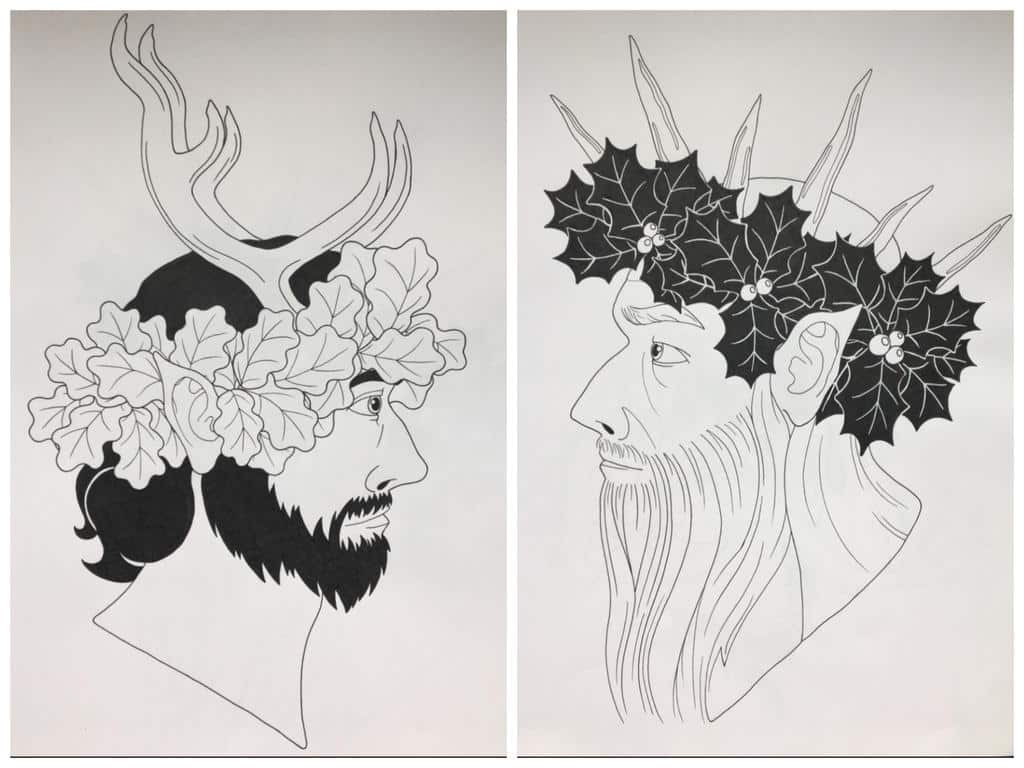
Artist: Fat-Chihuahua | CC BY-NC-ND 3.0
Stories of a light king and a dark king, or summer battling winter, turn up in many places. The best-known example from medieval Britain is Sir Gawain and the Green Knight, in which a mysterious green giant arrives at King Arthur's court at midwinter. Graves saw it as a version of the oak and holly battle. In the Welsh tale Culhwch and Olwen, Gwyn ap Nudd and Gwythyr fight every May Day for the hand of the maiden Creiddylad, and will go on fighting until the end of time.
Some writers also compare the story to the Irish battle between Lugh of the Tuatha Dé Danann and Balor of the Fomorians, the bright young god against the old, dark one. Lugh is honored at Lughnasadh. These stories aren't the same myth, but they share the same deep pattern: the year turning from light to dark and back again.
The Two Kings as Aspects of the Horned God
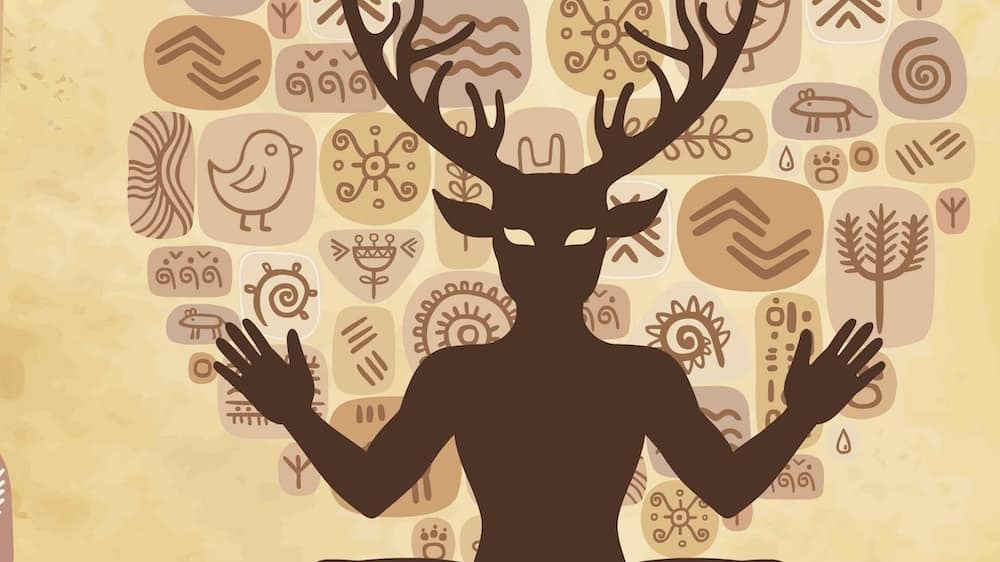
Many Wiccans don't see the Holly King and the Oak King as separate beings at all. Instead, they see them as two sides of one deity: the Horned God, also called the Sun God. He's usually shown with horns or antlers and goes by many names, including the Green Man and the Lord of the Wildwood, and he's often linked with horned gods such as Pan and Cernunnos.
In this view, the God holds both light and dark within himself. The "battle" is simply one face of the God giving way to the other as the seasons change, while the Goddess moves through her own cycle of Maiden, Mother and Crone. If you'd like to find a deity who fits your own path, our Discover Your Deity course can help.
How to Honor the Holly King and the Oak King
You don't need an elaborate ritual to bring the two kings into your sabbats. A few simple ideas: Our Yule altar ideas include a Holly King and Oak King altar, and the winter solstice rituals guide has a ritual to tell their story.
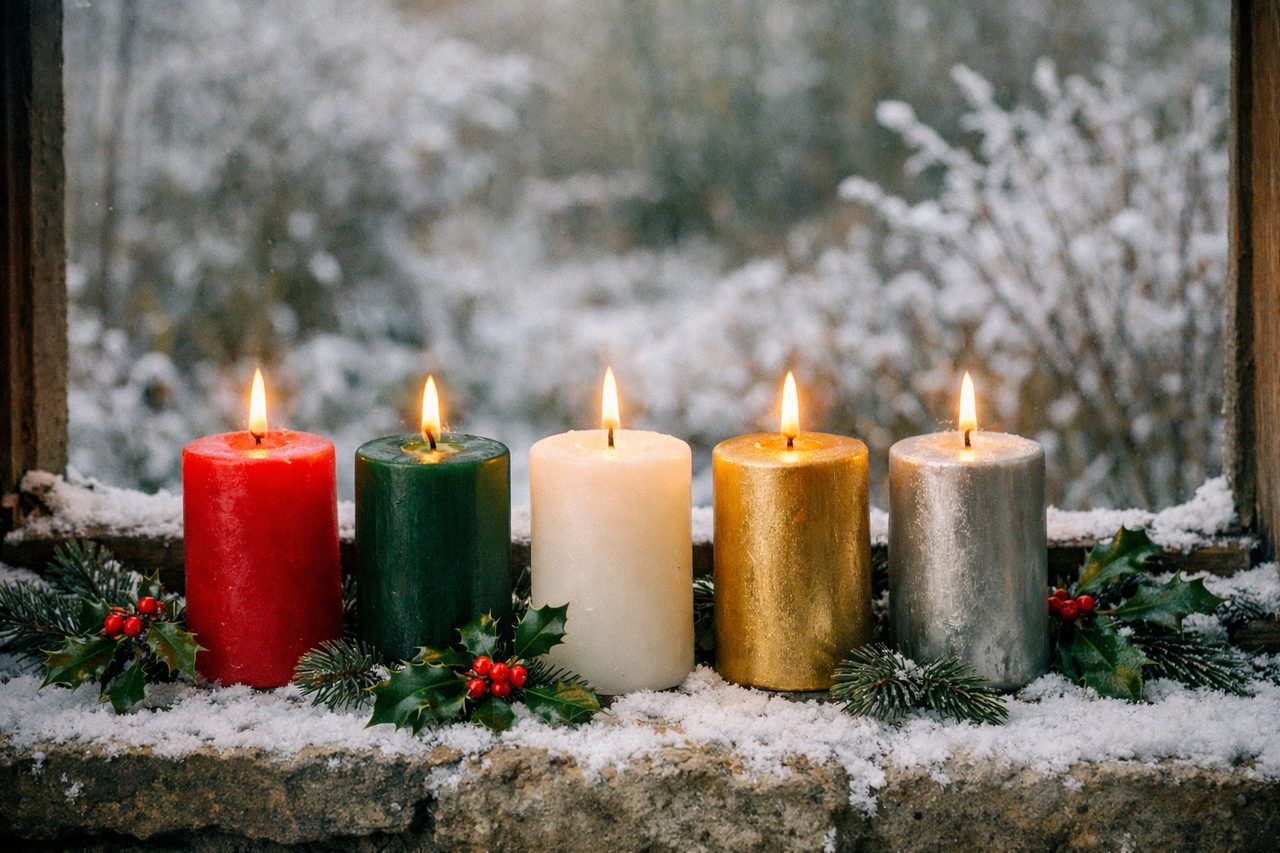
- At Yule: decorate with holly to say farewell to the Holly King, and add an acorn or oak leaf to your altar to welcome the Oak King's return. Light a gold candle for the newborn sun.
- At Litha: do the opposite. Crown your altar with oak leaves for the Oak King at his peak, and add a sprig of holly to greet the coming dark half.
- Act it out: many covens and families stage a playful battle between the two kings, with crowns of holly and oak leaves. It's a wonderful way to teach children about the seasons.
- Reflect: ask yourself what you want to let go of with the waning king, and what you want to grow with the waxing one. Write it in your Book of Shadows.
Safety note: holly berries are poisonous to people and pets, so keep holly decorations out of reach of children, cats and dogs, and away from candle flames.
The Two Kings Summarized
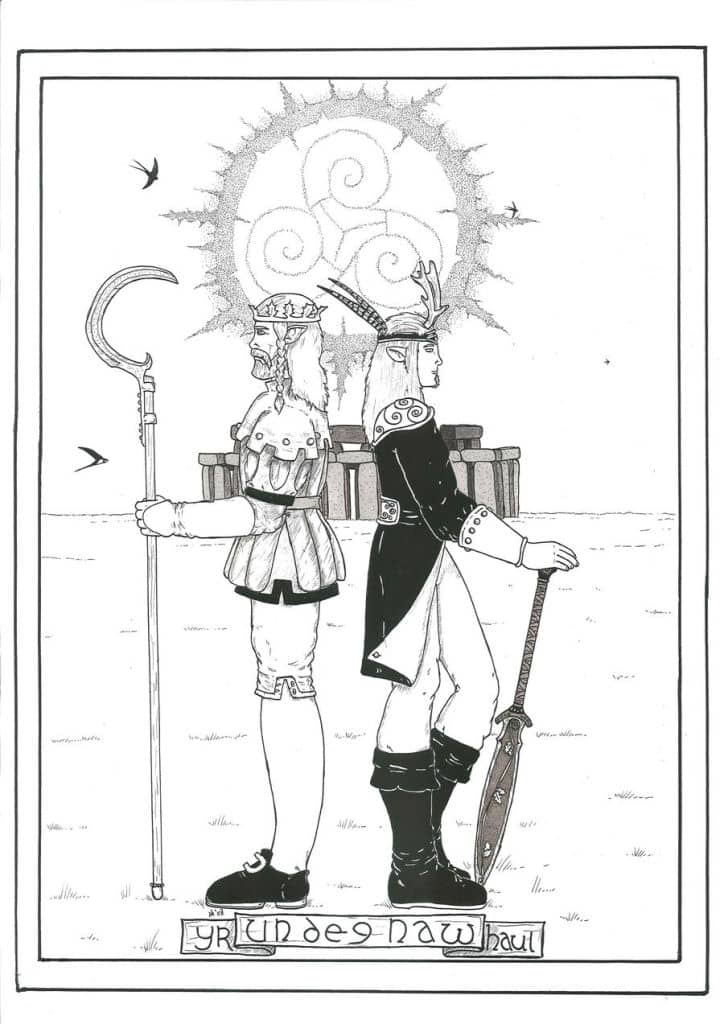
Be it Yule or Litha, one of the two kings is always at his strongest at a solstice. Whether you see them as two gods or as two faces of one, the Holly King and the Oak King remind us that nature sleeps, wakes and blooms again every single year. If you'd like to celebrate each turn of the Wheel with them, our Wiccan Holidays course covers every sabbat.
Do you work with the Holly King and the Oak King in your sabbats? Which king do you feel closer to?
Check out our other articles:
Yule: The Pagan Winter Solstice
Wheel of the Year: The 8 Pagan Sabbats
Who Are the Moon Goddess and the Horned God?
Wiccan Holidays: Litha
See All Articles
Love this article? Share the magick with your friends and loved ones!
Holly King and Oak King FAQs
Who are the Holly King and the Oak King?
They are two mythic kings, often described as twin brothers, who represent the two halves of the year. The Oak King rules the waxing year, when the days grow longer, and the Holly King rules the waning year, when the days grow shorter.
Who wins at Yule, the Holly King or the Oak King?
In the most common version, the Oak King defeats the Holly King at Yule, the winter solstice. From that night on the days grow longer, which is why Yule celebrates the return of the light.
Is the Holly King Santa Claus?
No, but they look alike. The Holly King is often pictured as a bearded man in red with a holly crown, a lot like Father Christmas. Santa Claus mostly comes from Saint Nicholas and later European and American traditions.
Is the Holly King and Oak King story ancient?
The story as it is told in Wicca is modern. It was shaped by Robert Graves in The White Goddess (1948) and popularized by Janet and Stewart Farrar in Eight Sabbats for Witches (1981), drawing on older folk customs and myths about summer and winter.
Are the Holly King and Oak King the Horned God?
Many Wiccans see them as two aspects of the Horned God, or Sun God: one for the light half of the year and one for the dark half. Others honor them as two separate figures. Both views are common.