Freya, also spelled Freyja, is the great goddess of the Norse world: a goddess of love, beauty and desire who also rides to battle, chooses half of the slain and taught the gods the magick called seiðr.
If you know her only as "the Norse goddess of love", there's a lot more waiting for you. In the old stories she owns a famous necklace, flies in a cloak of falcon feathers and drives a chariot pulled by cats. She weeps tears of gold for a husband who wandered away, and she refuses to be handed over to a giant like a prize.
In this guide we'll cover who Freya is, where her stories actually come from, the Freya and Frigg question, how she's honored in modern paganism and witchcraft, her symbols and offerings, and a simple devotional ritual you can try at home.
Freya at a Glance
- Name: Freyja in Old Norse, usually written Freya in English. It means "lady".
- Family: one of the Vanir gods, daughter of the sea god Njord and sister of Freyr (often described today as her twin).
- Domains: love, beauty, desire, fertility, gold, war and the dead, and seiðr magick.
- Home: the field of Fólkvangr and her hall Sessrúmnir.
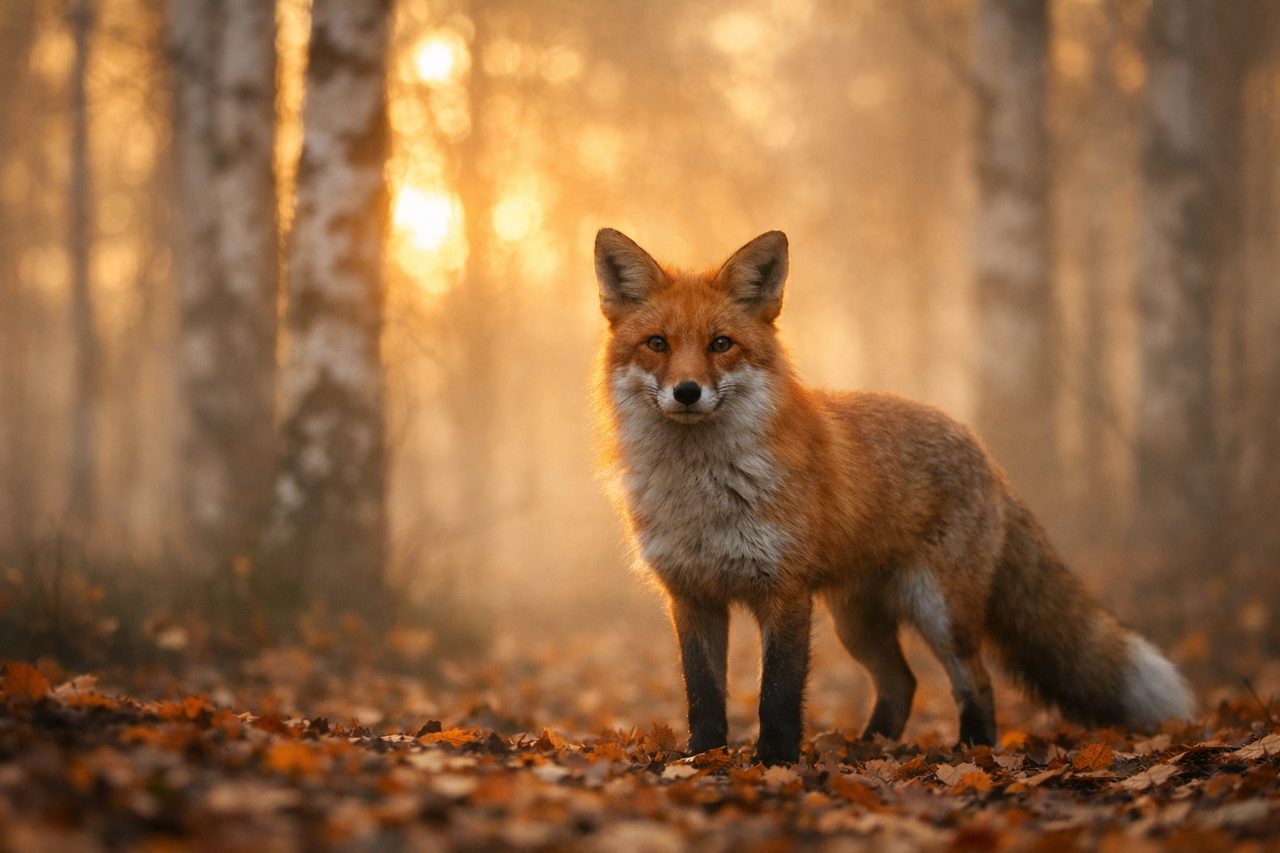
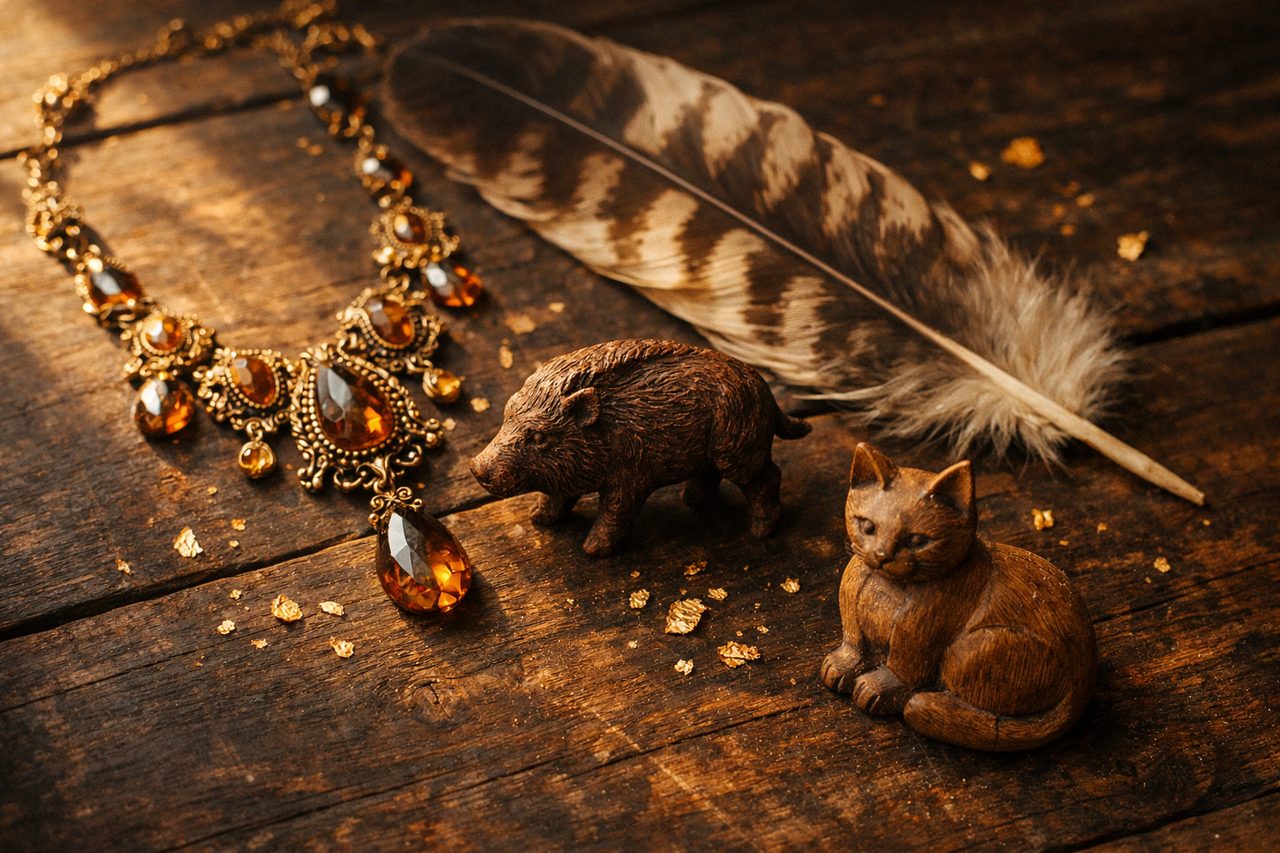
- Treasures and animals: the necklace Brísingamen, a falcon-feather cloak, a chariot drawn by two cats and the boar Hildisvíni.
- Main sources: the Poetic Edda, Snorri Sturluson's Prose Edda and his Heimskringla.
Who Is Freya, the Norse Goddess?
Norse myth has two families of gods: the Æsir, like Odin, Thor and Frigg, and the Vanir, gods linked with fertility, the sea, wealth and the land. Freya is one of the Vanir, and her father Njord and brother Freyr are too. Her brother's name means "lord" just as hers means "lady".
According to Snorri Sturluson, the two families fought a war, then made peace and exchanged hostages. Njord and Freyr went to live among the Æsir, and in the myths Freya lives among them too, as one of their most honored goddesses.
Freya is often called the goddess of love, and the old stories make it clear that she was seen as desirable and powerful. The giant who offered to build a wall around the gods' home asked for Freya, the sun and the moon as payment. Another giant, Thrym, stole Thor's hammer and demanded Freya as his bride. In the poem Þrymskviða, she's so furious at the idea that the halls shake and her necklace bursts. Thor ends up dressing as the bride himself. Freya isn't a goddess who gets bartered away.
Her husband is Óðr, who leaves on long journeys. Snorri tells us Freya weeps for him, and her tears turn to red gold. She travels among strange peoples searching for him, using many names along the way, including Mardöll, Hörn, Gefn, Sýr and Vanadís, "lady of the Vanir". Her daughter is Hnoss, whose name means "treasure", and Snorri's Heimskringla names a second daughter, Gersemi.
Freya Goddess of Love, War and Seiðr
Freya's stories hold more than love. Here are the parts of her myth that modern devotees talk about most.
Fólkvangr and Half the Slain
In the poem Grímnismál, Freya rules the field of Fólkvangr, where she decides who will sit in her hall, and each day she chooses half of the fallen warriors while Odin takes the other half. So Freya is also a goddess of battle and of the dead, with first choice of the honored fallen.
Seiðr Magick
Snorri writes in Heimskringla that Freya was a priestess of sacrifices and the first to teach the Æsir seiðr, a kind of magick practiced among the Vanir. Seiðr involved trance, seeing the future and influencing fate. That's a big reason many witches feel drawn to her, and why she's often seen as a patron of Norse magick and of practices like rune casting.
Brísingamen, the Falcon Cloak, Cats and Hildisvíni
- Brísingamen: Freya's famous necklace, mentioned in both Eddas. A later Icelandic tale says she got it from four dwarf smiths.
- The falcon-feather cloak: it lets the wearer fly in the form of a bird. Loki borrows it twice in the myths, once to find Thor's stolen hammer and once to rescue the goddess Idunn.
- The cat-drawn chariot: Snorri says Freya rides in a chariot pulled by two cats. This is the root of her strong link with cats today.
- Hildisvíni: "battle-swine", a boar she rides in the poem Hyndluljóð. The boar is also linked with her brother Freyr, who has a golden boar of his own.
If cats or falcons keep showing up in your life, our guide to animal guides and their meanings is a lovely next read.
Where Do Freya's Stories Come From?
It helps to know what our sources are, because it keeps us honest about what's ancient and what's modern.
- The Poetic Edda: a collection of Old Norse poems about gods and heroes, mostly preserved in an Icelandic manuscript called the Codex Regius, written down around 1270. Many of the poems are older. Freya appears in poems such as Grímnismál, Þrymskviða, Hyndluljóð and Lokasenna.
- The Prose Edda: written by the Icelandic poet and chieftain Snorri Sturluson around 1220. It retells the myths and gives most of the details we know about Freya, including her cats, her tears and her many names.
- Heimskringla: Snorri's history of the kings of Norway, from around 1230. Its first part, Ynglinga saga, tells of the gods as early kings and queens and is where we read about Freya teaching seiðr.
All three were written down in Christian Iceland, more than two centuries after the country officially converted around the year 1000. They preserve real old material, but they also reflect the people who wrote them down. Scholars read them carefully for that reason, and it's wise for us to do the same.
Freya and Frigg: Are They the Same Goddess?
This question comes up a lot. Freya and Frigg, Odin's wife, are separate goddesses in the Norse sources, with different families and roles. But they have a few things in common. Both are linked with love and marriage, both have a husband with a very similar name (Óðr and Odin), and outside Scandinavia, older Germanic sources mention a goddess called Frija or Frīg, but no Freya.
Because of this, some scholars think the two grew out of one earlier Germanic goddess. Others argue they were always distinct. There's no agreed answer. The same debate touches Friday: the English name comes from Old English Frīgedæg, usually traced to Frigg, though it's often linked to Freya today. Most modern pagans honor them as two goddesses, each with her own character.
Freya in Modern Paganism and Witchcraft
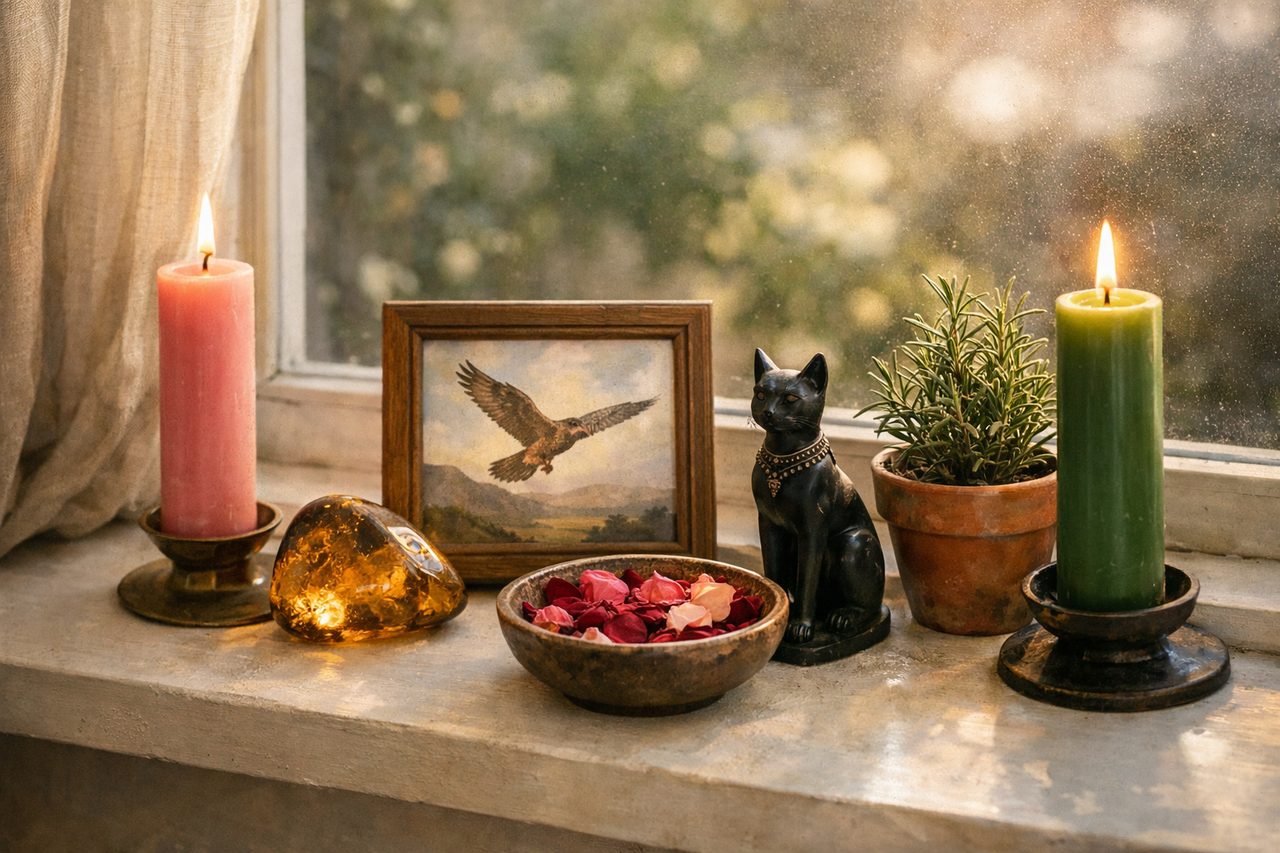
Freya is honored by many kinds of pagans today. In Heathenry, the modern revival of Norse and Germanic religion (also called Ásatrú), she's one of the most loved deities. Iceland's Ásatrú association was recognized as an official religion there in 1973. Many Heathens honor the gods as distinct beings and keep traditions such as the blót, a shared offering, and the Hávamál's idea that a gift always looks for a gift in return.
In Wicca and eclectic witchcraft, Freya is often honored as a goddess of love, magick and personal power. Some Wiccans see her as one face of the Goddess, as described in our article on the Moon Goddess and the Horned God. Others prefer to honor her as herself, with her own stories and customs. Both approaches are common, and if you're unsure where you stand, our guide to the difference between Wicca and paganism may help.
One important note: some hate groups have tried to claim Norse symbols and gods. Mainstream Heathen organizations reject this firmly, and so do we. Freya belongs to everyone who comes to her with respect.
Freya Symbols and Offerings
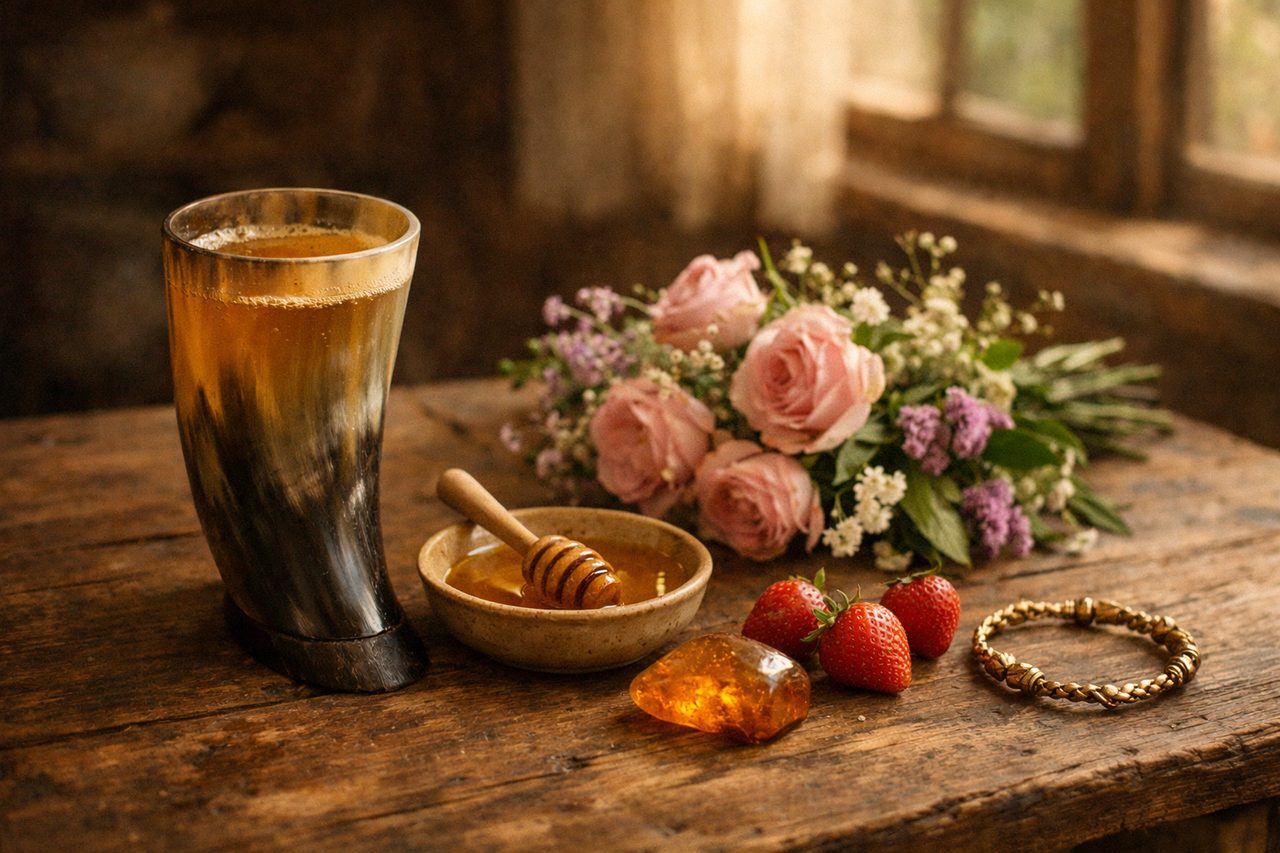
This table separates what comes from the old sources from what modern devotees have added. Both are fine to use, as long as we're clear about which is which. For more correspondences, browse our free Witch's Cabinet.
| Symbol or offering | Connection to Freya | Old source or modern |
|---|---|---|
| Cats | Two cats pull her chariot | Old source (Prose Edda) |
| Falcons and feathers | Her falcon-feather cloak | Old source (both Eddas) |
| Boar | She rides the boar Hildisvíni | Old source (Poetic Edda) |
| Necklace | Brísingamen, her famous necklace | Old source (both Eddas) |
| Gold | Her tears of red gold; daughter named Treasure | Old source (Prose Edda) |
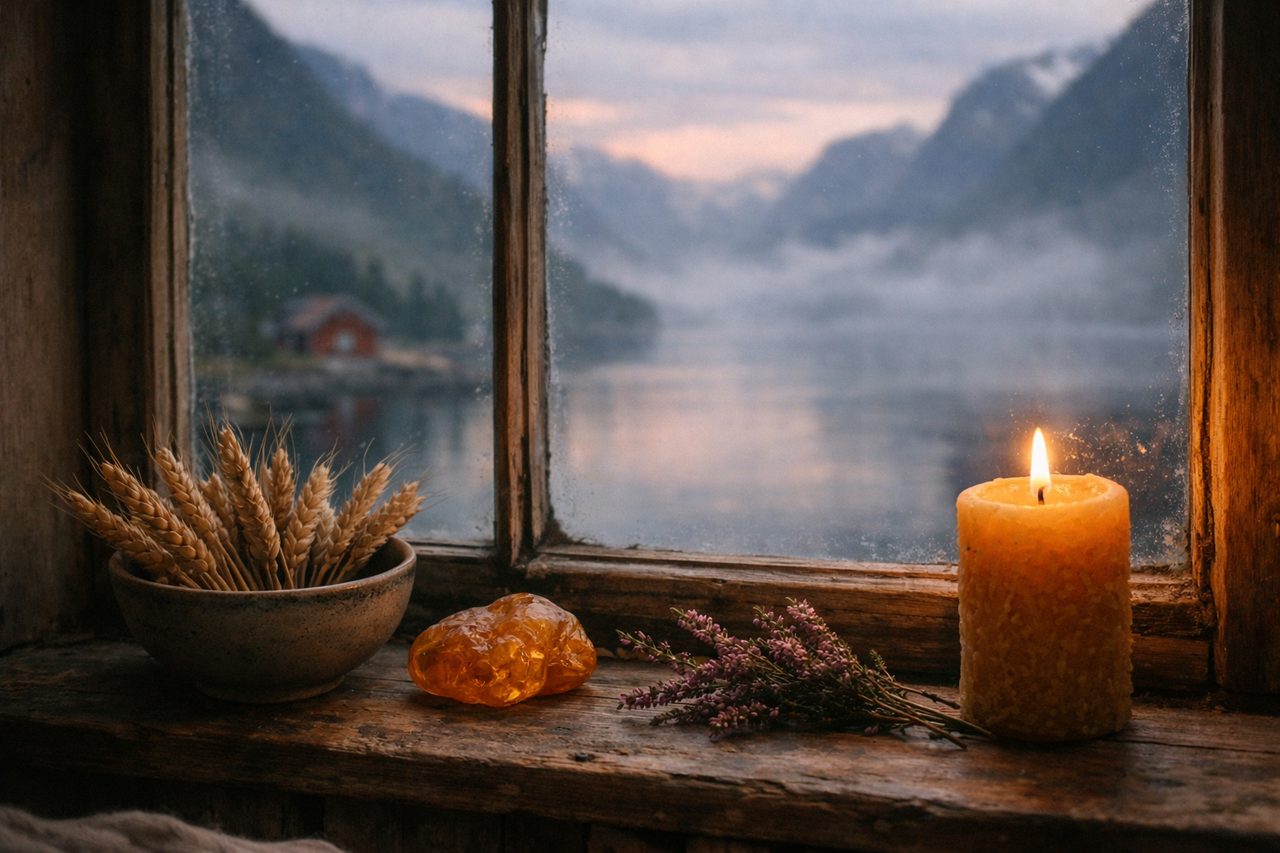
| Amber | Golden "tears" from the sea | Modern association |
| Mead | A classic drink for Norse offerings | Traditional Norse custom |
| Honey, flowers and sweets | Love, beauty and pleasure | Modern devotional practice |
| Jewelry and handmade crafts | Beauty, gold and skill | Modern devotional practice |
| Friday | A day many devotees set aside for her | Modern devotional practice |
How to Honor Freya Respectfully
Working with any deity is a relationship, and good relationships are built slowly. Here are some simple ways to start:
- Read her stories. A good translation of the Eddas will teach you more about Freya than any list of correspondences.
- Make a small altar space. A candle, a flower and something golden is plenty. Our guide to setting up a Wiccan altar can help.
- Give offerings with care. Mead, honey, flowers or a little of your own baking. If you pour a drink outside afterward, keep it away from pets, since alcohol isn't safe for them.
- Honor her through action. Practice real self-love, stand up for yourself, make something beautiful or donate to a cat shelter.
- Keep love magick ethical. Ask Freya's help with self-love, with attracting the right love or with strengthening a bond you already share, never with controlling another person.
- Listen and keep notes. Write down dreams, signs and feelings in your Book of Shadows, and trust what you feel.
If you're still wondering which goddess or god is calling you, our Discover Your Deity course walks you through meeting and working with deities step by step. You might also enjoy our guides to Hecate and Brigid.
A Simple Devotional Ritual for Freya
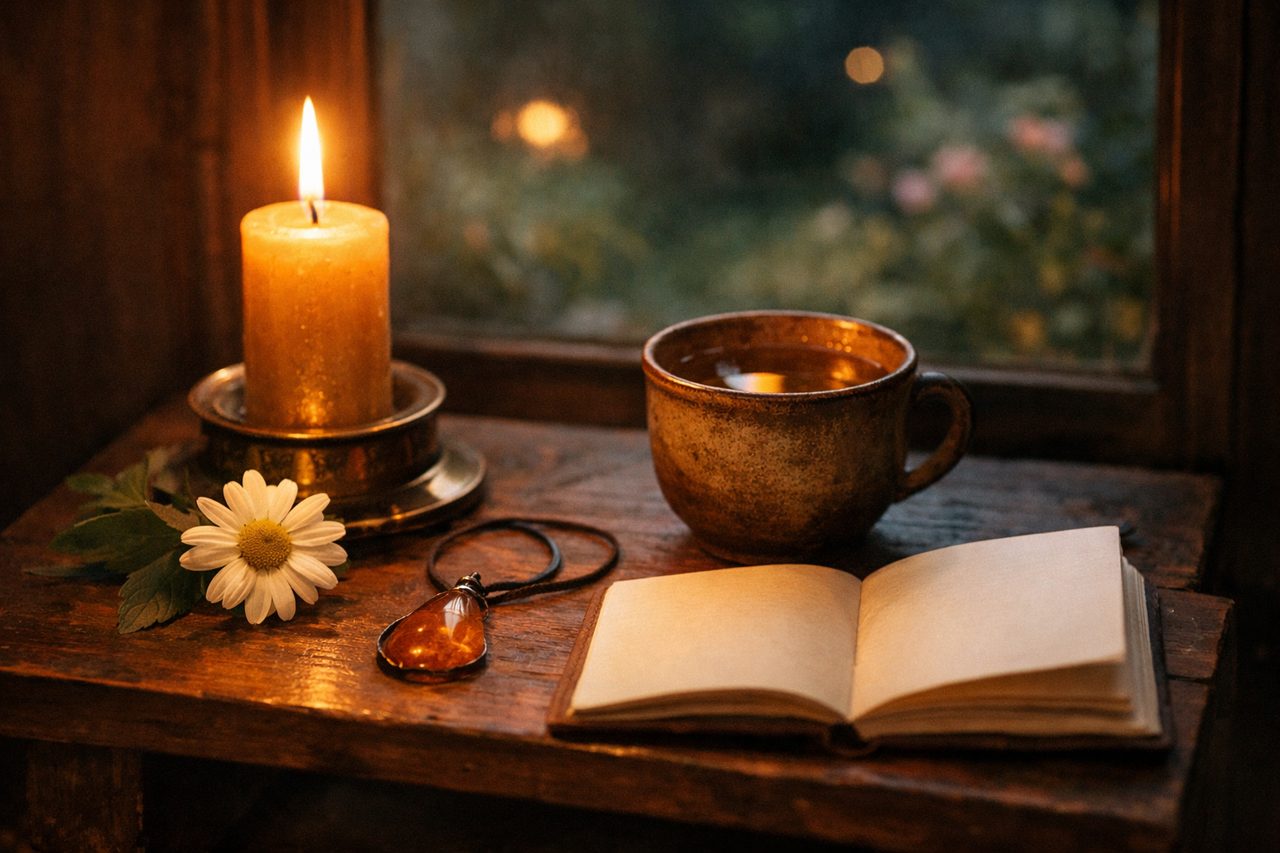
This short ritual is a gentle way to introduce yourself. Friday evening is a popular modern choice, but any quiet time works. The words below are our own, not an ancient prayer, so feel free to change them.
You will need: a gold, green or pink candle in a safe holder; a small cup of mead, apple juice or honey water; a flower; something golden or a piece of amber; and your journal.
- Tidy your altar space and set out your items. Take a few slow breaths and let the day fall away.
- Light the candle and say: Freya, Lady of the Vanir, goddess of love and gold, of the falcon and the cat, I light this flame in your honor.
- Hold up the cup and say: I offer this gift in friendship. May there be gifts between us, freely given. Set it on the altar.
- Sit quietly for a few minutes. Think about where you'd like more love, courage or self-worth in your life, and tell her in your own words.
- Notice any images, feelings or memories that come up, then write them in your journal.
- Thank her, snuff out the candle and, later, pour the drink onto the earth outside or down the sink with thanks.
Safety: never leave a candle burning unattended, keep it away from curtains and dried flowers, and keep both the flame and the offering out of reach of children and pets.
Final Thoughts
Freya is so much more than a pretty face on a love spell. She's a goddess of desire and gold, of grief and searching, of battle and the honored dead, and of the deep magick of seiðr. Learn her stories from the old sources, honor her with simple gifts and real actions, and let your relationship with her grow at its own pace.
Do you work with Freya, or are you just getting to know her? Share your experience in the comments!
Sources
Sturluson, Snorri. The Prose Edda. Translated by Jesse Byock. Penguin Classics, 2005.
Larrington, Carolyne, trans. The Poetic Edda. Oxford University Press, 2014.
Sturluson, Snorri. Heimskringla, Volume I. Translated by Alison Finlay and Anthony Faulkes. Viking Society for Northern Research, 2011.
Näsström, Britt-Mari. Freyja: The Great Goddess of the North. University of Lund, 1995.
Davidson, H. R. Ellis. Gods and Myths of Northern Europe. Penguin Books, 1964.
Check out our other articles:
Who are the Moon Goddess and the Horned God?
Hecate: A Comprehensive History of the Divine Triple Goddess
Brigid: Triple Goddess of Healing
Spirit Animals and Animal Guides: 19 Spiritual Animal Meanings
See All Articles
Love this article? Share the magick with your friends and loved ones!
Freya FAQs
What is Freya the goddess of?
Freya is the Norse goddess of love, beauty, desire and fertility, and also of gold, war and the dead. She chooses half of the warriors who die in battle for her field, Fólkvangr, and she is said to have taught the gods the magick called seiðr.
Is Freya the goddess of love?
Yes. Freya is the best-known goddess of love and desire in Norse myth, and many modern pagans call on her for self-love and romance. She is also a goddess of war, gold and magick, so love is only one side of her.
What is the difference between Freya and Freyja?
There is no difference. Freyja is the Old Norse spelling, and Freya is the most common English spelling. The name means lady.
Are Freya and Frigg the same goddess?
In the Norse sources they are separate goddesses with different families and roles. Some scholars think both grew from one earlier Germanic goddess because of shared traits and their husbands' similar names, while others disagree. Most modern pagans honor them as two goddesses.
What are Freya's symbols?
Her main symbols are cats, which pull her chariot, falcons and feathers from her falcon cloak, the boar Hildisvíni, her necklace Brísingamen and gold. Amber, flowers and Friday are popular modern associations.
What offerings does Freya like?
Popular offerings include mead, honey, flowers, sweets, gold or amber jewelry and handmade crafts. Acts of self-love, creativity and kindness, such as helping a cat shelter, are offerings too.
How do I know if Freya is calling me?
Many people notice repeated signs such as cats, falcons, amber or a strong pull toward her stories, often during times of change around love or self-worth. Try a simple devotional ritual, keep notes and see whether the connection grows.
Who is Freya's husband?
Freya's husband is Óðr, who goes away on long journeys. According to the Prose Edda, she weeps tears of red gold for him and searches for him under many names. Their daughter is Hnoss, whose name means treasure.