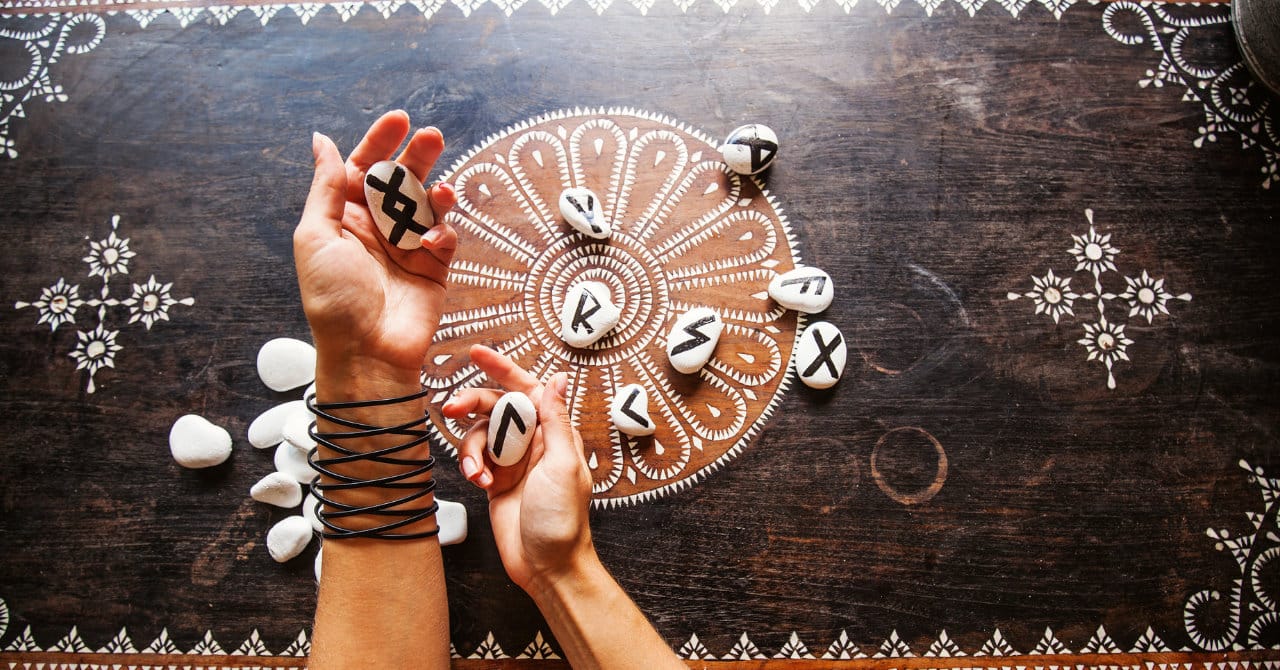
Rune casting is a form of divination where you draw or throw small stones or tiles marked with runes, the letters of an old Germanic alphabet, and read their meanings for guidance. It's simple to start, deeply symbolic, and one of the most popular divination tools among witches today.
Runes are more than letters. Each one carries an idea, like wealth, protection, a journey or a new dawn, so a handful of runes can tell a surprisingly clear story about your question.
In this guide you'll learn what rune casting means, how to cast runes step by step, all 24 runes of the Elder Futhark with their sounds and meanings, simple rune spreads, how to throw runes on a cloth, and how witches use runes in spellwork.
What Is Rune Casting?
Quick answer: rune casting (also written "runecasting") means asking a question, then drawing runes from a bag or tossing them onto a cloth and interpreting the symbols that appear. Most modern readers use the 24-rune Elder Futhark. Like tarot, it's used for reflection and guidance rather than a fixed prediction.
There are two main ways to do it. In a draw, you pull a set number of runes and lay them in a pattern called a spread. In a cast or throw, you scatter several runes and read where and how they land. Both are covered below.
How to Cast Runes in 6 Steps
- Prepare your space. Lay a cloth (white or a plain color) on a table, light a candle if you like, and take a few grounding breaths.
- Hold your question in mind. Make it clear and open, such as "What do I need to know about my new job?"
- Mix the runes. Swirl your hand through the rune bag while you focus on the question.
- Draw or throw. Pull one or three runes without looking, or take a small handful and gently scatter them on the cloth.
- Read the runes. Look up each rune's meaning in the table below, then notice how they relate to each other and to your question.
- Record your reading. Write down the runes and your impressions in a journal or your Book of Shadows, and return the runes to their bag.
The Origins of Runes
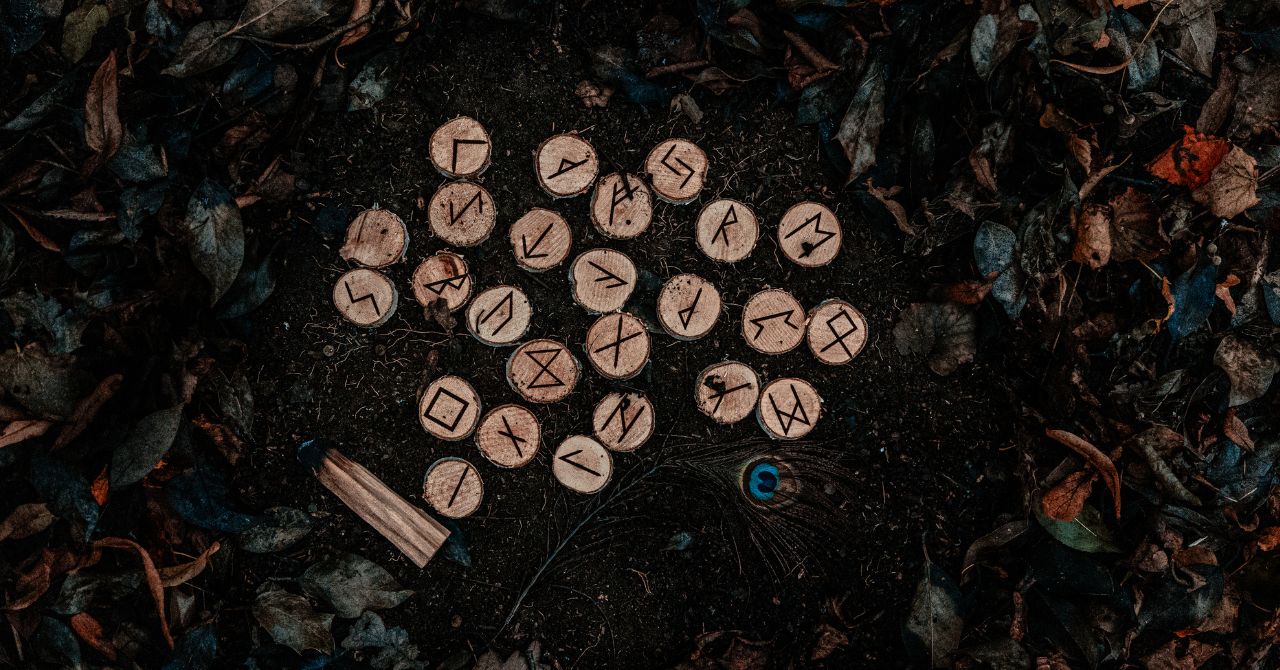
Runes were the writing systems of Germanic peoples, including the Norse. The oldest runic alphabet, the Elder Futhark, appears in inscriptions from roughly the 2nd to the 8th centuries CE. It is named after its first six letters: F, U, Th, A, R, K. In the Viking Age it was simplified into the 16-rune Younger Futhark, and in England it grew into the Anglo-Saxon Futhorc.
Runes were carved on stones, weapons, jewelry and everyday objects, and some inscriptions seem to have had a charm-like or protective purpose. In the Old Norse poem Hávamál, the god Odin hangs for nine nights on a windswept tree, wounded by a spear, and gains the runes through that ordeal. Many readers take the tree to be Yggdrasil, the World Tree.
We don't know exactly how ancient peoples used runes for divination. The Roman writer Tacitus described Germanic tribes casting lots on strips of wood marked with signs, but he didn't say they were runes. Most rune meanings used today come from the medieval rune poems and from modern practitioners, so it's fine to read them as a living tradition rather than a fixed ancient rulebook.
The 24 Elder Futhark Runes and Their Meanings
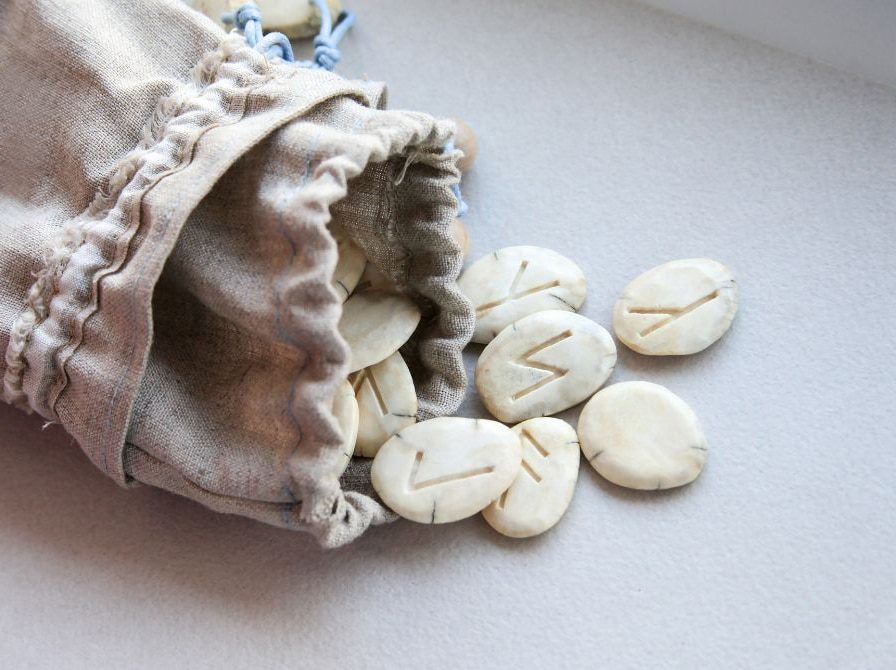
The Elder Futhark is split into three groups of eight runes called aettir (families): Freyr's aett, Hagal's aett and Tyr's aett. Here are all 24 runes in their traditional order, with the sound each one stands for and its usual meaning in rune casting. Click a rune name to read more in our rune library.
| Rune | Name | Letter sound | Literal meaning | Meaning in a reading |
|---|---|---|---|---|
| ᚠ | Fehu | f | Cattle, wealth | Abundance, prosperity, earned success |
| ᚢ | Uruz | u | Aurochs (wild ox) | Strength, health, raw energy |
| ᚦ | Thurisaz | th | Giant, thorn | Defense, conflict, a challenge to face |
| ᚨ | Ansuz | a | A god (Odin), the mouth | Communication, wisdom, messages |
| ᚱ | Raidho | r | Riding, journey | Travel, progress, the right path |
| ᚲ | Kenaz | k | Torch | Insight, creativity, knowledge |
| ᚷ | Gebo | g | Gift | Generosity, partnership, balance |
| ᚹ | Wunjo | w | Joy | Happiness, harmony, belonging |
| ᚺ | Hagalaz | h | Hail | Sudden disruption that clears the way |
| ᚾ | Nauthiz | n | Need | Hardship, patience, resourcefulness |
| ᛁ | Isa | i | Ice | Stillness, pause, waiting |
| ᛃ | Jera | j (as y in "year") | Year, harvest | Cycles, reward for effort, good timing |
| ᛇ | Eihwaz | ei or ï (uncertain) | Yew tree | Endurance, transformation, life and death |
| ᛈ | Perthro | p | Uncertain, often read as "lot cup" | Mystery, chance, fate |
| ᛉ | Algiz | z (later r) | Elk, protection | Protection, guardianship, higher self |
| ᛊ | Sowilo | s | Sun | Success, vitality, victory |
| ᛏ | Tiwaz | t | The god Tyr | Justice, honor, courage |
| ᛒ | Berkano | b | Birch | Birth, renewal, nurturing |
| ᛖ | Ehwaz | e | Horse | Teamwork, trust, steady progress |
| ᛗ | Mannaz | m | Man, humankind | The self, community, cooperation |
| ᛚ | Laguz | l | Water, lake | Intuition, emotions, flow |
| ᛜ | Ingwaz | ng | The god Ing (Yngvi) | Fertility, inner growth, completion |
| ᛞ | Dagaz | d | Day | Breakthrough, awakening, a new dawn |
| ᛟ | Othala | o | Inheritance, ancestral land | Home, heritage, ancestors |
When you read, think about each rune's meaning and how it fits your question. A rune can also lean positive or negative depending on what's around it. Some readers use reversed or merkstave meanings when a rune lands upside down, usually a blocked or shadow side of the rune. Others read every rune upright. Several runes, like Gebo, Isa and Dagaz, look the same either way, so there's no wrong choice. Pick one approach and stay consistent.
How to Throw Runes
Throwing (or casting) runes is the more intuitive method. Here's a simple way to start:
- Spread your casting cloth in front of you.
- Focus on your question and take nine runes (or a small handful) from the bag without looking.
- Hold them in cupped hands, breathe on them or shake them gently, and scatter them onto the cloth.
- Read only the runes that land face up. Set aside any that land face down or roll off the cloth.
- Notice the layout. Runes near the center are often read as most important to the question, and those near the edge as smaller influences. Runes lying close together are read as one connected message.
Rune Spreads for Beginners
If you prefer more structure, draw runes and lay them in a spread. Here are five classic layouts, from quickest to deepest.
Single Rune Draw
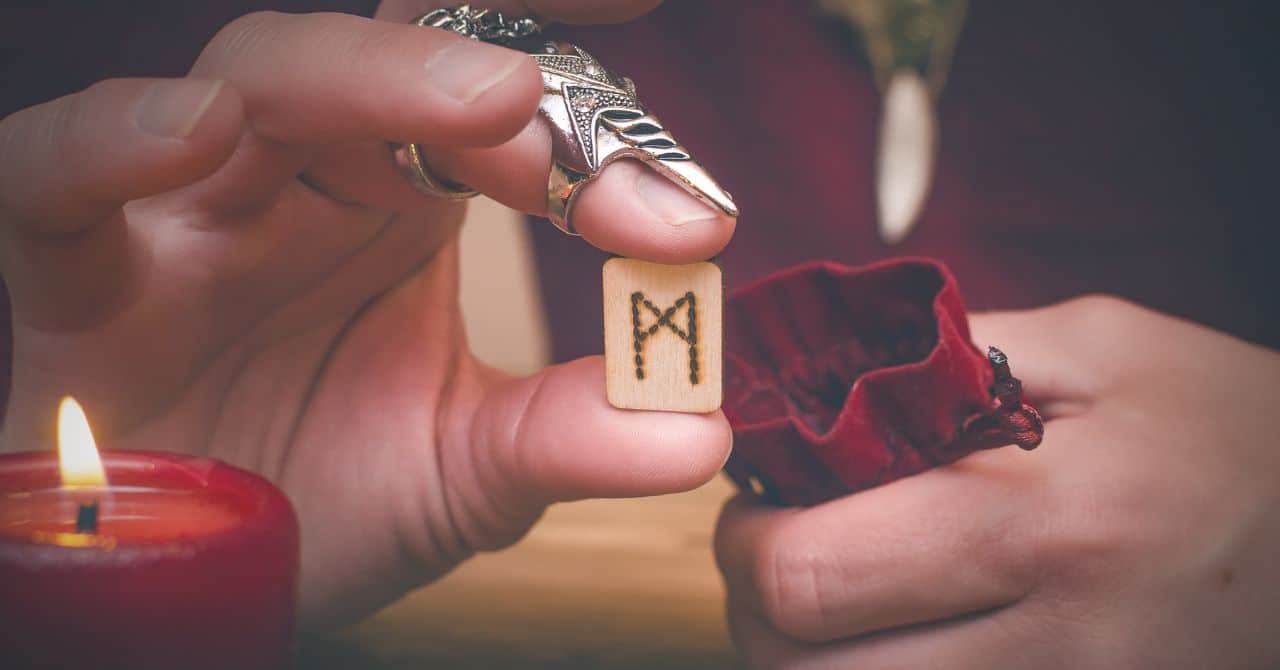
Ask a question and pull one rune for a straightforward answer. It's ideal for daily guidance: draw a rune each morning and notice how its theme shows up during your day.
Three-Rune Spread
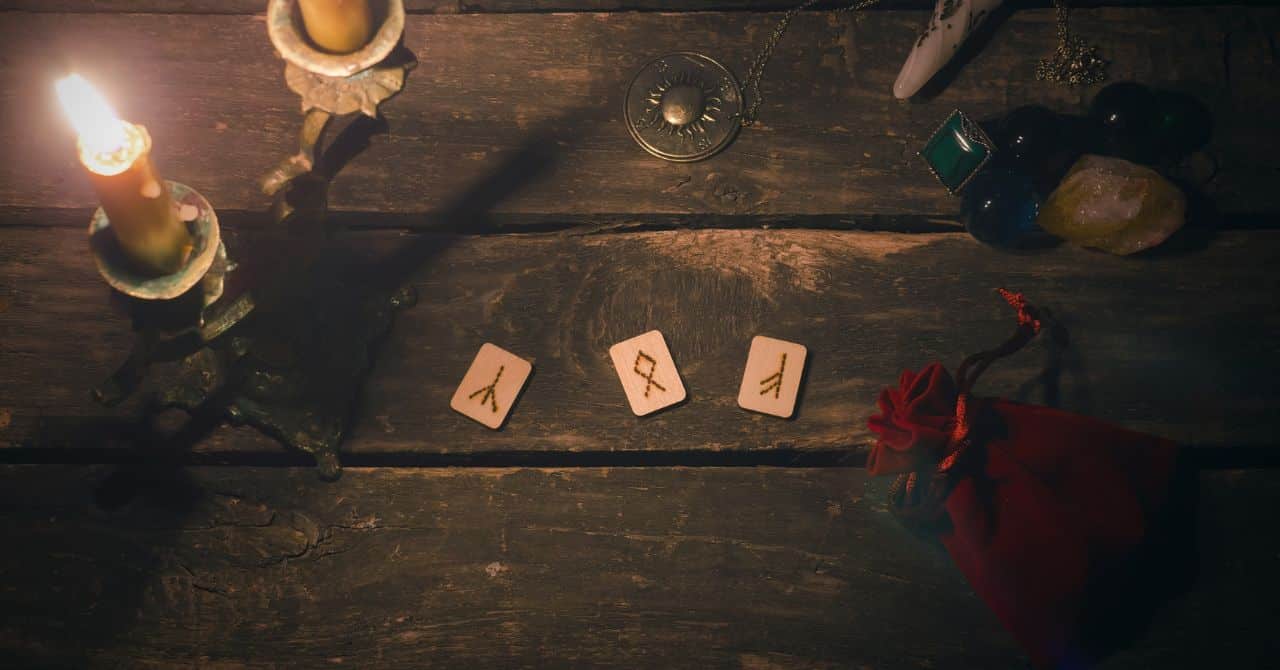
Pull three runes and lay them left to right. Common meanings for the three positions are:
- Past, present and future
- Situation, action and outcome
- Mind, body and spirit
- Challenge, opportunity and advice
Five-Rune Cross Spread
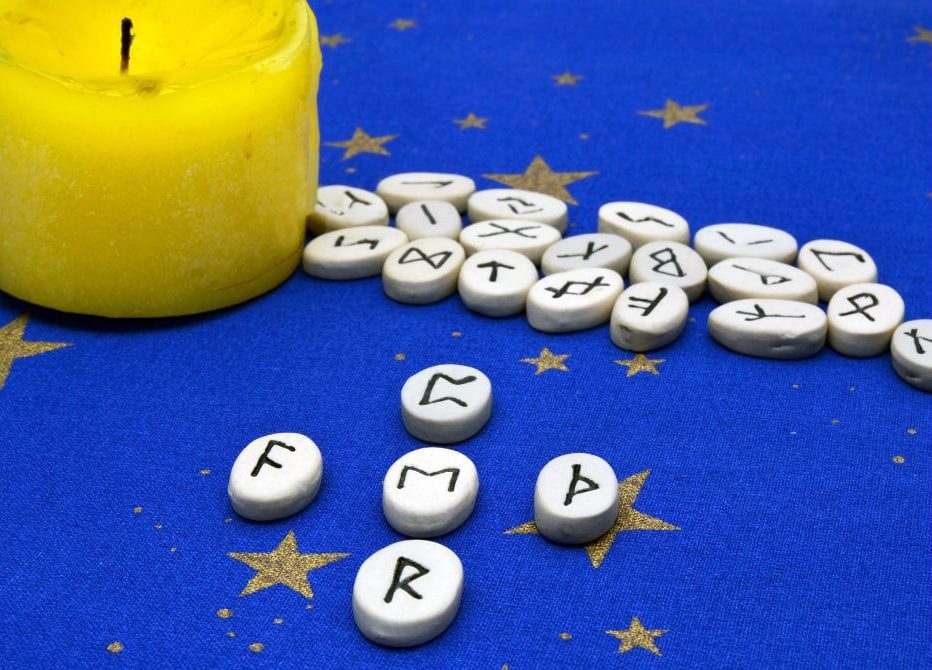
This spread gives a fuller look at a situation. Lay the runes in a cross:
- Center: the heart of the matter
- Left: past events and lessons
- Right: future possibilities
- Top: challenges and obstacles
- Bottom: foundations and hidden influences
Nine-Rune Cast
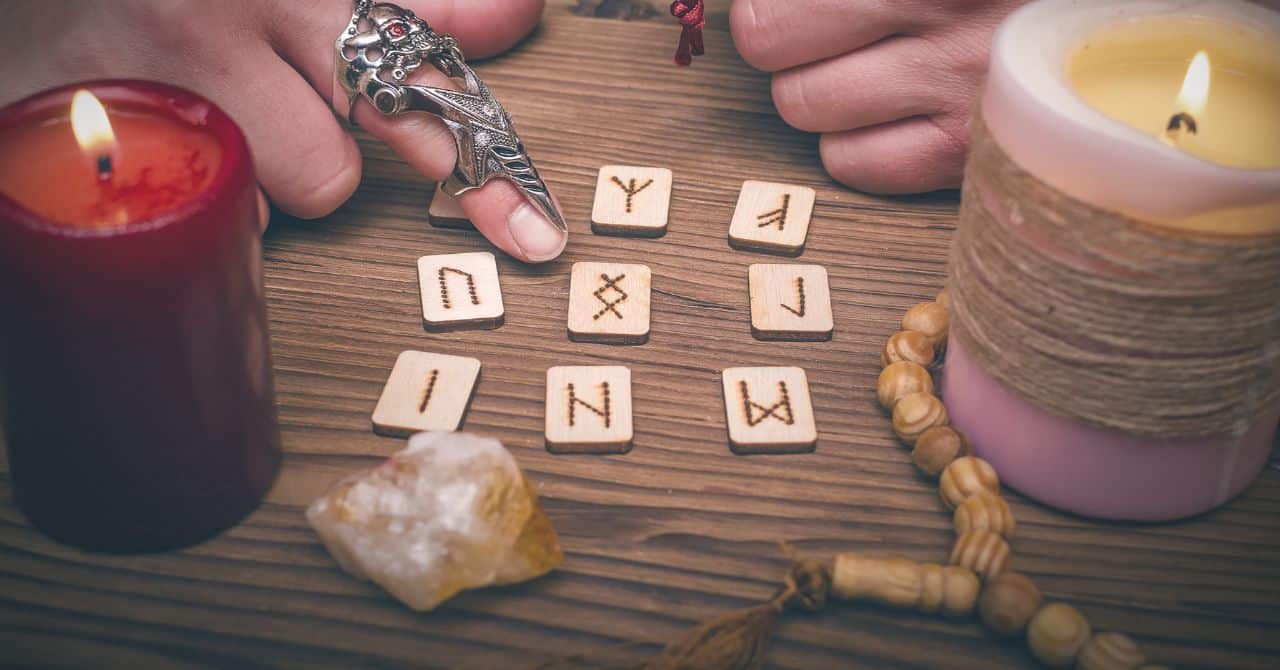
Nine is a special number in Norse lore (Odin hung for nine nights). Lay nine runes in a 3x3 grid, with the rows as physical, emotional and spiritual influences and the columns as past, present and future. You can also throw all nine onto a cloth as described above.
Runic Pathworking
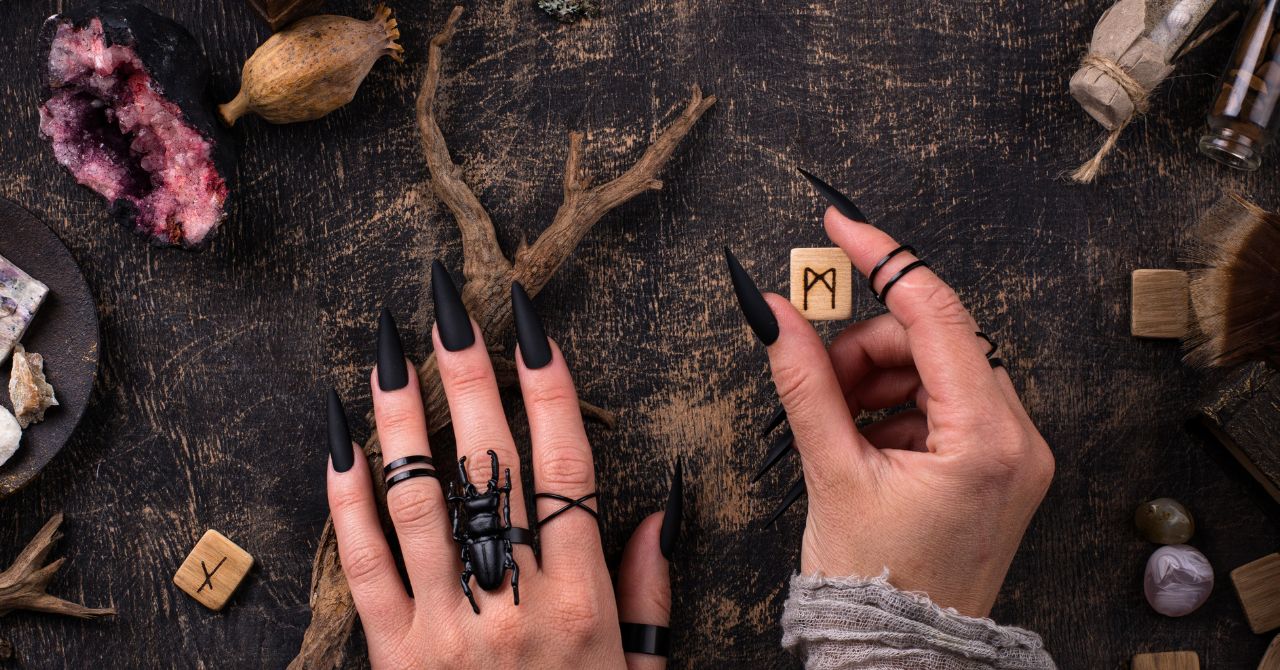
Instead of drawing at random, choose one rune on purpose and meditate on its shape, sound and meaning for a few days. It's a wonderful way to learn the runes one by one.
How to Make Your Own Rune Set
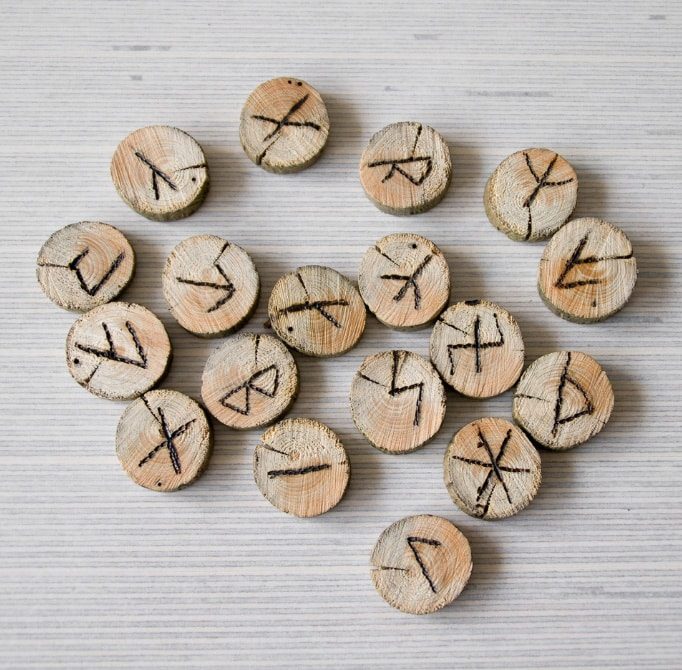
You can buy a rune set, but making your own is a meaningful, magickal project:
- Choose your material: wood slices, flat pebbles, air-dry clay or even cardboard tiles.
- Gather 24 pieces of similar size and shape so you can't tell them apart by touch.
- Mark each one with a rune using paint, a permanent marker or a wood-burning tool. Work in a ventilated space and keep hot tools away from children and pets.
- Consecrate the set by passing it through incense smoke, sprinkling it with salt water (on sealed or stone pieces only) or holding it while you state your intention.
- Keep your runes in a cloth pouch, and add a casting cloth to use with them.
To cleanse your runes later, use the same methods you'd use for cleansing a tarot deck: smoke, moonlight or sound.
How to Use Runes in Witchcraft
Runes aren't only for divination. Many witches also use them in spellwork:
- Candle magick: carve a rune like Fehu or Sowilo into a candle that matches your goal. Our guide to candle color meanings helps you pick the color.
- Protection: draw Algiz over a doorway, inside a shoe or on a charm, alongside other protection spells for your home.
- Bindrunes: combine two or three runes into one symbol, much like a sigil. If you enjoy this, try our guide to sigils for beginners.
- Talismans and jars: paint a rune on a stone or slip it into a spell jar.
Runes are symbols with meaning, and they deserve respect. Heathenry, the modern revival of Norse and Germanic religion, is a living faith, and Heathen communities speak out strongly against the misuse of a few runes, such as Othala, by hate groups. Learn the history, use the runes with care, and they will serve you well. If you love working with symbols, our Wicca 101 signs and symbols course covers many more.
Final Thoughts
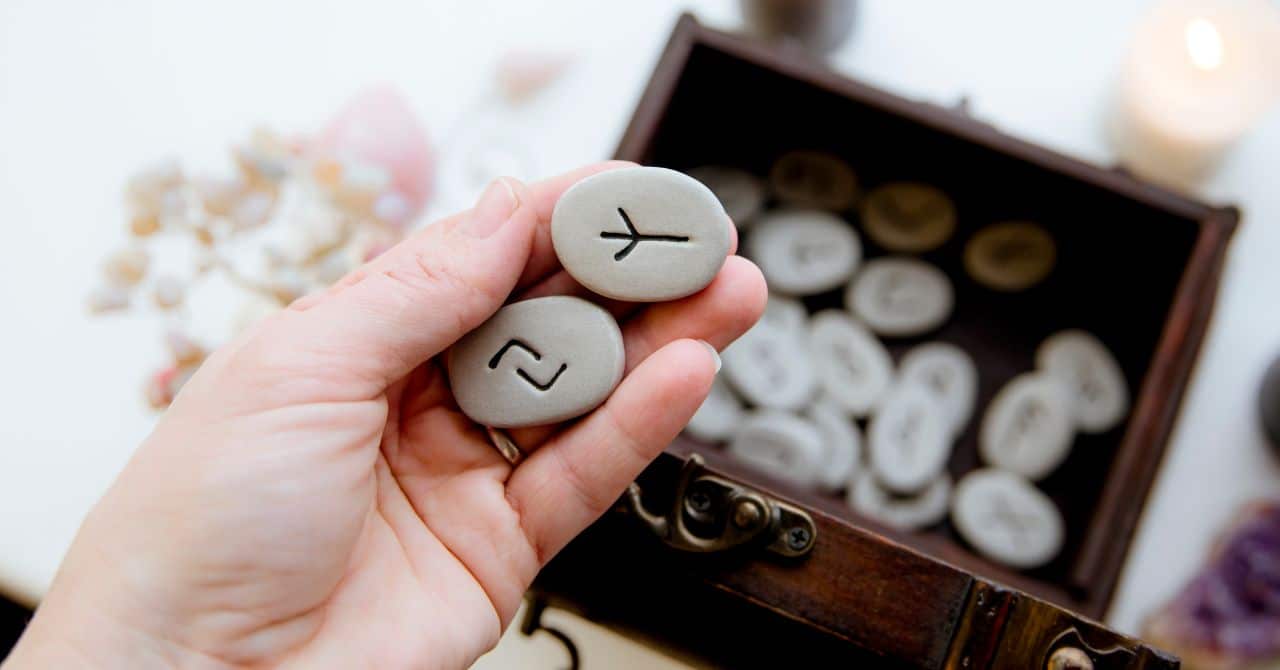
Rune casting is a beautiful way to listen to your intuition with the help of very old symbols. Start with a single rune each morning, learn the meanings little by little, and keep notes as you go. Before long, the runes will feel like old friends.
Curious about other tools? Explore more types of divination, learn how to use a pendulum, or try Samhain divination when the veil is thin. Which rune do you feel most drawn to?
Check out our other articles:
Divination for Beginners: 13 Types of Divination
How to Use a Pendulum
Sigils for Newcomers
How to Cleanse a Tarot Deck
See All Articles
Love this article? Share the magick with your friends and loved ones!
Rune Casting FAQs
What does rune casting mean?
Rune casting means drawing or throwing runes, letters of an old Germanic alphabet, and reading their meanings to answer a question. Each rune stands for an idea such as wealth, protection or a journey. Most readers use it for guidance and reflection.
How many runes should you cast?
Beginners usually draw one or three runes. For a full throw, many readers take nine runes or a small handful and scatter them on a cloth, reading only the ones that land face up.
How do you use runes in witchcraft?
Witches use runes for divination and for spellwork: carving them into candles, drawing them on charms and doorways for protection, and combining them into bindrunes. Choose runes whose meanings match your goal, such as Fehu for prosperity or Algiz for protection.
What is the difference between the Elder and Younger Futhark?
The Elder Futhark is the oldest runic alphabet, with 24 runes, used from roughly the 2nd to the 8th centuries CE. The Younger Futhark has 16 runes and was used in Scandinavia during the Viking Age. Most rune sets for divination use the Elder Futhark.
What does the blank rune mean?
Some modern rune sets include a blank rune, often called Wyrd or Odin's rune, read as the unknown or fate. It isn't part of the historical Elder Futhark and became popular through a 1980s rune book, so many readers leave it out.
Can I make my own runes?
Yes. Many witches make their own set from wood, pebbles or clay by marking each of the 24 runes with paint, marker or a wood-burning tool. A handmade set carries your own energy and is a lovely way to learn the symbols.
Do you read runes upside down?
Some readers use reversed or merkstave meanings when a rune lands upside down, while others read every rune upright. Several runes look the same either way. Choose one method and use it consistently.