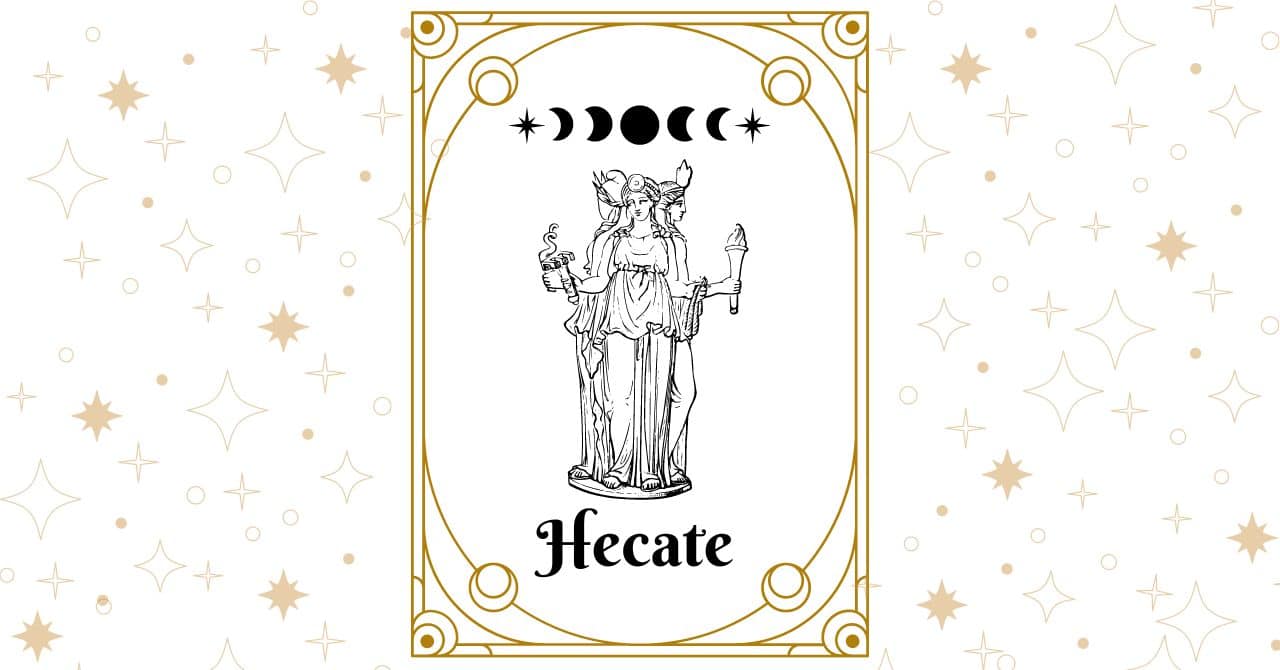
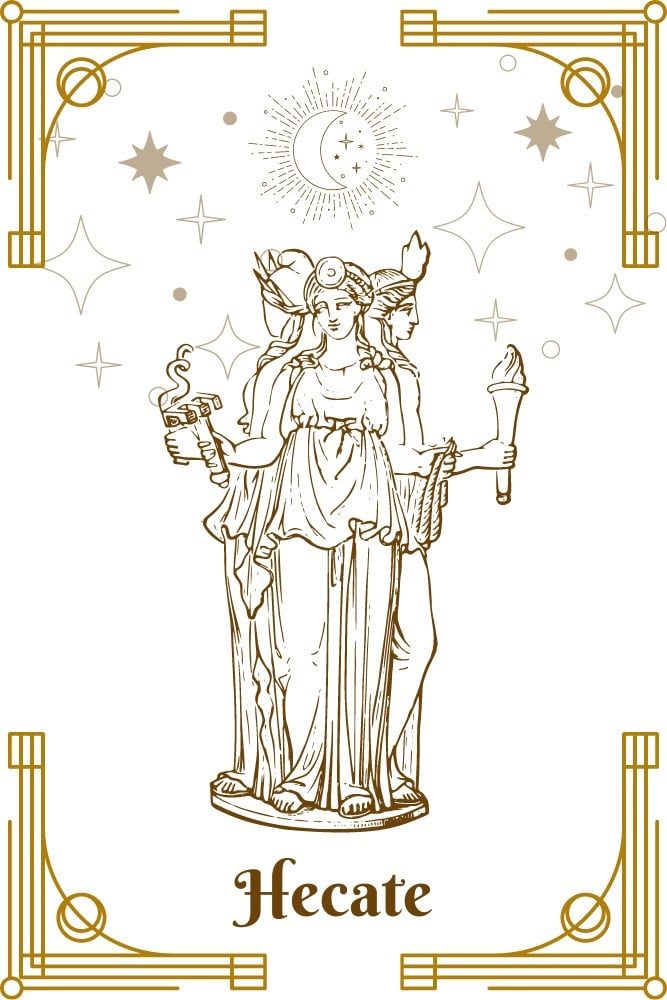
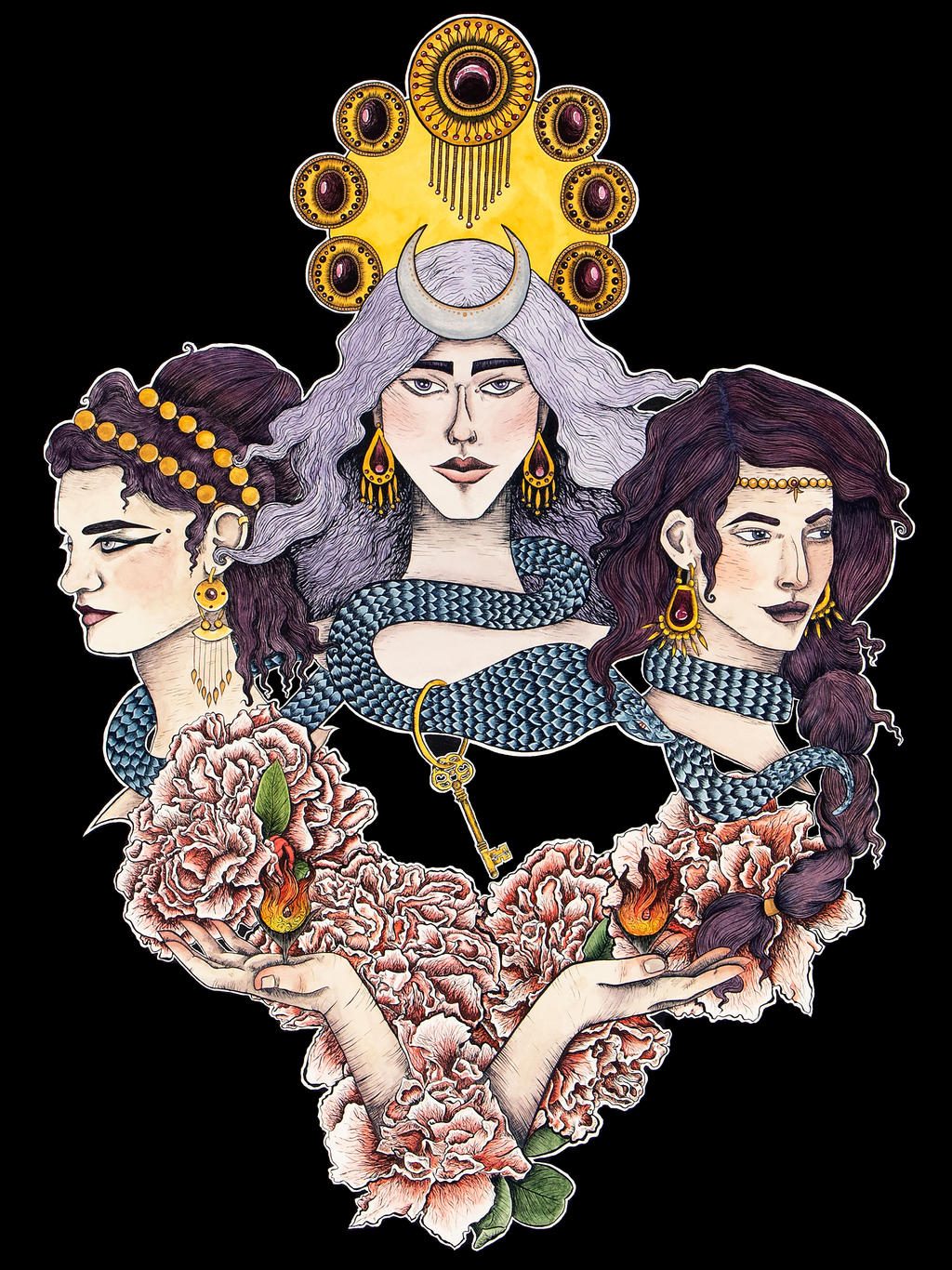
Hecate (also spelled Hekate) is the ancient Greek goddess of crossroads, thresholds, the night, the moon, ghosts and witchcraft. She carries torches to light the way through darkness, holds the keys to hidden places, and is often shown in a triple form, facing three directions at once. Today she is one of the most loved goddesses in modern witchcraft.
Hecate can seem mysterious, even a little intimidating, and that's part of her pull. But the ancient sources also show a generous goddess who helps people in many parts of life, and who guided Persephone and Demeter through one of the darkest moments in Greek myth.
This beginner's guide covers who Hecate is in the Greek sources, the meaning of her triple form, her symbols (keys, torches, dogs and the crossroads), her role in modern witchcraft, the Deipnon new moon offering, and how to start working with her respectfully.
Who Is Hecate?
Quick answer: Hecate is a Greek goddess of the crossroads, doorways, night, magick and the spirits of the dead. In Hesiod's Theogony she is the daughter of the Titans Perses and Asteria, honored by Zeus above all others. In the Homeric Hymn to Demeter she helps search for Persephone and becomes her companion. Modern witches honor her as the goddess of witchcraft, a guide at life's crossroads and a guardian of the threshold between worlds.
Her name may come from a Greek word meaning "far-reaching" or "she who works from afar," though scholars aren't certain. She has many titles, each showing a side of her:
- Enodia: "she of the roads," the guardian of travelers
- Trioditis: "of the three ways," the goddess of the crossroads
- Propylaia: "before the gate," the protector of entrances
- Phosphoros: "light-bringer," the torch-bearer
- Kleidouchos: "key-holder," the keeper of the keys
- Chthonia: "of the earth," linked with the underworld
How to Start Working With Hecate in 6 Steps
If you feel drawn to Hecate, here's a gentle way to begin. Each step is explained further down.
- Learn her stories. Read the passages on Hecate in Hesiod and the Homeric Hymn to Demeter, summarized below.
- Make a small space for her. A candle, a key and an image or symbol of Hecate on a shelf or corner of your altar is enough.
- Introduce yourself. Light the candle, say who you are and why you'd like to know her, and listen.
- Offer something simple. Bread, honey, a little wine or water, incense, or a heartfelt prayer.
- Honor her at the new moon. Keep a simple Deipnon each month: tidy your home and leave her a small meal.
- Keep a journal. Note dreams, feelings and anything that stands out, and let the relationship grow at its own pace.
Where Does Hecate Come From?
Hecate's origins are one of the great puzzles of Greek religion. Many scholars think her worship began in Caria, in what is now southwest Turkey, where her great sanctuary at Lagina later flourished. Others argue she was Greek from the start. Either way, by the time of the earliest Greek poems she was already an important goddess, and her worship spread across the Greek and Roman world.
Unlike some deities, Hecate was never forgotten. She was honored at doorways and crossroads in ancient Athens, called on in late ancient magick and philosophy, and she lives on in literature and in modern witchcraft.
Hecate in the Ancient Greek Sources
Hesiod's Theogony: the Goddess Zeus Honored Above All
The oldest long description of Hecate comes from the poet Hesiod, writing around 700 BCE. In his Theogony, the story of the birth of the gods, he gives her an unusually warm hymn of praise. He says she is the daughter of the Titans Perses and Asteria, and that Zeus "honored her above all."
According to Hesiod, Zeus let Hecate keep all the honors she had held among the older Titan gods, and gave her a share of the earth, the sea and the starry heaven. She can bring success to people in assemblies, in battle, in athletic contests, to horsemen, to sailors and fishermen, and to herders, increasing their flocks, or taking it away if she wishes. Hesiod also calls her a nurse of the young. In his poem she is a generous, powerful helper of everyday people, not a frightening figure.
The Homeric Hymn to Demeter: Companion of Persephone

Hecate's best-known role in myth comes from the Homeric Hymn to Demeter, an early Greek poem. When Hades carries off Persephone to the underworld, only Hecate, from her cave, and the sun god Helios hear the girl cry out.
Demeter searches for her daughter for nine days. On the tenth day, Hecate comes to meet her, holding a torch, and tells her that she heard Persephone's cry but didn't see who took her. Together they go to Helios, who tells Demeter the truth. When Persephone is finally reunited with her mother, Hecate embraces her, and the hymn says that from then on Hecate was Persephone's attendant and companion.
This story is why Hecate is so often linked with torches, with the underworld, and with helping people through grief, loss and big transitions. She is the one who walks with you in the dark.
Hecate's Triple Form
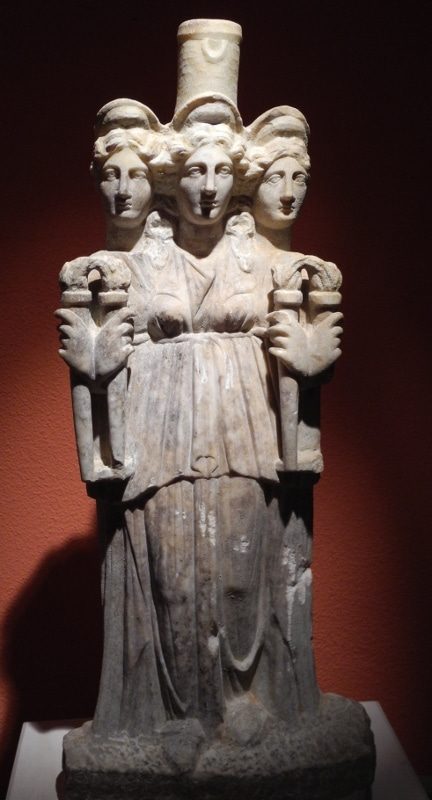
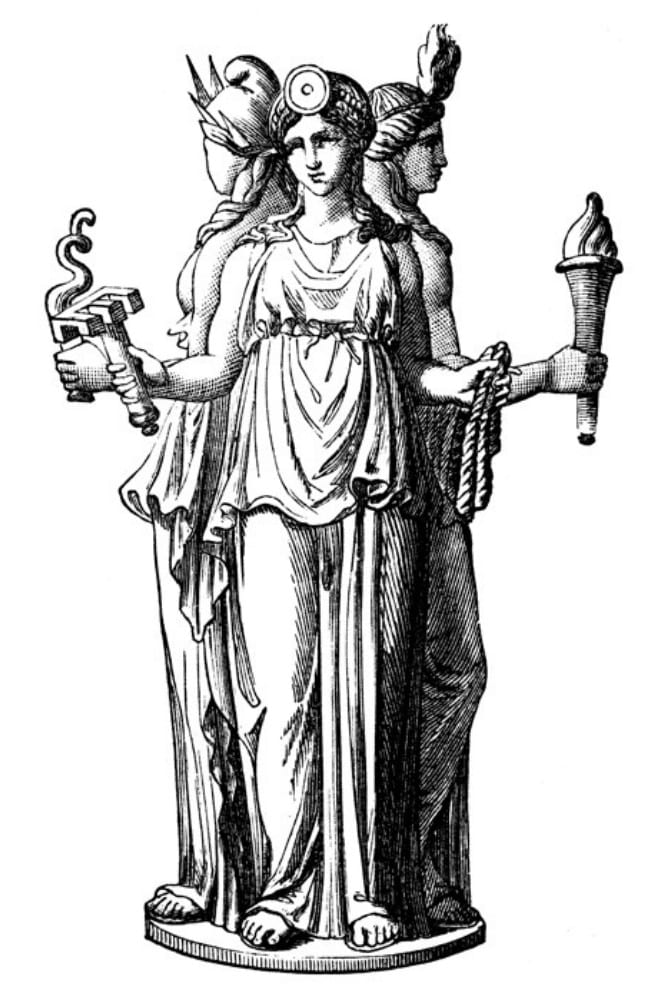
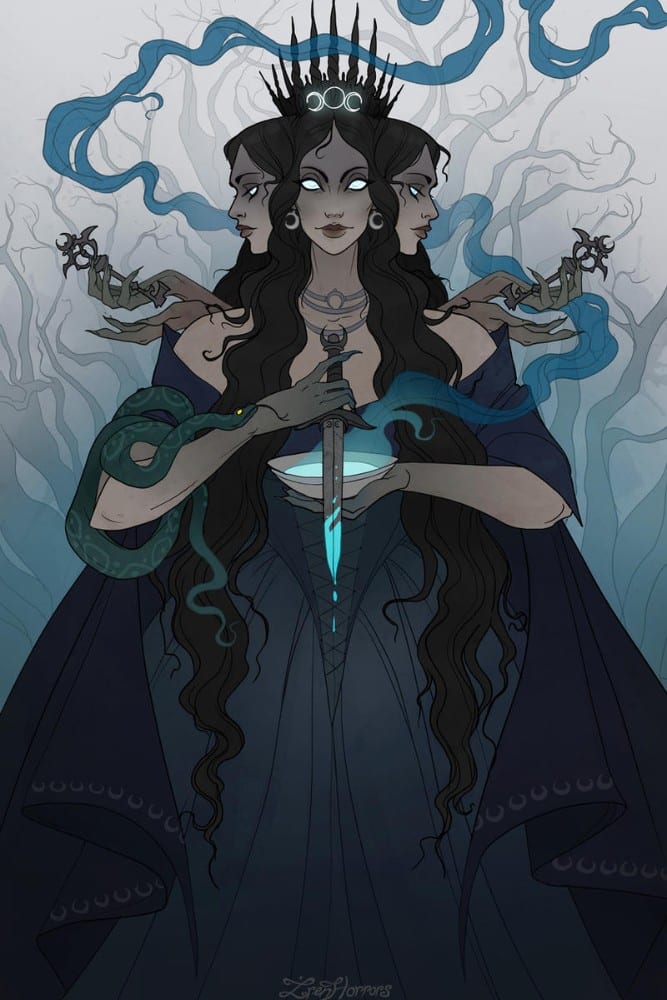
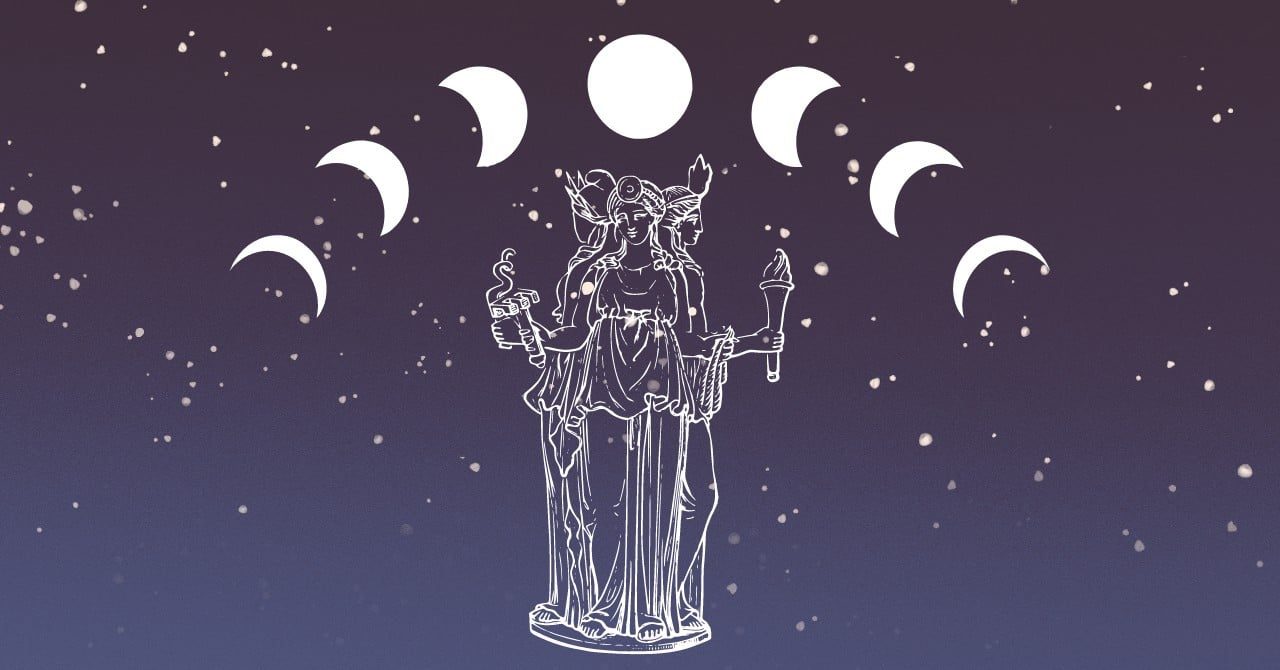
In early Greek vase painting, Hecate usually appears as a single young woman in a long robe, holding two torches. From the 5th century BCE, she is also shown in her famous triple form: three figures standing back to back. The ancient writer Pausanias says the Athenian sculptor Alcamenes was the first to make a three-bodied statue of her, which stood near the Temple of Athena Nike on the Acropolis.
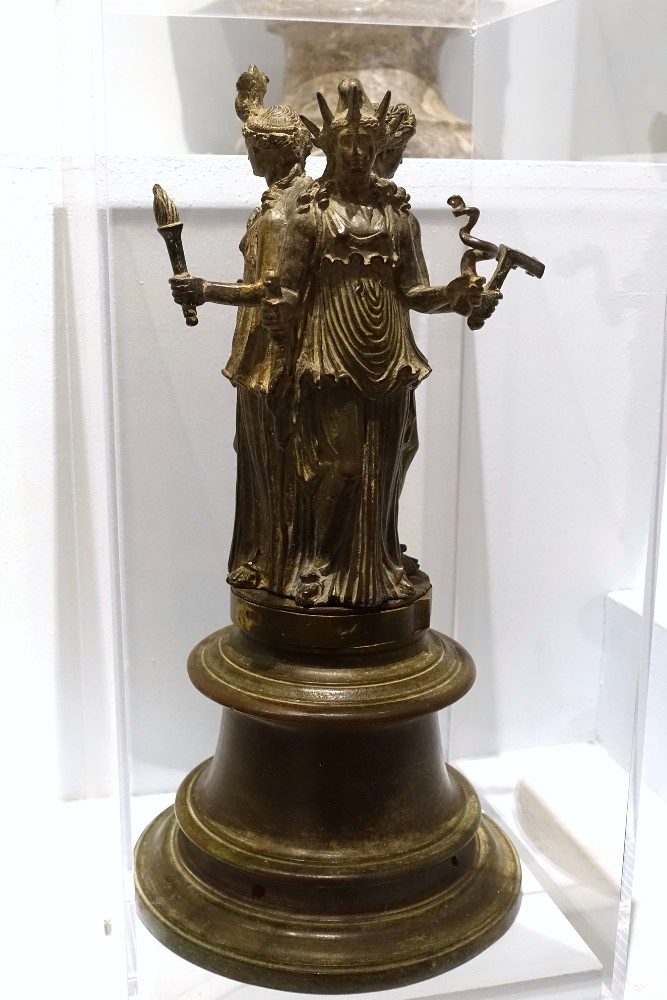
Triple Hecate statues and pillars, called hekataia, were set up at crossroads and in front of houses, with each face looking down a different road. Roman writers later linked her three faces with the moon in heaven, the goddess Diana on earth and Proserpina in the underworld, and the Romans called her Trivia, "of the three ways."
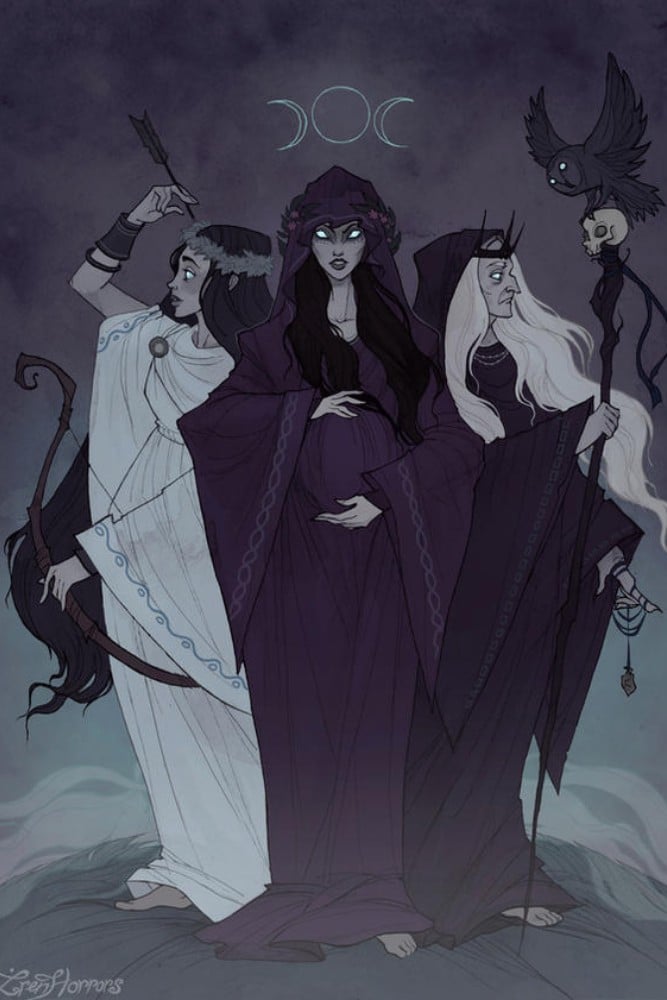
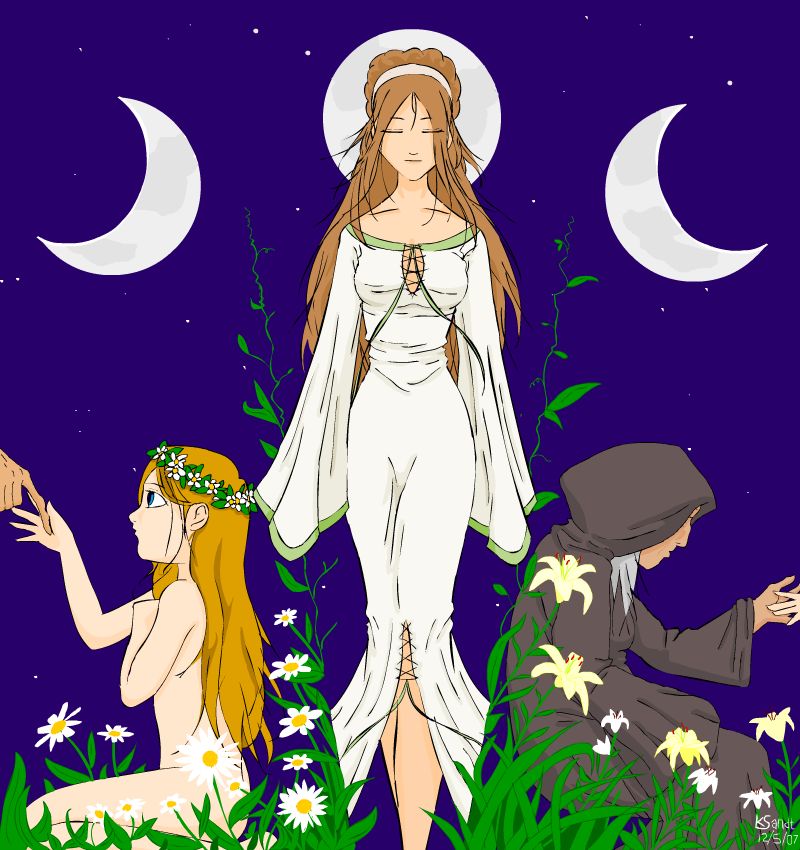
Many modern witches see her three faces as the past, present and future, or as the Maiden, Mother and Crone. In ancient art she is not shown as an old woman, but some Wiccans honor her as the Crone aspect of the Triple Goddess.
Goddess of Crossroads, Keys, Torches and Dogs
Some rights reserved. This work is licensed under a Creative Commons Attribution-Noncommercial-No Derivative Works 3.0 License.
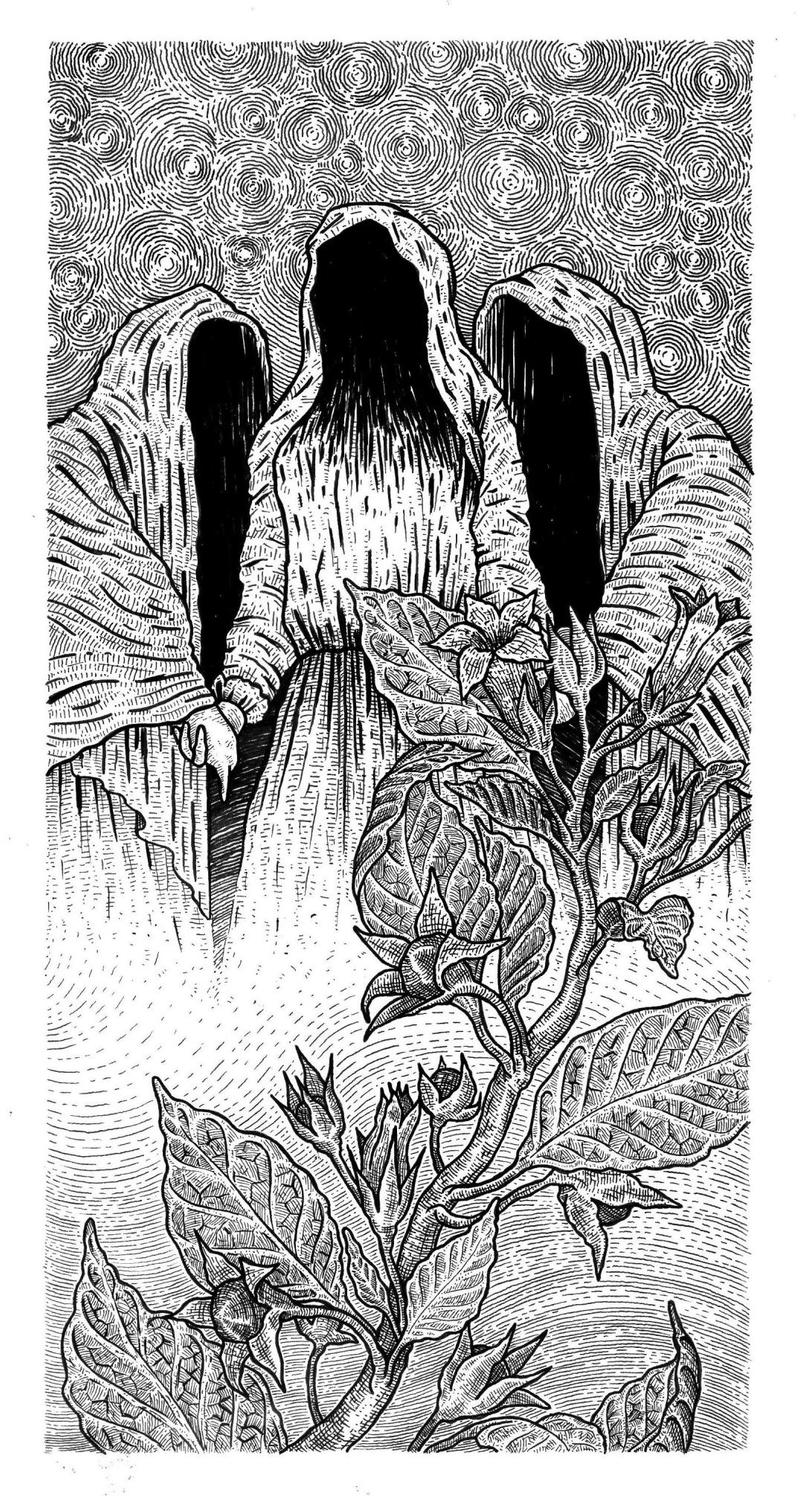
The Crossroads
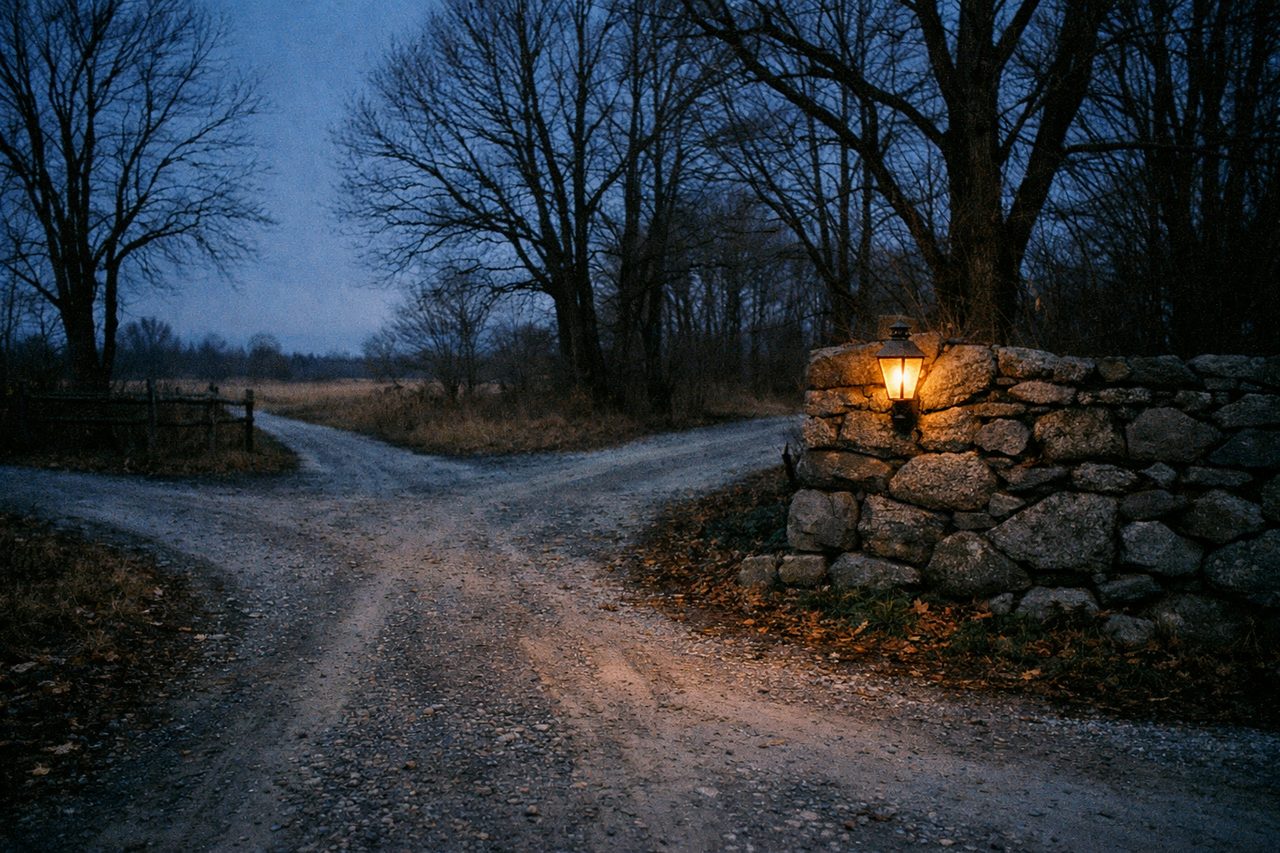
Crossroads were Hecate's special places, especially where three roads meet. They are places of choice and of the in-between, where travelers needed protection and where restless spirits were believed to gather. When you stand at a crossroads in your own life, Hecate is the goddess to call on.
Keys
As Kleidouchos, the key-holder, Hecate guards doors and gates, between rooms, between homes and the street, and between the world of the living and the world of spirits. Her key is a symbol of access to hidden knowledge and the mysteries.
Torches
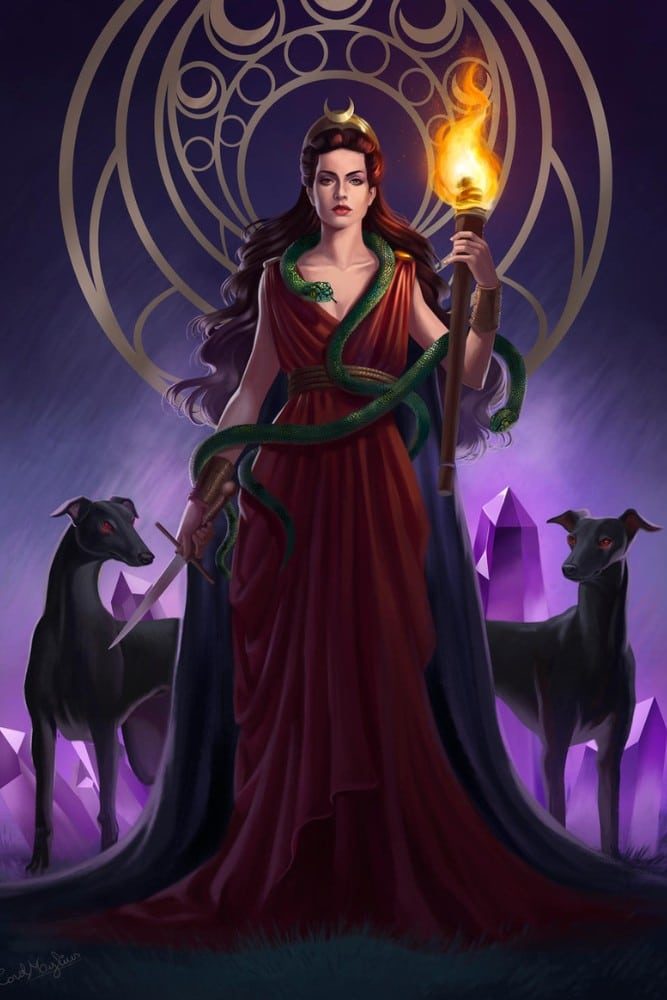
Hecate's two torches light the way through darkness, as they did for Demeter. They make her a goddess of guidance, insight and finding your way when you can't see the path ahead.
Dogs
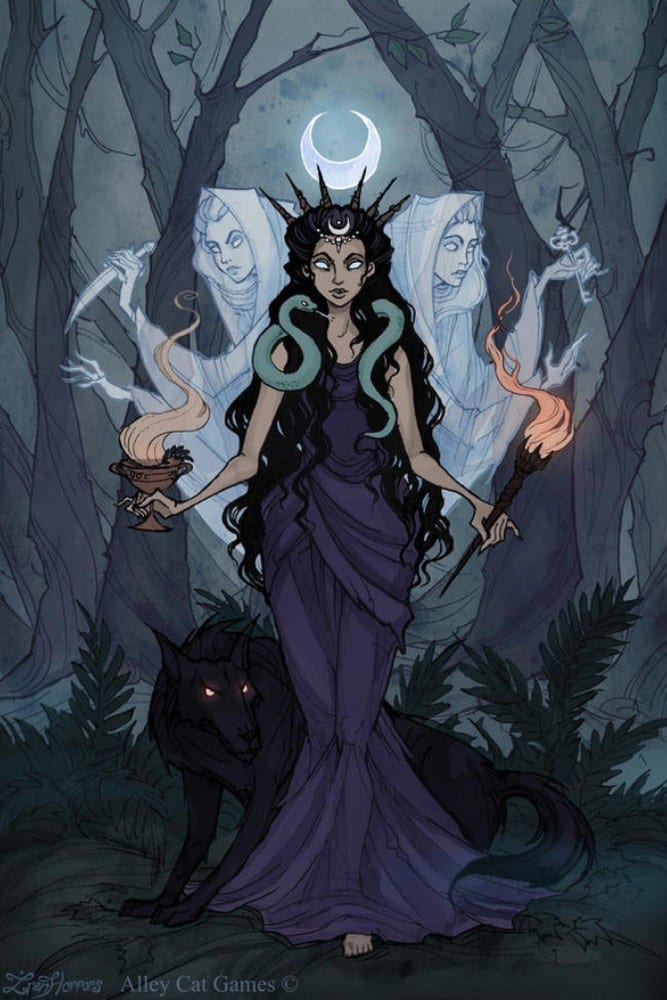
Dogs were Hecate's sacred animals. Greek writers describe dogs howling when she draws near at night, and dogs were offered to her in some ancient rites. Today, many devotees honor her by caring for dogs, supporting animal shelters or simply being kind to the strays at their own crossroads. If you share your life with a dog, you might feel it as a kind of familiar in your work with her.
Hecate in Magick and Literature
Over time, Hecate became more and more closely linked with magick. In Apollonius of Rhodes' Argonautica, the sorceress Medea is a priestess of Hecate and calls on her before working her spells. In later antiquity, philosophers and magicians wrote hymns and prayers to her, and the Chaldean Oracles describe her as a great cosmic soul. Her symbol, the strophalos or Hecate's wheel, comes from this tradition, though the popular modern design is a newer version.
Centuries later, she appears as the queen of the witches in Shakespeare's Macbeth, and she has been the goddess of witches in the popular imagination ever since.
Hecate in Modern Witchcraft
Today Hecate is honored by many kinds of practitioners: eclectic witches, Wiccans, and Hellenic polytheists who worship the Greek gods as a living religion. She isn't one of Wicca's core deities, but many Wiccans and witches work with her as:
- The goddess of witchcraft and magick, a teacher and guardian for anyone learning the craft.
- A guide at life's crossroads, for big decisions, endings and new beginnings.
- A protector, especially of the home, travelers and those who feel vulnerable.
- A guide to the spirit world, in ancestor work, dream work and shadow work.
- A moon goddess, especially of the dark and new moon.
Many witches feel especially close to her around Samhain, when the veil between the worlds is thin, and include her in rites for honoring the ancestors.
The Deipnon: Hecate's New Moon Supper
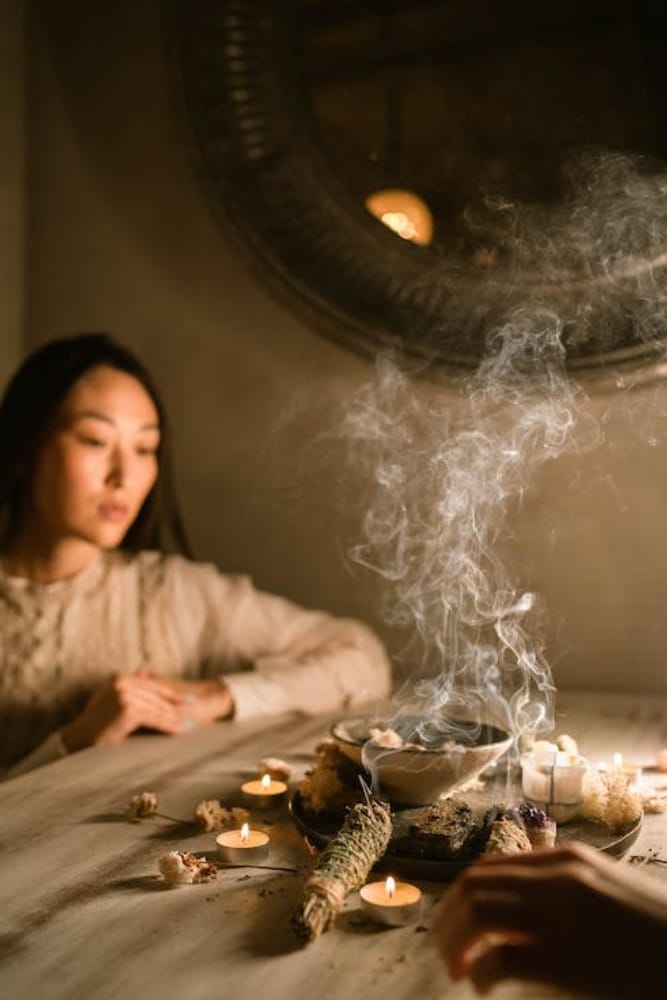
In ancient Athens, the last day of the lunar month, just before the new moon, was the day of the Deipnon ("supper"). Households cleaned their homes and left a meal for Hecate at a crossroads, along with the swept-up dust and leftovers of the month, to clear away bad luck and restless spirits before the new month began. The comic playwright Aristophanes jokes that the poor would sneak these "suppers of Hecate" to eat.
Many people who honor Hecate keep a simple Deipnon today. Here's one way to do it. Find the date of the next new moon on our moon calendar. Many witches also honor her once a year on November 16; our guide to the Night of Hecate explains where that date comes from and gives a full ritual.
- Clean your home. Sweep, take out the trash and tidy your altar. Think about what you want to leave behind with the old month.
- Prepare a small meal. Bread, cake, an egg, honey or a little of whatever you're cooking. Some devotees include garlic, which is often mentioned in connection with her suppers.
- Offer it. Light a candle and say a few words of thanks. Leave the plate on your altar, by the front door or at a crossroads.
- Don't eat it. Offerings to Hecate are traditionally left for her, not shared. The next day, compost or bury them, or put them in the trash.
- Reflect. Note anything you want to release or ask for help with before the new moon.
If you leave food outdoors, keep it small and biodegradable, and remember that garlic, onions, chocolate and grapes are toxic to dogs, Hecate's own animals. Many devotees prefer to leave the offering at a home shrine and dispose of it the next morning.
Hecate Symbols and Offerings

Here are the symbols most linked with Hecate, and offerings and ideas many devotees use today. Use what feels right to you.
| Symbol or offering | What it represents | How to use it |
|---|---|---|
| Torches and candles | Light, guidance through darkness | Light a candle (or two) at her shrine when you pray |
| Keys | Thresholds, mysteries, protection of the home | Place an old key on your altar or wear one as a charm |
| Dogs | Her sacred animals, loyalty, guardianship | Donate to a dog shelter or care for a dog in her name |
| The crossroads | Choices, transitions, the in-between | Leave offerings or pray where three paths meet |
| The dark and new moon | Endings, renewal, hidden things | Honor her with a Deipnon each month |
| Hecate's wheel (strophalos) | Her power and wisdom, the cycle of life | Draw it or wear it as a devotional symbol |
| Serpents | The underworld, rebirth | Use serpent imagery on her shrine |
| Bread, cakes, eggs, honey | Traditional food offerings | Offer on the Deipnon or when asking for help |
| Wine, milk or water | Libations (poured offerings) | Pour a little into a bowl or onto the earth |
| Incense such as myrrh | Prayer rising, purification | Burn while praying, in a ventilated room |
More correspondences, such as herbs, crystals and colors for protection and the dark moon, are in our free Witch's Cabinet.
How to Work With Hecate Respectfully
Hecate is a powerful goddess, but she isn't someone to fear. Approach her the way you'd approach a wise elder: with courtesy, honesty and patience.
- Start with gratitude, not demands. Build a relationship before asking for big favors.
- Be consistent. A small monthly Deipnon means more than one grand ritual.
- Keep your word. If you promise an offering, give it.
- Don't over-read signs. Seeing a dog or a key once isn't always a message. Notice patterns, keep a journal, and trust your intuition over time.
- Respect living traditions. Hellenic polytheists worship Hecate today. Learn from their research and the ancient sources, and don't treat her as just a "witchy aesthetic."
- Stay safe. Never leave candles unattended, and keep incense smoke away from pets.
If you're not sure whether Hecate or another deity is calling you, our Discover Your Deity course walks you through it step by step. You can also try a simple divination reading and ask.
Prayers to Hecate
These short prayers are written for beginners. Say them as they are, or use them as a starting point for your own words. Many people light a candle and hold a key while praying.
A Prayer to Hecate for Protection
"Hecate, goddess of the crossroads,
protect me from all harm,
shield me with your light,
and guide me safely on my journey."
A Prayer to Hecate for Guidance
"Hecate, torch-bearer and key-holder,
grant me your guidance and insight.
Light the way forward on my path,
and open the doors that are meant for me."
A Prayer of Thanks to Hecate
"Hecate, queen of the night and the moon,
I offer you my thanks
for your guidance, your wisdom and your care,
and for every gift you have given me."
For a protection practice to go with your prayers, see our protection spells for your home.
Final Thoughts
Hecate has been honored for more than 2,500 years, from the doorways of ancient Athens to the altars of modern witches. She is the light-bringer at the crossroads, the key-holder at the threshold, and a steady companion through life's darkest passages. Start small, learn her stories, and let the relationship grow.
Do you work with Hecate, or are you just getting to know her? What drew you to her?
Sources
Hesiod. Theogony, lines 411 to 452.
Homeric Hymn to Demeter (Homeric Hymn 2).
Pausanias. Description of Greece, Book 2.
Johnston, Sarah Iles. Restless Dead: Encounters Between the Living and the Dead in Ancient Greece. University of California Press, 1999.
Check out our other articles:
Who Are the Moon Goddess and the Horned God?
Brigid: Triple Goddess of Healing
Honoring Your Ancestors at Samhain
Moon Phases and Simple Rituals
See All Articles
Love this article? Share the magick with your friends and loved ones!
Hecate FAQs
What is Hecate the goddess of?
Hecate is the Greek goddess of crossroads, doorways and boundaries, the night and the moon, ghosts and the spirit world, and witchcraft and magick. She is also a light-bringer and guide, shown carrying torches and keys.
Is Hecate a Titan?
In Hesiod's Theogony, Hecate is the daughter of the Titans Perses and Asteria, and Zeus lets her keep the honors she held among the Titans. She is often called a Titan goddess today, but she was honored alongside the Olympians and was never punished with the Titans.
Is Hecate good or evil?
Hecate is neither evil nor dark in a bad sense. In the oldest sources she is a generous goddess who helps people in many areas of life and comforts Persephone and Demeter. Her links to night, ghosts and magick made her seem frightening to some later writers.
What are the signs that Hecate is calling you?
People often mention repeated dreams of keys, torches, dogs or crossroads, a strong pull toward her stories, or feeling her presence during a big life change. Signs are personal and easy to over-read, so keep a journal and give the connection time.
What are Hecate's sacred animals?
Dogs are the animal most strongly linked with Hecate in ancient sources. Serpents are also associated with her, and some stories connect her with the polecat. Many modern devotees honor her by caring for dogs.
Is Hecate part of Wicca?
Hecate isn't one of Wicca's core deities, but many Wiccans honor her, often as the Crone aspect of the Triple Goddess or as the goddess of witchcraft. She is also worshipped by eclectic witches and Hellenic polytheists.
What does Hecate's wheel mean?
Hecate's wheel, or strophalos, is a symbol linked with Hecate in the Chaldean Oracles, a late ancient text, where a spinning wheel stood for her power. The popular modern design is a newer version. Devotees draw or wear it as a sign of devotion to her.
Can beginners work with Hecate?
Yes. Hecate is a popular goddess for beginners because she is a guide for those starting something new. Begin with learning her myths, small offerings and a monthly Deipnon, and approach her with respect rather than demands.