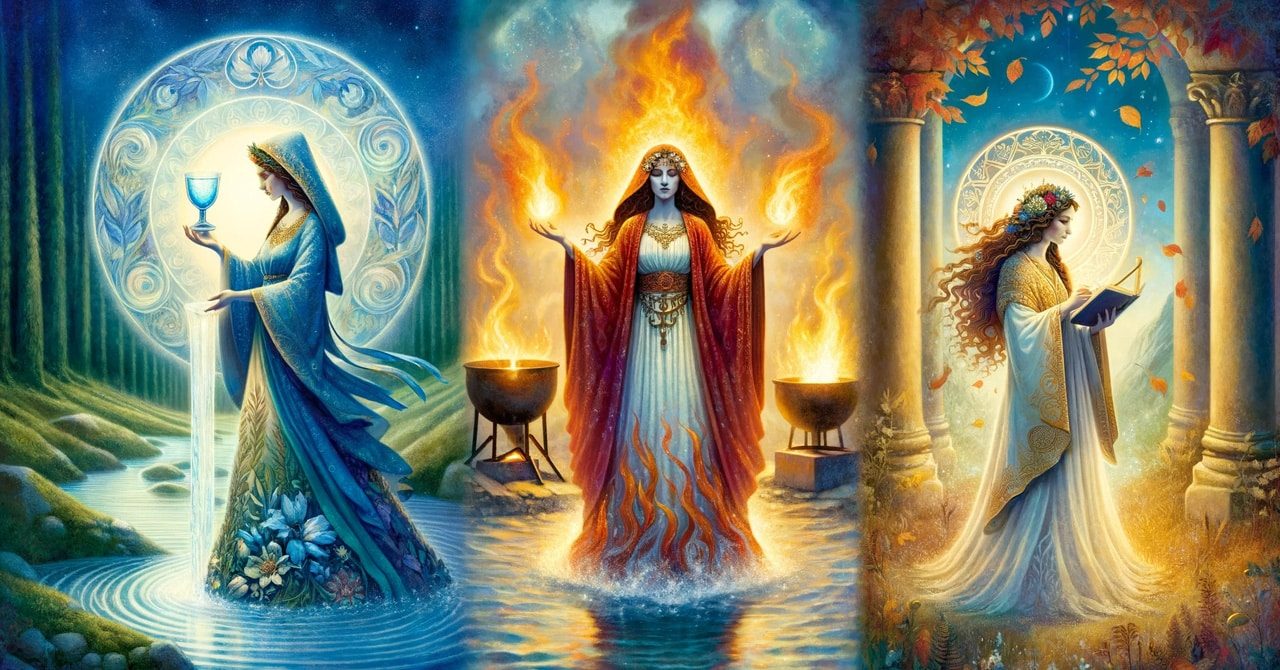
Brigid (also Brighid, Brigit or Bríd) is an Irish goddess of healing, poetry and smithcraft, a goddess of fire and holy wells who welcomes the first stirrings of spring at Imbolc. She is one of the most loved goddesses in modern paganism and witchcraft, and she is often honored as a triple goddess.
Her story is unusual: she was a goddess of the ancient Irish, and she also lives on as Saint Brigid of Kildare, one of Ireland's patron saints. Her crosses still hang in Irish kitchens, and her wells are still visited by people seeking healing.
This guide covers who Brigid is in Irish mythology, why she's called a triple goddess, her symbols (the cross, the flame and the well), her link with Imbolc and Saint Brigid, and simple ways to honor the goddess Brigid in your own practice.
How to Honor Brigid in 5 Steps
- Light a flame for her. A white or red candle on your altar or hearth is the simplest way to welcome Brigid. Never leave it unattended.
- Bring her water. Set out a bowl of fresh water, or water from a spring, to honor her wells.
- Make her a cross. Weave a Brigid's cross from rushes, straw or paper at Imbolc and hang it by your door.
- Create something. Write a poem, sing, cook, knit or mend something. Brigid is a goddess of skilled hands and inspired words.
- Celebrate Imbolc. On February 1st (August 1st in the Southern Hemisphere), clean your home, light candles and leave out a cloth for her blessing.
Who Is the Goddess Brigid?
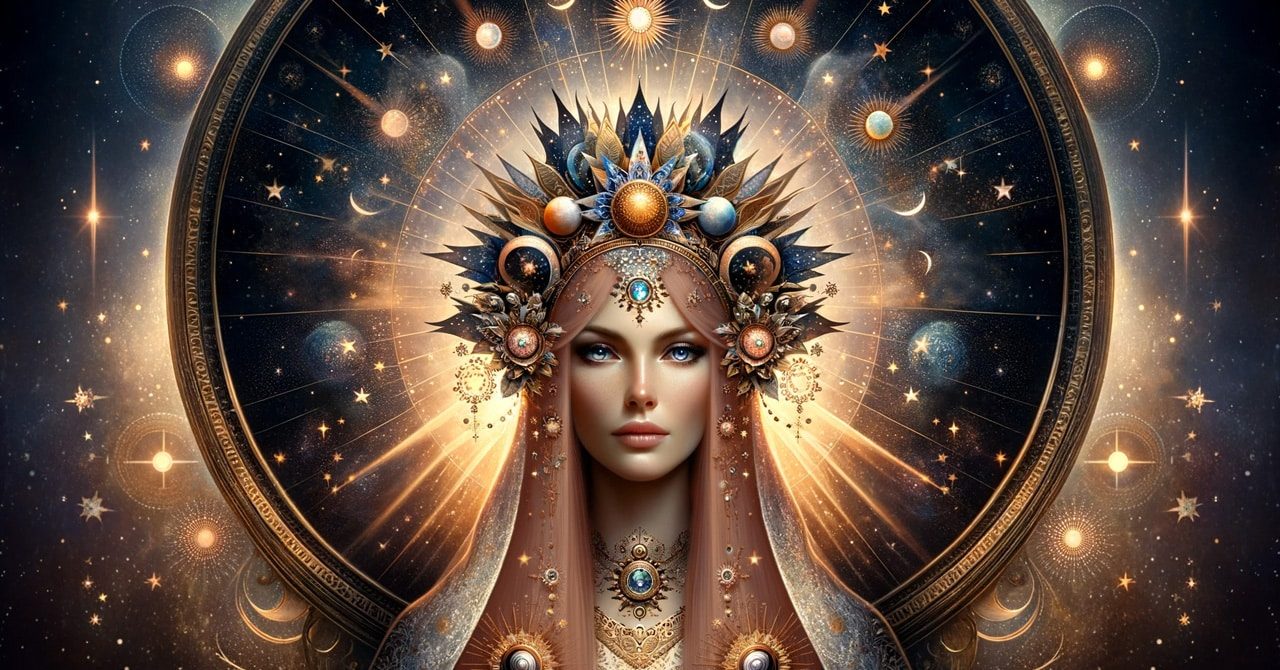
Brigid is a goddess of the Tuatha Dé Danann, the divine race of Irish myth. The oldest description of her comes from Cormac's Glossary, written in Ireland around the year 900. It calls her a poetess and the daughter of the Dagda, the "good god" and father figure of the Tuatha Dé, and says she was a goddess whom poets worshipped. It adds that she had two sisters also named Brigid: one a woman of healing and one a woman of smithcraft.
Her name likely means "the exalted one" or "the high one." You may also see a popular modern translation, "fiery arrow," but that one isn't supported by language scholars. Some scholars link her with Brigantia, a goddess honored in northern Britain in Roman times, though the connection is uncertain.
Brigid in Irish Myth
In the tale of the Second Battle of Mag Tuired, Brigid is the wife of Bres, who was for a time king of the Tuatha Dé, and the mother of their son Ruadán. When Ruadán is killed in battle, Brigid comes to mourn him, and her cries are said to be the first keening (lament for the dead) ever heard in Ireland. Medieval Irish texts also mention animals belonging to her: two oxen, a boar and a ram.
Brigid's story shows a goddess who is creative, wise and nurturing, but who also knows deep grief. That's part of why so many people turn to her for healing.
Why Is Brigid a Triple Goddess?
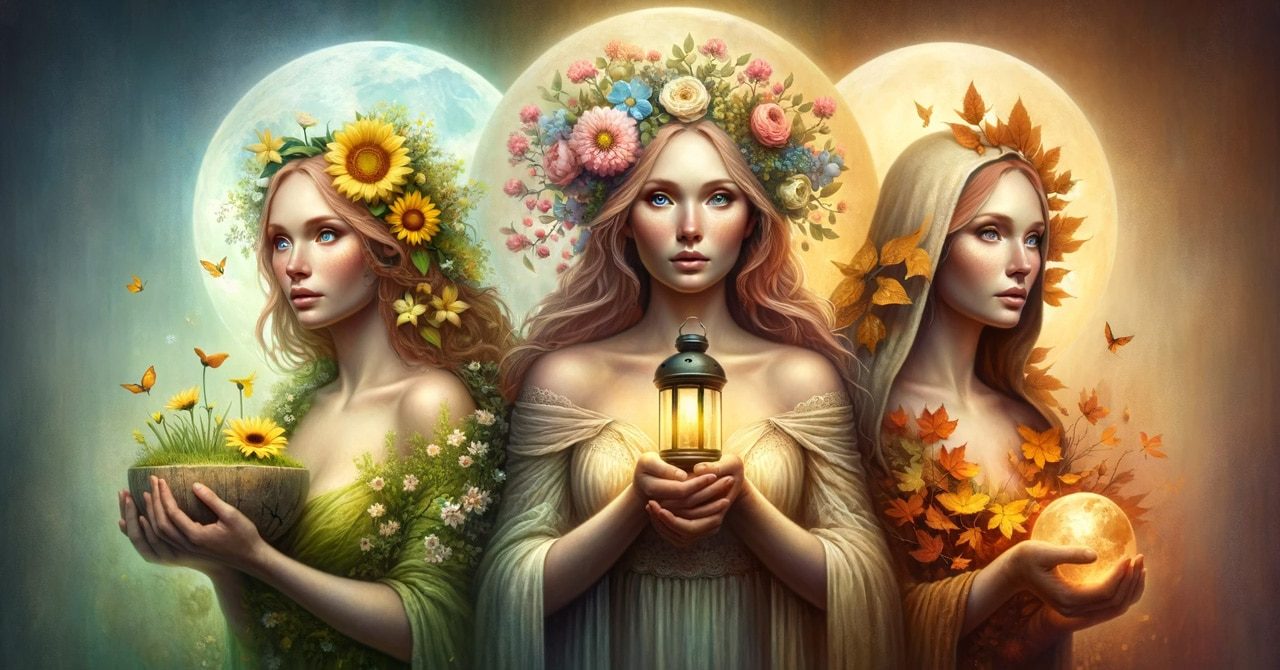
Brigid is called a triple goddess for two reasons, one ancient and one modern.
- The three Brigids: Cormac's Glossary describes three sisters named Brigid, ruling poetry, healing and smithcraft. Many people see them as three faces of one goddess.
- Maiden, Mother and Crone: in modern Wicca, many practitioners honor Brigid as the Maiden, the young goddess of spring, or as the whole Triple Goddess moving through the stages of life.

Brigid isn't traditionally a moon goddess. Her energy is more solar and fiery, linked with the hearth, the forge and the growing light of spring. Still, many witches honor her alongside the moon's phases as part of the Triple Goddess, and that's a perfectly valid personal practice. Trust what you feel.
Goddess of Healing, Poetry and Smithcraft
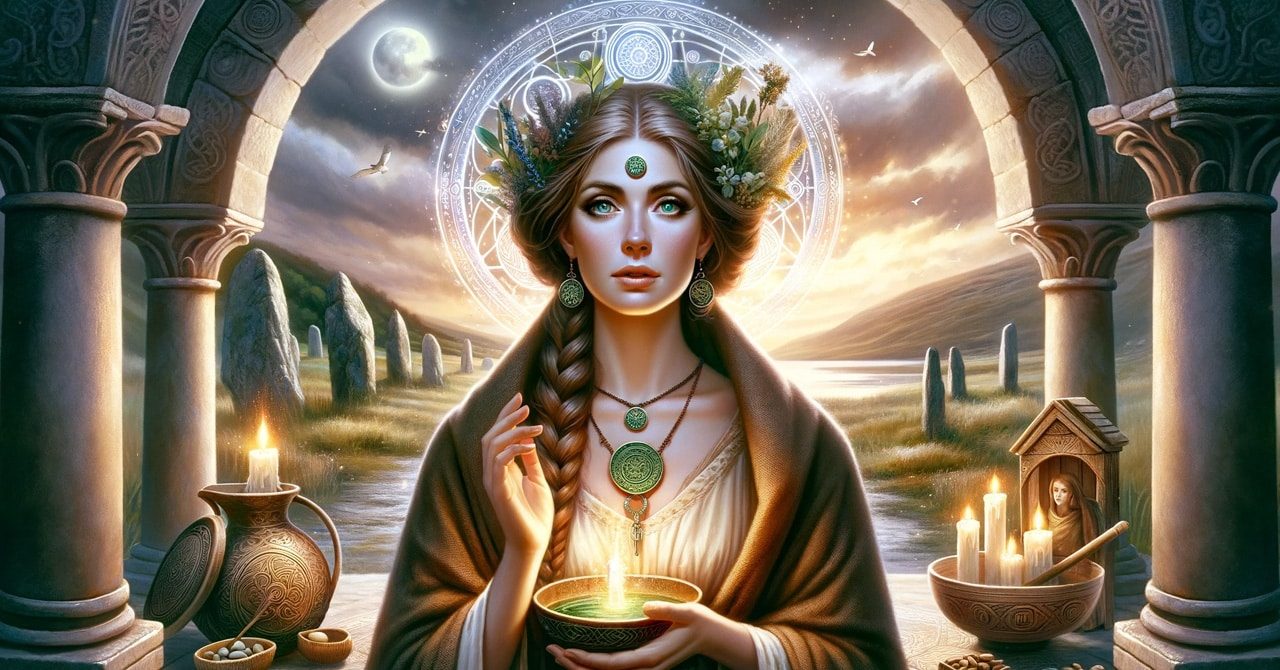
Healing
Brigid is a compassionate goddess of healing, especially linked with holy wells. People still visit St. Brigid's wells across Ireland, leaving ribbons, coins and prayers for themselves and loved ones. Many witches call on her for comfort, recovery and emotional healing. Her blessings are a support, not a substitute for medical care, so please see a doctor for health problems.
Poetry
In early Ireland, poets (the filid) were highly respected, keeping history, law and lore alive in verse. Brigid was their goddess. Today, writers, musicians and artists call on her for inspiration and the right words. If you love pagan poetry, read this award-winning poem by Laura Plummer.
Smithcraft
Brigid's third gift is smithcraft, the art of shaping metal with fire. It links her to every kind of skilled handiwork, from blacksmithing and jewelry-making to crafts, cooking and building. Brigid is the goddess of the forge as much as the hearth: she transforms raw material into something useful and beautiful.
Brigid and Imbolc
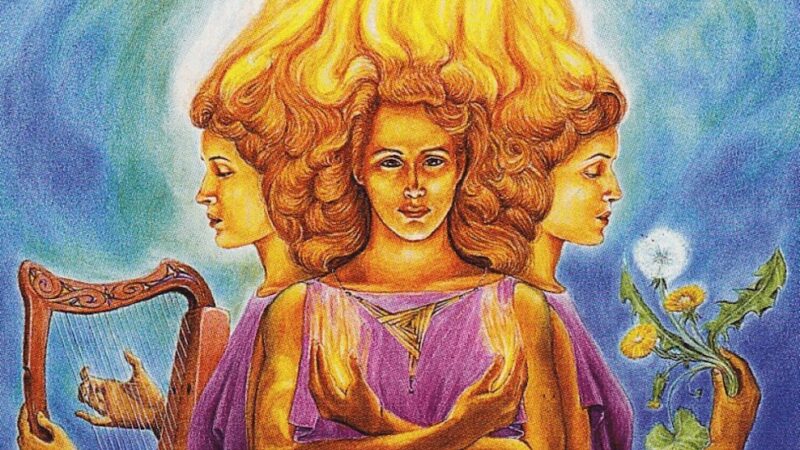
Imbolc celebrates the first signs of spring. It falls on February 1st in the Northern Hemisphere (August 1st in the Southern Hemisphere), halfway between the winter solstice and the spring equinox, and right beside the Christian feast of Candlemas on February 2nd. In Ireland, February 1st is also St. Brigid's Day, and the festival has belonged to Brigid for a very long time.
Traditional Irish customs for the eve of St. Brigid's Day include:
- Weaving Brigid's crosses from rushes to protect the home for the year ahead.
- The Brídeóg: a small doll of straw or rushes, dressed and carried from house to house by young people, who were welcomed with food and gifts.
- Brigid's bed: a little bed made for the Brídeóg by the hearth, inviting Brigid into the home.
- The brat Bríde: a cloth or ribbon left outside overnight for Brigid to bless, then kept for healing and protection through the year.
Wiccans often celebrate Imbolc with candles, a Brigid's cross on the altar, milk or butter offerings, spring cleaning, and planting seeds. You can find Imbolc colors, herbs and crystals in our Imbolc correspondences, and our Wiccan holidays course covers the whole Wheel of the Year. Here's a short prayer for the day:
"Brigid, as Imbolc's light begins to glow,
I seek your presence in the melting snow.
Bless this season of renewal and birth,
and fill my life with inspiration and mirth."
From Goddess to Saint Brigid
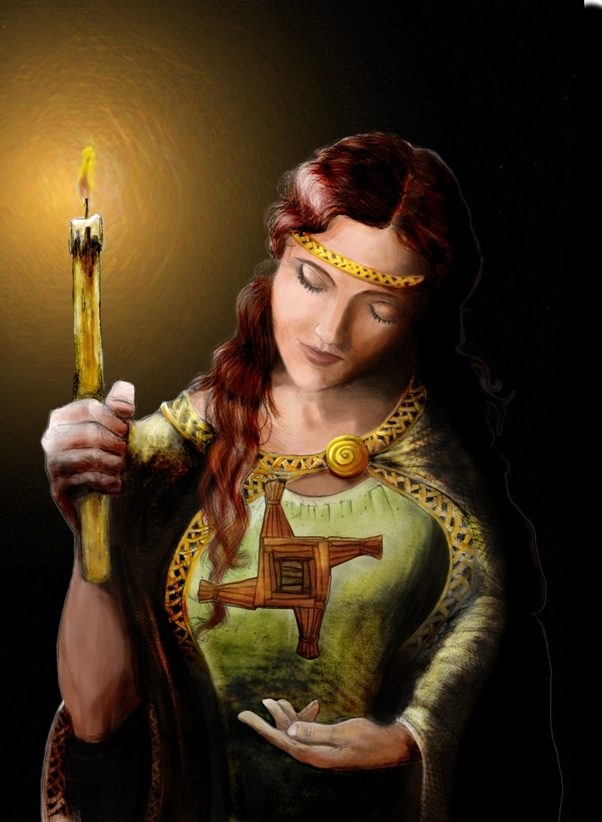
Brigid - color / Eltzero / CC BY-NC-ND 3.0
As Ireland became Christian from the 5th century onward, Brigid's story became entwined with that of Saint Brigid of Kildare, an abbess said to have lived around 450 to 525 and founded a great monastery at Kildare. The saint shares the goddess's feast day, her link with fire and wells, and her care for the poor, the sick and animals.
Historians still debate how much of Saint Brigid comes from the goddess and how much from a real abbess. In the 12th century, Gerald of Wales described a sacred fire at Kildare that nuns kept burning day and night. That flame was later put out, but the Brigidine Sisters relit it in 1993, and a perpetual flame for Brigid now burns in Kildare town. Today, Christians and pagans alike honor Brigid, each in their own way.
Brigid's Symbols
Brigid's symbols are simple, homely and full of meaning. Here's what each one represents and how you can use it.
| Symbol | What it represents | How to use it |
|---|---|---|
| Brigid's cross | Protection of the home, the turning of the year | Weave one at Imbolc and hang it by your door or hearth |
| Flame and candles | Inspiration, the hearth, the forge, purification | Light a candle for her when you pray or create |
| Holy wells and water | Healing, life, blessing | Offer fresh water, or visit a spring or well with respect |
| Brat Bríde (her mantle) | Healing and protection | Leave a cloth outside on Imbolc eve and keep it for blessings |
| Brídeóg (straw doll) | Brigid as a guest in the home | Make a small doll and give it a "bed" by the hearth |
| Milk, butter and bread | Nourishment, the return of spring | Leave as offerings on her altar at Imbolc |
| The anvil or hammer | Smithcraft, skilled work, transformation | Place a small tool on your altar or bless your craft tools |
Brigid's Cross
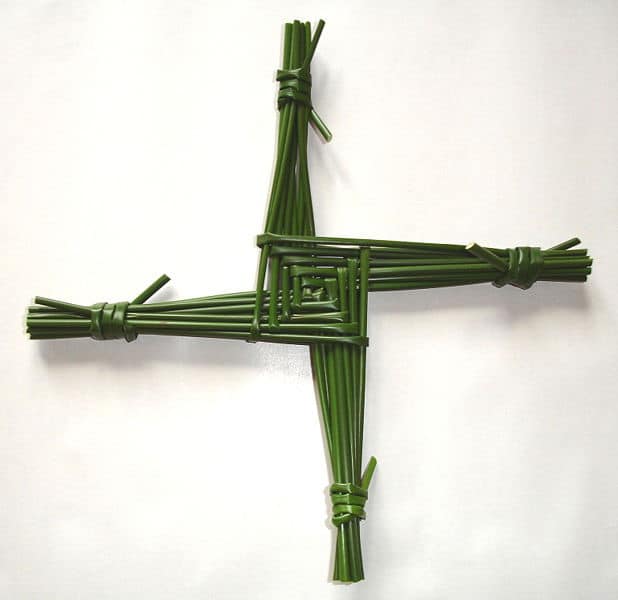
Saint Brigid's cross, made from rushes from County Down. / Culnacreann / CC-BY-3.0
Brigid's cross is traditionally woven from rushes, with four arms around a woven square center. It's made on the eve of St. Brigid's Day and hung over a door or in the kitchen to protect the house from fire and harm. Many witches use it as a protective charm, and weaving it is a lovely meditation on the turn from winter to spring. For more hands-on projects, see our witch crafts guide.
Brigid Dolls
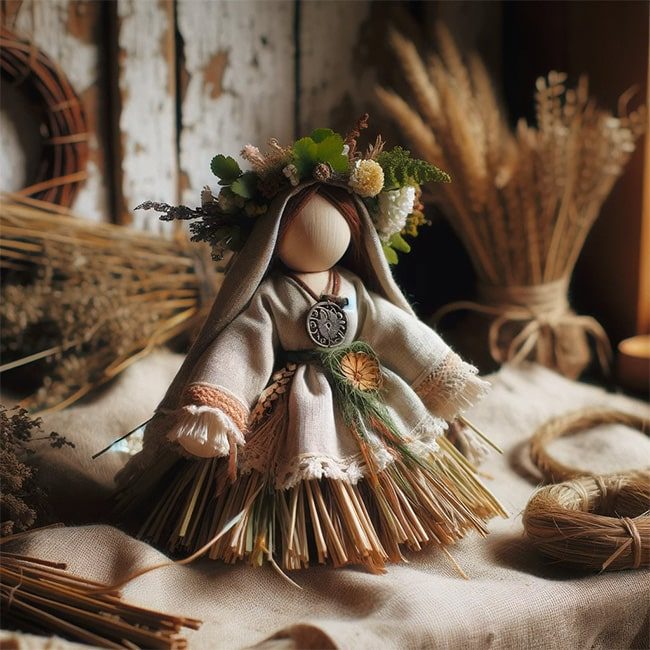
The Brídeóg ("little Brigid") is a doll made of straw or rushes, often dressed in white cloth. In Irish tradition, young people carried her from house to house on St. Brigid's Eve, singing and collecting treats, and families made a bed for her by the fire. The custom invited Brigid's blessing and good fortune into each home.
Flames
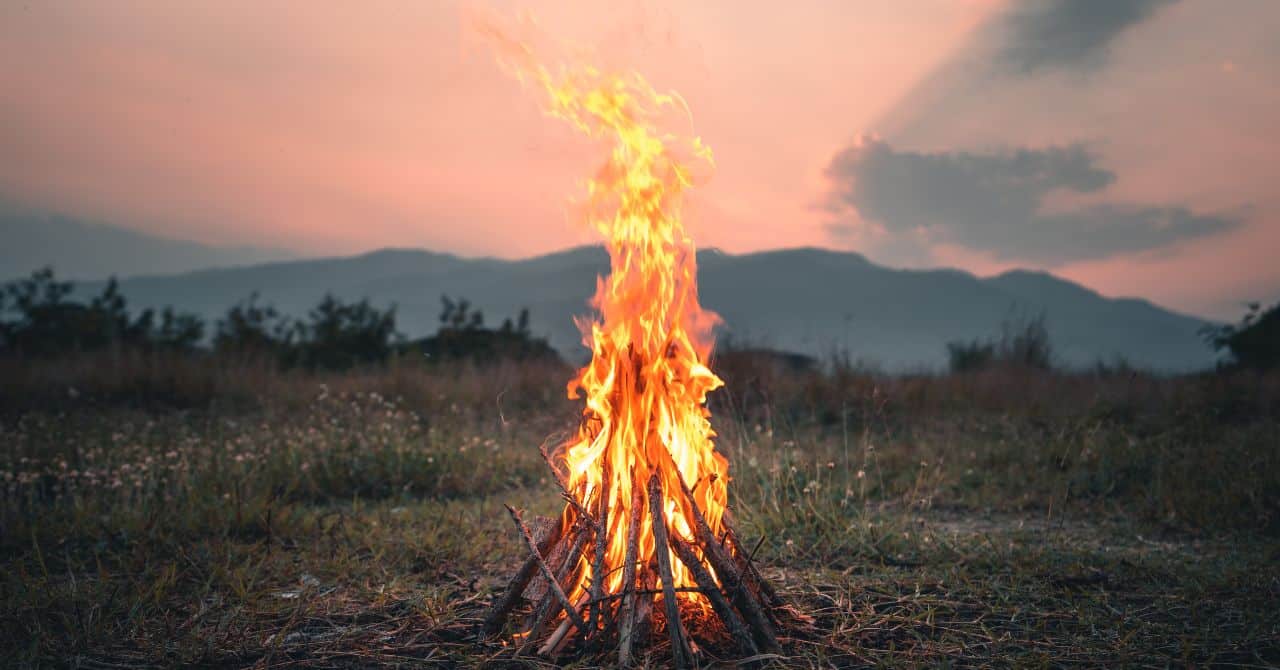
Fire is at the heart of Brigid's story: the hearth that warms and feeds, the forge that shapes metal, and the flame of inspiration. A candle is the easiest way to bring her presence into your practice. Our guide to candle color meanings can help you choose a color; white, red and gold are popular for Brigid.
Wells
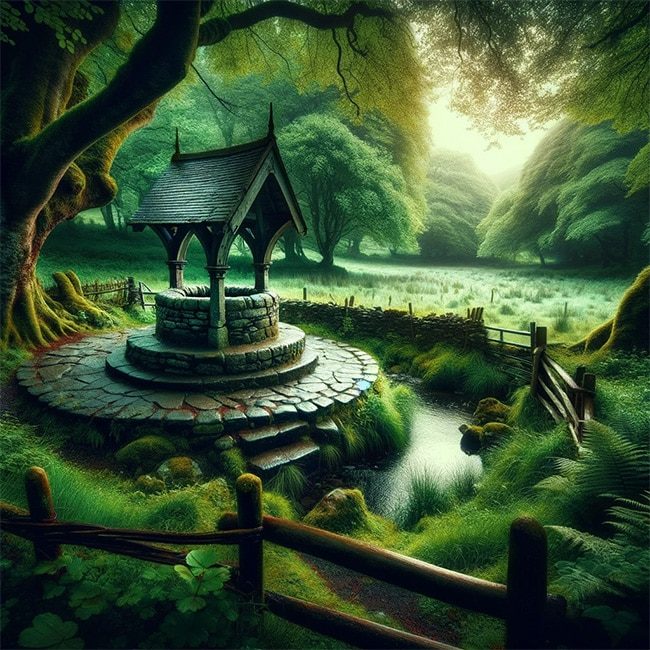
There are many St. Brigid's wells in Ireland, including one near Kildare. They are places of pilgrimage, prayer and healing, and many are still visited, especially around February 1st. If you visit one, treat it with respect: it's a sacred place for local people. At home, a bowl of fresh water on your altar honors this side of Brigid.
How to Work With Brigid Today
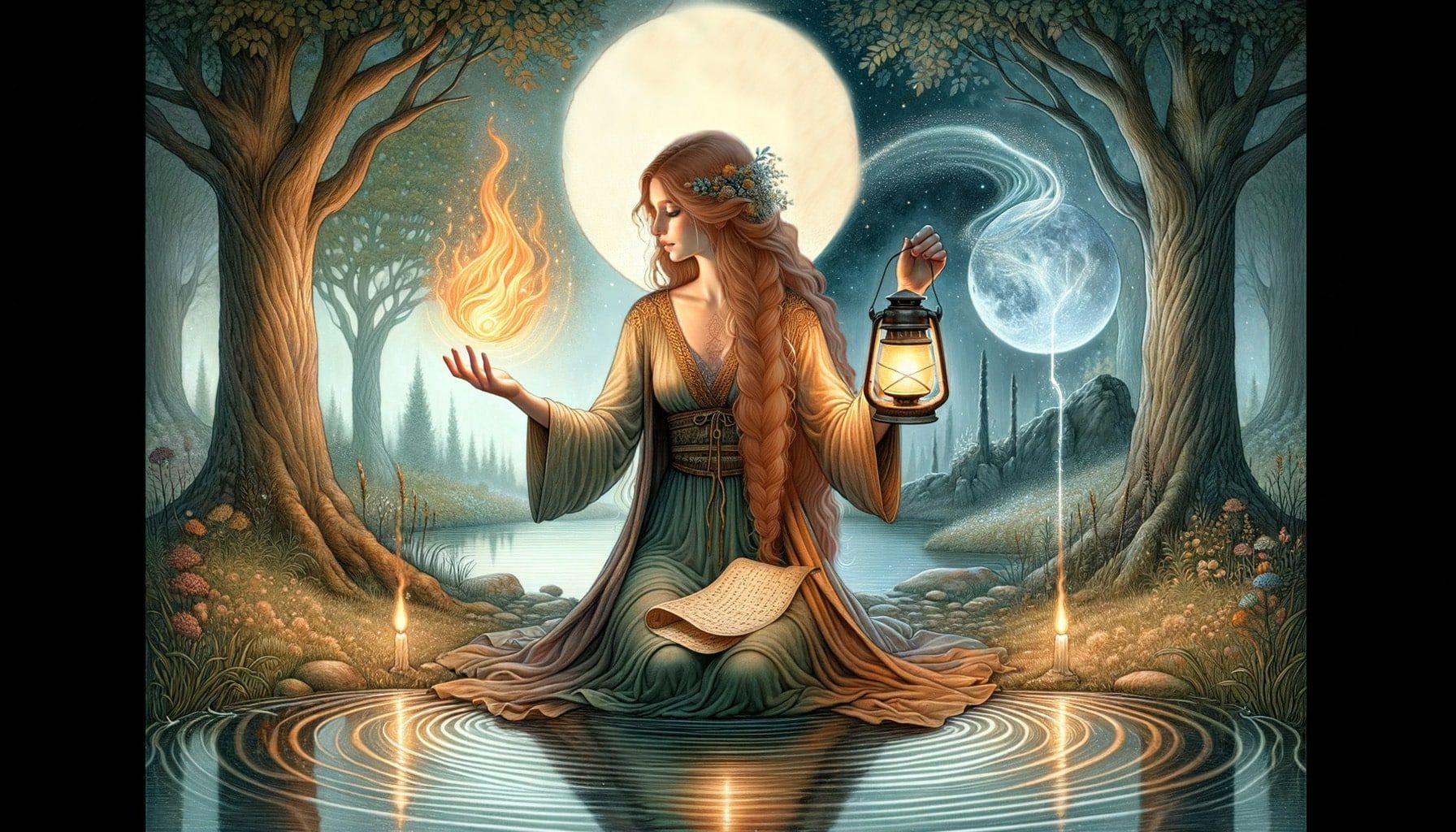
You don't need an elaborate ritual to connect with Brigid. Here are some simple ways many witches honor her:
Candlelight Devotion
Light a candle on your altar or kitchen table, sit quietly, and speak to Brigid from the heart. Some people keep a candle for her each Imbolc, or light one every evening as a small daily devotion:
"Brigid, in this sacred space I stand,
a candle lit, a prayer at hand.
Bless my day with your radiant light,
and guide my steps to make them right."
Creative Offerings
Because Brigid loves poetry and craft, one of the best offerings is something you've made: a poem, a song, a loaf of bread, a drawing or a mended garment. Before you start a project, you might say:
"Brigid, patroness of arts and crafts,
fill my hands with your creative spark.
Guide my words and every creation,
and bless me with your inspiration."
A Simple Healing Ritual
Fill a bowl with fresh water and light a candle beside it. Add a pinch of a gentle herb like chamomile or lavender if you like. Hold your hands over the water and say:
"Brigid, lady of healing and compassion,
bless me with your soothing touch.
Mend what is hurting in body and soul,
and bring me wellness, making me whole."
Dip your fingers in the water and touch your forehead and heart, then pour the water onto the earth or a houseplant. Remember that healing magick works alongside medical care, never instead of it. A warm spiritual bath is another lovely way to work with Brigid's healing waters.
If you feel Brigid calling you and want to explore that relationship, our Discover Your Deity course can guide you. You may also enjoy reading about another beloved triple goddess, Hecate.
Final Thoughts
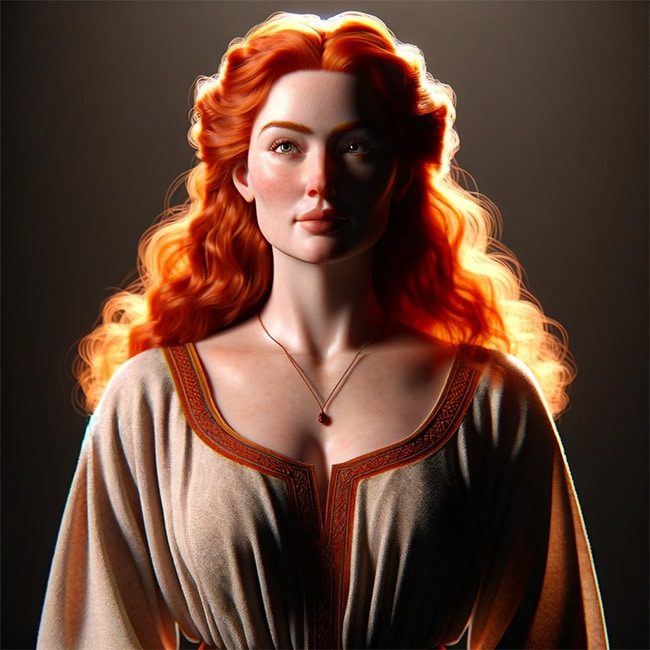
Brigid is a goddess of light in the darkest part of the year: the candle in the window, the spark of a new idea, the spring water that heals. Whether you honor her as a goddess, a saint or both, she welcomes anyone who comes with an open heart and willing hands.
How do you like to honor Brigid at Imbolc?
Sources
Cunningham, Scott. Wicca: A Guide for the Solitary Practitioner. Llewellyn Publications, 1988.
Hutton, Ronald. The Stations of the Sun: A History of the Ritual Year in Britain. Oxford University Press, 1996.
Check out our other articles:
The Wiccan Holiday Imbolc
Who Are the Moon Goddess and the Horned God?
Hecate: Goddess of Witchcraft
The Goddesses and Gods Love You
See All Articles
Love this article? Share the magick with your friends and loved ones!
Brigid FAQs
What is Brigid the goddess of?
Brigid is the Irish goddess of healing, poetry and smithcraft. She is also linked with fire and the hearth, holy wells, fertility, livestock and the coming of spring at Imbolc.
When is Brigid's feast day?
Brigid is honored on February 1st, which is both St. Brigid's Day in Ireland and the pagan festival of Imbolc. In the Southern Hemisphere, many pagans celebrate Imbolc on August 1st instead. Since 2023, Ireland has also marked St. Brigid's Day with a public holiday in early February.
How do you pronounce Brigid?
Common pronunciations are "BRIDGE-id" and "BREE-id." In modern Irish she is often called Bríd, pronounced roughly "breed." Any respectful pronunciation is fine.
How do I know if Brigid is calling me?
People often mention a strong pull toward fire, wells, poetry or craft, dreams of flames or water, or feeling drawn to her around Imbolc. Signs are personal, so keep a journal and give the connection time to grow.
What offerings does Brigid like?
Popular offerings for Brigid include candles, fresh water, milk, butter, bread, oatcakes and honey, along with things you've made yourself, like a poem, song or craft. A Brigid's cross is also a traditional gift at Imbolc.
Is Saint Brigid the same as the goddess Brigid?
They share a name, a feast day on February 1st and links to fire, wells and healing, but historians still debate how they're connected. Saint Brigid of Kildare was honored as an abbess, while the goddess comes from older Irish myth. Many people honor both.