Have you been seeing the same crow every morning, dreaming about owls or crossing paths with a fox more often than seems normal? Many witches would say an animal is trying to get your attention.
People often search for their "spirit animal" when this happens. In this guide we'll talk about what that phrase means and why many witches prefer to say animal guide or animal ally. Then we'll cover the spiritual meanings of 19 animals in witchcraft and folklore, including the crow, raven, owl, cat and fox, how to find and work with an animal guide, and how to honor the animals that teach us.
As always, take what resonates and leave the rest. Your own experience with an animal matters more than any list.
Quick Answer: How to Find Your Animal Guide
- Notice repeats. Which animal keeps showing up in real life, in pictures, in stories or in conversation?
- Watch your dreams. Keep a notebook by the bed and write down any animal that appears, along with how you felt.
- Meditate. Picture a quiet path in nature and ask to meet an animal that wants to help you (a short meditation is below).
- Research the animal. Learn its real behavior and habitat as well as its myths and folklore.
- Journal and wait. Write down what this animal might be teaching you right now. A true guide tends to keep coming back.
Spirit Animals, Animal Guides and Animal Allies: A Note on Words
The phrase "spirit animal" is everywhere, from memes to online quizzes. But it's closely tied to the sacred practices of specific Indigenous peoples of the Americas, where relationships with animal spirits are part of living religions. In those communities, such relationships are usually held within family, clan and ceremony, often guided by elders. They aren't something you pick from a list. Even the word "totem" comes from the Ojibwe word for a clan. Many Indigenous people find the casual use of "spirit animal" hurtful, and we think that deserves respect.
That's why many witches and pagans today use animal guide, animal ally or animal teacher instead. These words describe the same experience in our own practice: an animal whose energy, behavior and symbolism help us learn something about ourselves. We use those terms in the rest of this article, and when we talk about the meanings of spiritual animals, we draw on European folklore and well-known myths, which we can share openly. If you're drawn to Indigenous teachings, the respectful path is to learn from Native teachers and writers directly.
Animal Guides vs Familiars: What Is the Difference?
These two ideas often get mixed up, so here's the simple version:
- An animal guide is a teacher. It's usually a wild animal, or the spirit of one, that appears in your life, dreams or meditations to show you a quality you need, such as courage, patience or adaptability. It may stay for years or only for a season.
- A familiar is a working partner in magick. In folklore, a familiar was a spirit in animal form that helped a witch with her craft. Today many witches use the word for a spirit companion, or for a living pet who joins in their rituals and seems tuned in to their energy.
- A pet is a beloved animal you care for. A pet can be a familiar, but it doesn't have to be, and it's never obliged to take part in your practice.
Our guide Get to Know Your Familiar explains familiars in more depth, and if a furry companion has joined your practice, you might enjoy our list of witchy names for pets. We also explore familiars, guides and the spirit world in our Spirits and Familiars course.
Spiritual Animals and Their Meanings in Witchcraft
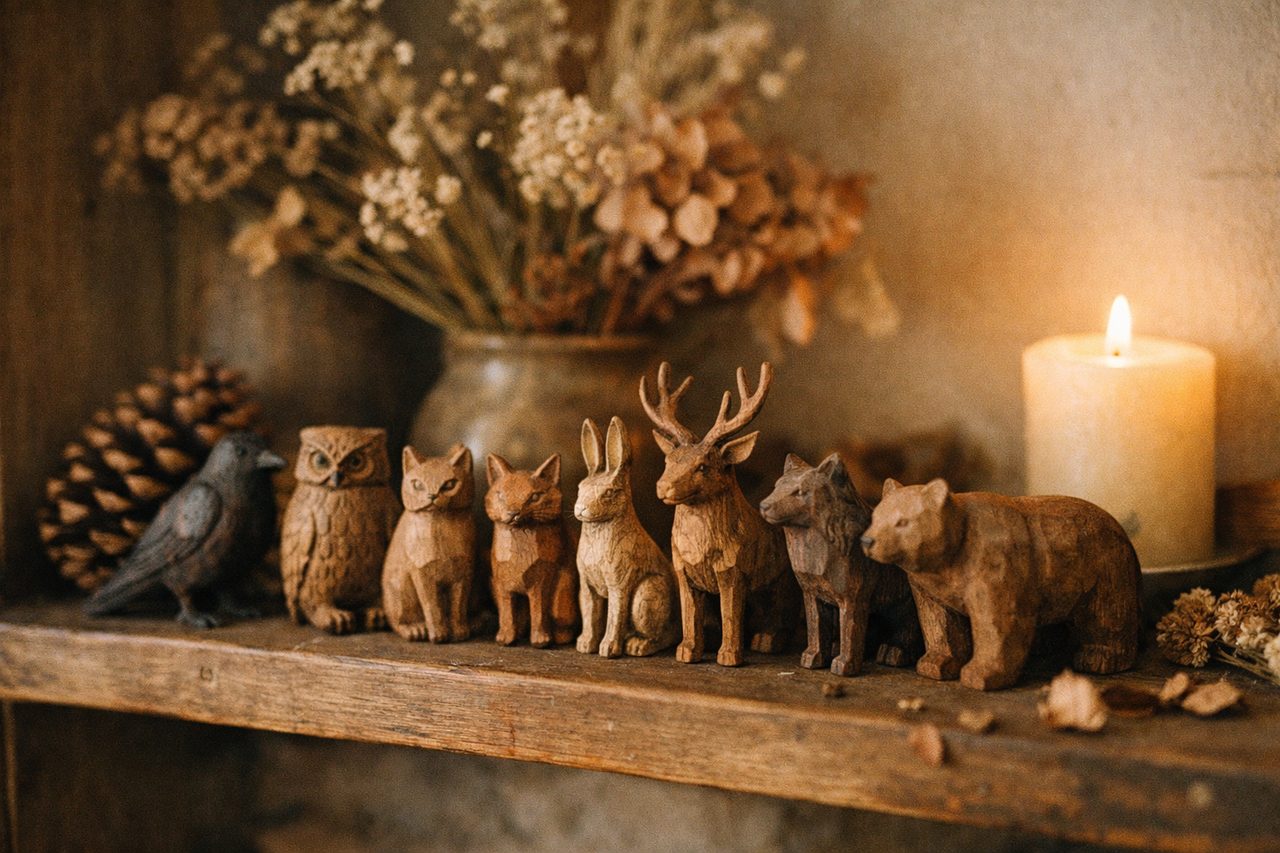
Here are 19 animals that often appear as guides, with the meanings witches commonly give them and where those ideas come from in myth and folklore. Meanings can differ between cultures, so let your own feelings about the animal guide you too.
| Animal | Common spiritual meanings | In myth and folklore |
|---|---|---|
| Crow | Messages, intelligence, change, magick | Linked to the Morrígan in Irish myth |
| Raven | Wisdom, memory, prophecy, the unseen | Odin's ravens Huginn and Muninn, "thought" and "memory" |
| Owl | Wisdom, intuition, seeing in the dark | Sacred to Athena in ancient Greece |
| Cat | Independence, intuition, protection, mystery | Bastet in Egypt; Freya rides in a cat-drawn chariot |
| Fox | Cleverness, adaptability, quiet confidence | Reynard the Fox in Europe; kitsune in Japan |
| Wolf | Loyalty, instinct, family, freedom | Romulus and Remus; Odin's wolves Geri and Freki |
| Dog | Loyalty, protection, guidance at crossroads | Sacred to Hecate; Anubis has a jackal head |
| Hare | The moon, fertility, intuition, quick change | A hare in the moon in many cultures; witches turning into hares in Scottish trial records |
| Stag | Nature, leadership, renewal, the wild God | Antlered Cernunnos; the Horned God of Wicca |
| Bear | Strength, rest, healing through retreat | Callisto becomes the Great Bear constellation |
| Snake | Transformation, healing, rebirth | The rod of Asclepius; shedding its skin |
| Toad | Hidden treasure, cleansing, transformation | The folk tale of a jewel in the toad's head; a familiar in old English trials |
| Spider | Creativity, patience, weaving your life | Anansi the storyteller; Arachne the weaver |
| Butterfly | Transformation, the soul, joy | Greek psyche means both soul and butterfly |
| Bee | Community, hard work, sweetness, messages | The British custom of telling the bees |
| Horse | Freedom, travel, power, the journey | Epona, Gaulish horse goddess; Rhiannon of Wales |
| Hawk | Focus, clear vision, the bigger picture | Horus, the falcon-headed god of Egypt |
| Swan | Grace, love, loyalty, transformation | The Children of Lir, turned into swans in Irish legend |
| Robin | Renewal, hope, loved ones nearby | A popular saying links robins to departed loved ones |
A note on moon animals: the hare, owl and cat are all creatures of the night and are often linked to the Goddess in her lunar form. If one of them shows up for you, try working with it during the moon phases. The stag and the bull, on the other hand, are tied to the Horned God and the wild, green world.
Crow, Raven, Owl, Cat and Fox: Spiritual Meanings Up Close
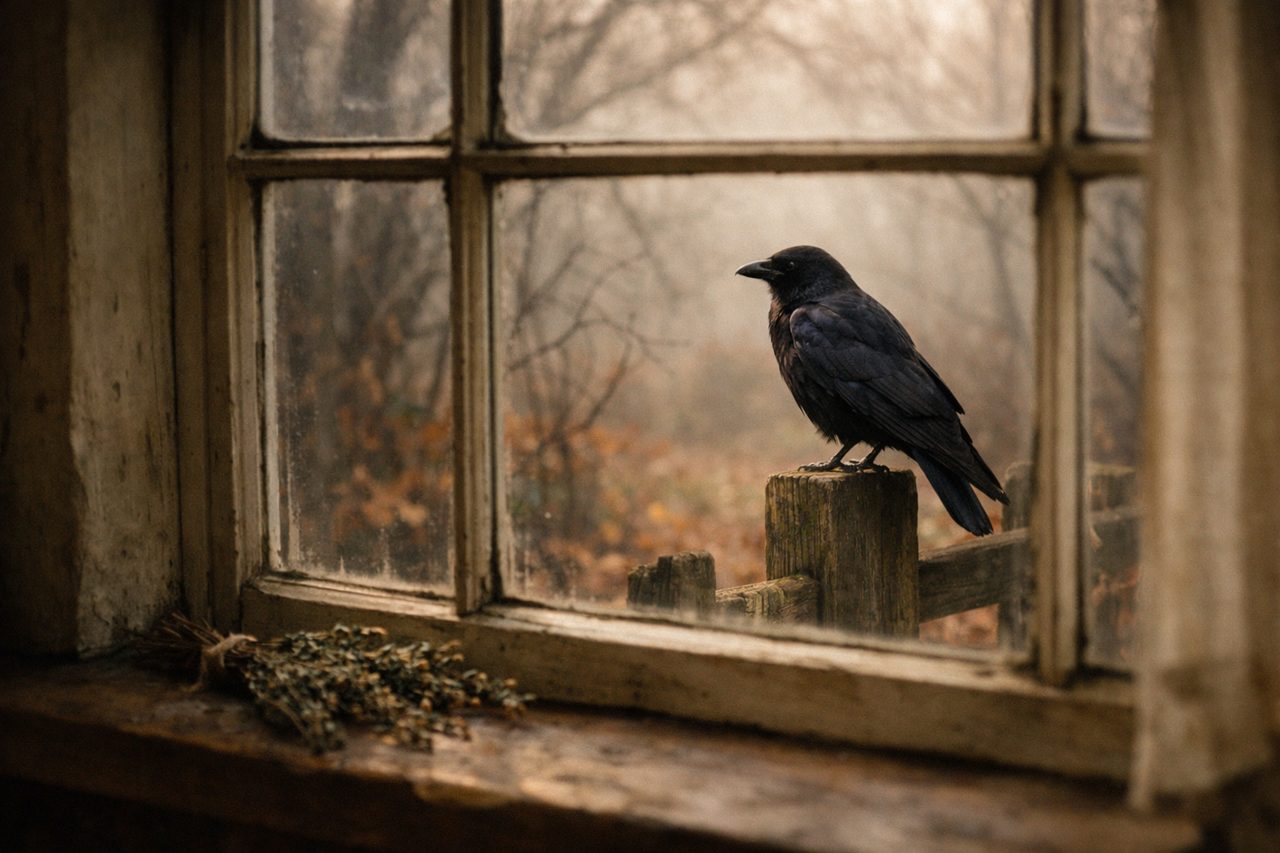
These five are the animals people ask about most, so let's look at each one more closely.
Crow Spiritual Meaning
The crow is a messenger. Crows are clever, social birds, and studies have shown they can remember individual human faces. In witchcraft, a crow often points to magick, change and paying attention. In Irish myth, the Morrígan, a goddess of fate and battle, is linked with crows and ravens. If crows keep turning up, ask yourself what message you've been ignoring. Seeing a crow is not a bad omen. It's more like a nudge to wake up and look around.
Raven Spiritual Meaning
The raven is the crow's larger, deeper-voiced cousin, and it carries even older stories. In Norse myth, Odin's two ravens, Huginn (thought) and Muninn (memory), fly over the world each day and bring him news. That's why ravens stand for wisdom, memory and prophecy. A raven guide may show up when you're studying divination, doing shadow work or trying to understand something hidden.
Owl Spiritual Meaning
Owls see in the dark, so they've long stood for wisdom and intuition. In ancient Greece, the owl was the bird of Athena, goddess of wisdom, and it appeared on Athenian coins. In some places owls were also seen as omens, but most witches today see an owl as a sign of change and of trusting what you sense, even when you can't see the whole path.
Cat Spiritual Meaning
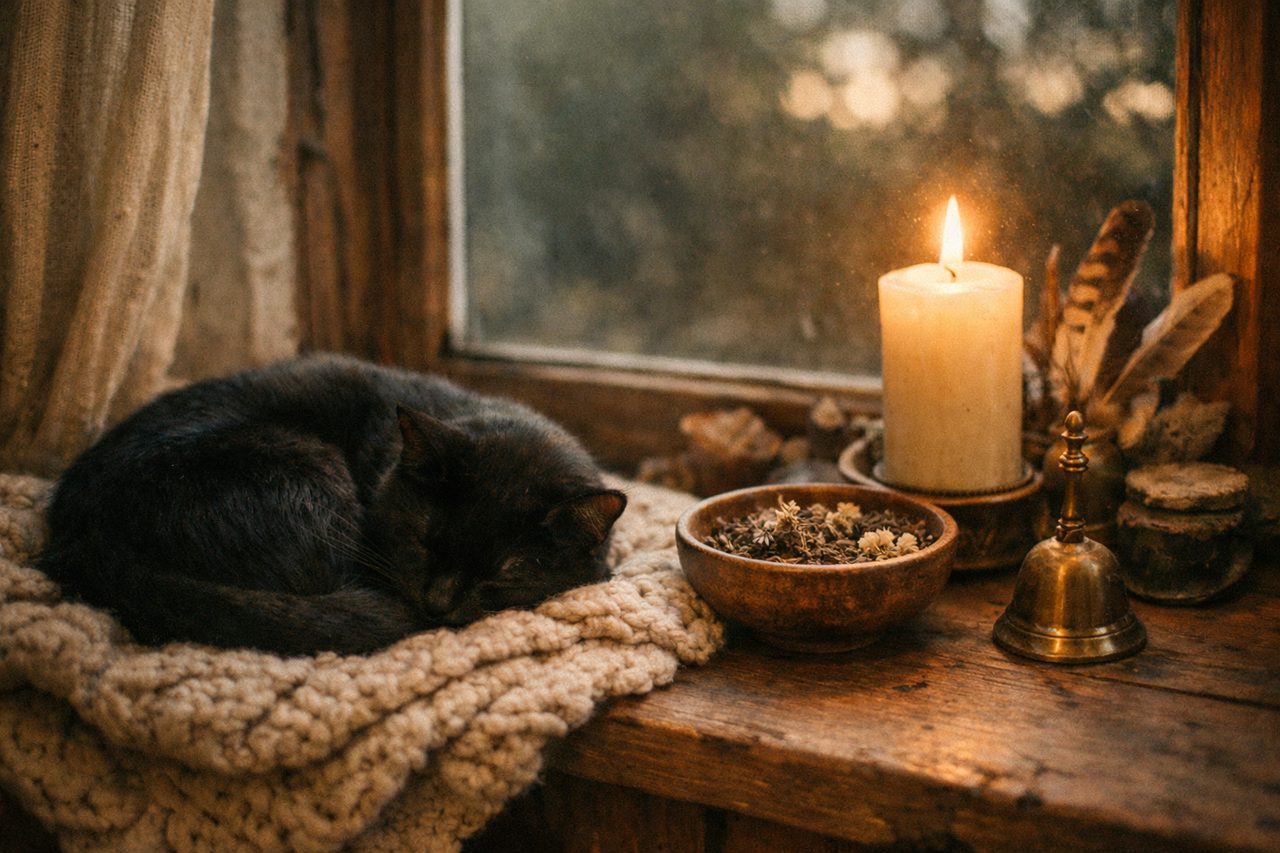
The cat is the witch's most famous companion. Ancient Egyptians honored the goddess Bastet, often shown as a cat, and in Norse myth Freya rides in a chariot pulled by two cats. As a guide, a cat teaches independence, healthy boundaries and the art of resting without guilt. Black cats are considered lucky in parts of Britain and unlucky in other places, which tells you more about people than about cats.
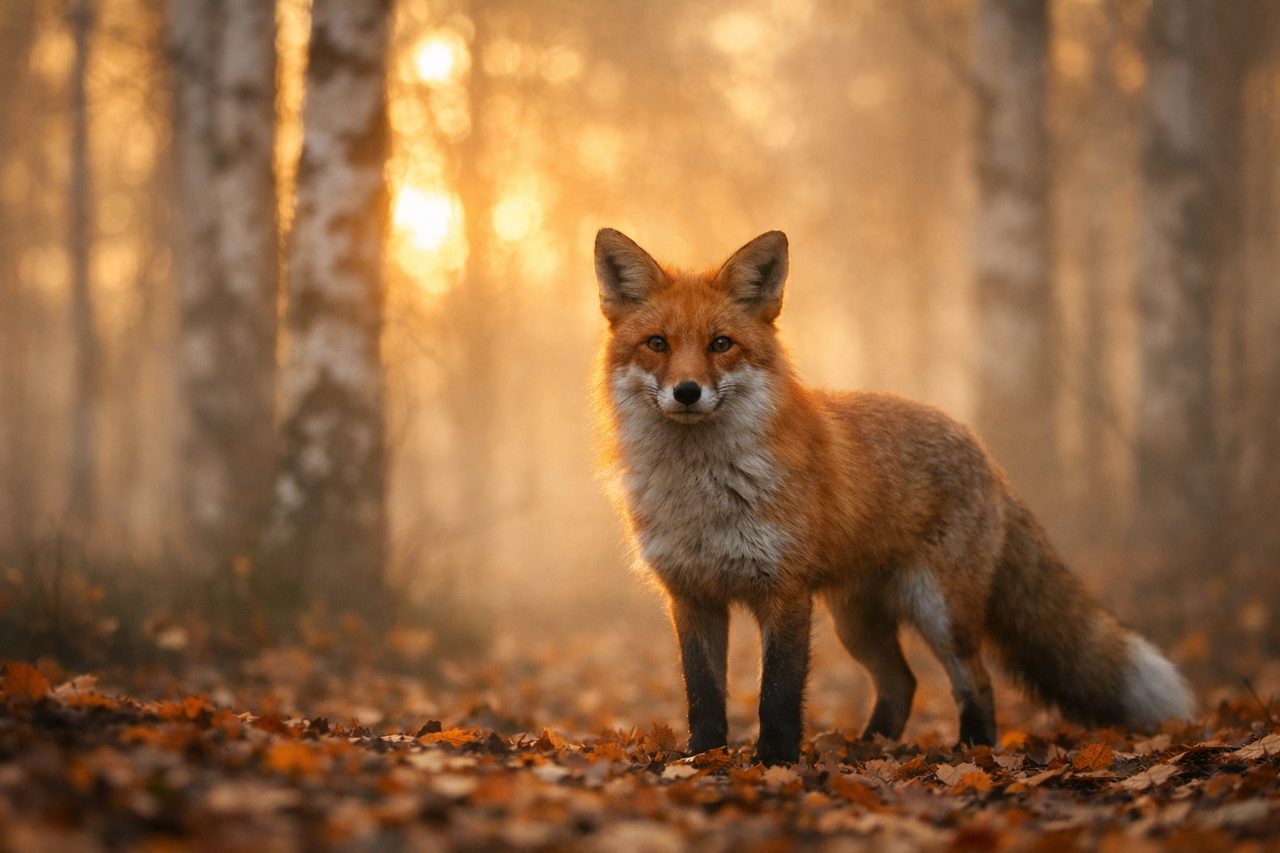
Fox Spiritual Meaning
The fox is clever, quick and adaptable. In medieval Europe, Reynard the Fox was a famous trickster, and in Japanese folklore kitsune are fox spirits, some of them messengers of the deity Inari. A fox guide often appears when you need to think on your feet, find a gentler way around a problem or trust your own quiet confidence.
How to Find and Work With an Animal Guide

You don't choose an animal guide the way you'd choose a crystal. It's more like making a new friend: you show up, pay attention and let the relationship grow. Here are the methods witches use most.
A Simple Animal Guide Meditation
You will need: a quiet space, a candle in a safe holder and a notebook.
- Light the candle, sit comfortably and take several slow breaths.
- Picture yourself walking along a path into a forest, meadow or shoreline, whichever feels like home to you.
- Find a place to sit and say silently: Animal friend, if you have something to teach me, I'm ready to listen.
- Wait without forcing anything. Notice any animal that appears, even briefly, and how it moves and how you feel.
- Thank whatever appeared, walk back along the path and open your eyes when you're ready.
- Write everything down straight away, before the details fade.
Don't worry if nothing appears the first time. Try again over a few weeks. Meditation like this is a skill, and our Meditation and Elements course can help you build it.
Dreams, Signs and Journaling
- Dreams: animals in dreams can carry strong messages. Note the animal, what it did and how you felt.
- Signs: look for patterns rather than single sightings. A crow in a city is normal. A crow that follows you for a week while you're making a big decision might be worth thinking about.
- Journaling: ask yourself what this animal is good at that you need right now, and what it might be asking you to change.
- Divination: animal oracle cards, tarot or a pendulum can help you ask questions. Our guide to popular divination methods is a good place to start.
Stay grounded, too. Not every animal is a sign, and that's fine. The point is to notice the world with fresh eyes, not to read a message into every pigeon.
How to Honor Your Animal Guide
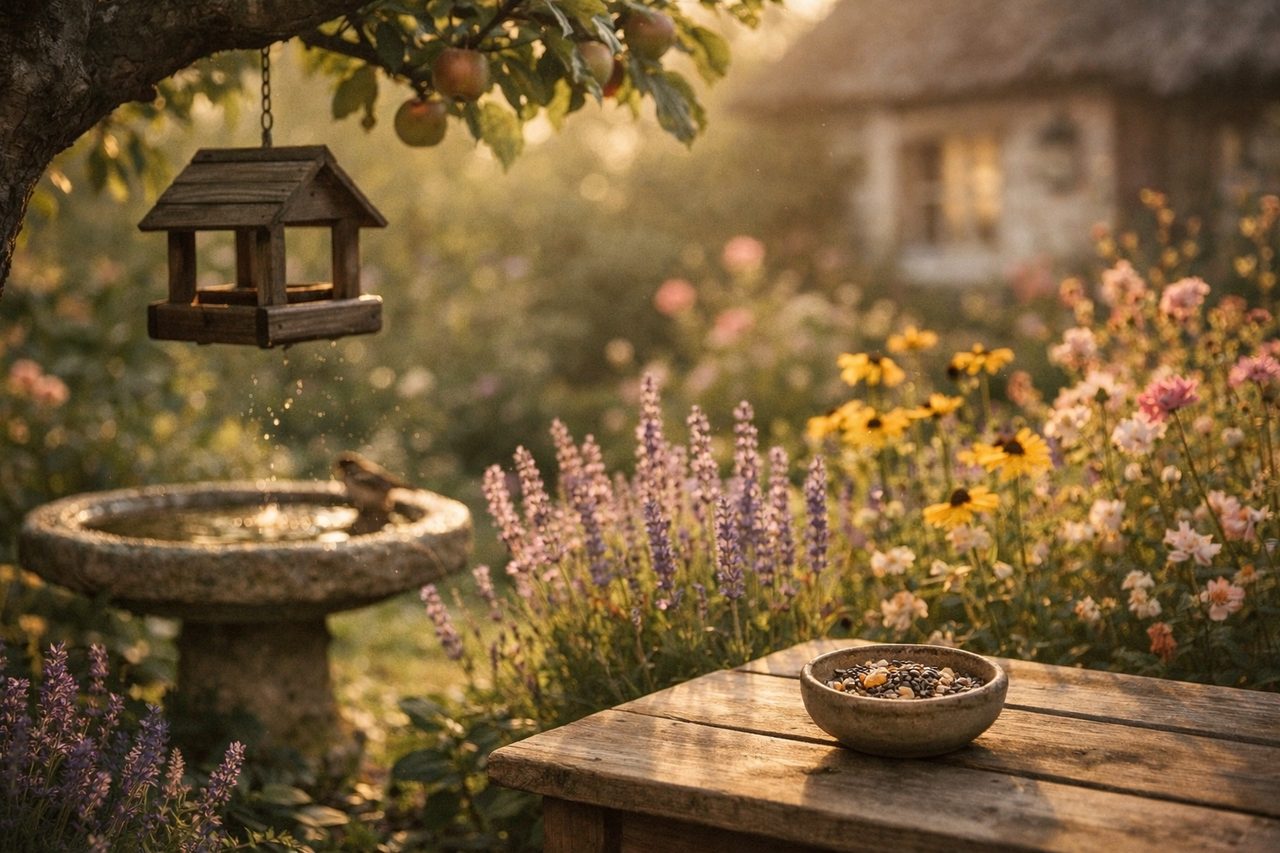
The best way to thank an animal guide is to help its living relatives. A few ideas:
- Support wildlife: donate to or volunteer with a wildlife rescue, bird charity or conservation group.
- Make your space friendly: plant flowers for bees and butterflies, put out clean water and keep a bird feeder stocked (and cleaned) through winter.
- Learn about the animal: read about its real habits and the threats it faces. Knowledge is a form of respect.
- Add it to your altar: a photo, drawing, carving or a found item like a pinecone from its home can represent your guide.
- Never harm or capture animals, and never buy animal parts for magick. Let wild animals stay wild, and don't try to tame or handle them.
- Check the law on feathers and bones. In the United States, for example, it's illegal to keep feathers of most native wild birds, including crows, ravens, owls, hawks and robins, even if you find them on the ground. Many other countries protect wild birds too.
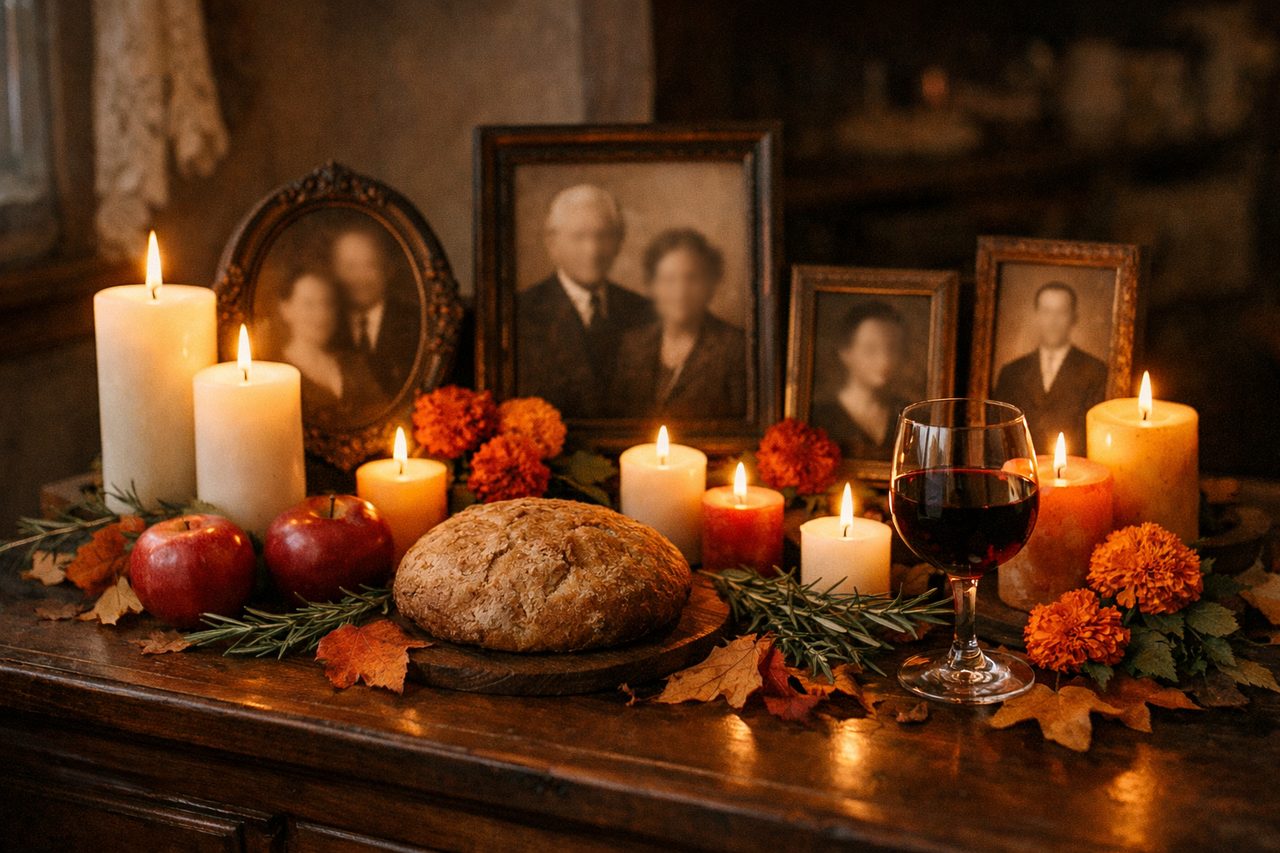
You can also honor animals that have passed, including beloved pets, in the same way many of us remember family at Samhain. Our article on honoring your ancestors has gentle ideas that work for animal companions too.
Final Thoughts
Animal guides are a beautiful part of witchcraft because they pull us outside our own heads and back into the living world. Pay attention to the creatures around you, learn their stories, use respectful words, and give something back to the wild ones who teach you. Your guide may be a raven or a robin, a fox or a house cat asleep on the windowsill. All of them have something to say.
Which animal keeps showing up in your life? Tell us about it in the comments!
Sources
Andrews, Ted. Animal-Speak: The Spiritual & Magical Powers of Creatures Great & Small. Llewellyn Publications, 1993.
Green, Miranda. Animals in Celtic Life and Myth. Routledge, 1992.
Larrington, Carolyne, trans. The Poetic Edda. Oxford University Press, 2014.
Cunningham, Scott. Wicca: A Guide for the Solitary Practitioner. Llewellyn Publications, 1988.
Check out our other articles:
Get to Know Your Familiar
Who are the Moon Goddess and the Horned God?
Faeries: Friendly or Frightening?
Hecate: A Comprehensive History of the Divine Triple Goddess
See All Articles
Love this article? Share the magick with your friends and loved ones!
Animal Guide FAQs
What does it mean when a crow visits you?
In witchcraft, a crow is usually seen as a messenger asking you to pay attention. It can point to change, magick and something you've been overlooking. A single crow is just a crow, but one that keeps appearing during an important time may be worth thinking about.
What is the spiritual meaning of an owl?
Owls stand for wisdom, intuition and seeing what others miss, partly because they see so well in the dark. In ancient Greece the owl was the bird of Athena, goddess of wisdom. Many witches see an owl as a sign to trust their inner knowing.
What does a raven symbolize spiritually?
Ravens symbolize wisdom, memory, prophecy and the hidden side of life. In Norse myth, Odin's ravens Huginn and Muninn, meaning thought and memory, fly across the world and bring him news each day.
Is it okay to say spirit animal?
The phrase is tied to sacred practices of specific Indigenous peoples, and many Native people find its casual use hurtful. Many witches prefer animal guide, animal ally or animal teacher, which describe the same experience in our own practice without borrowing from closed traditions.
What is the difference between a spirit animal and a familiar?
An animal guide is a teacher that shows up to help you learn a quality you need. A familiar is a working partner in magick, traditionally a spirit in animal form and today often a spirit companion or a pet who joins your rituals.
How do I find my animal guide?
Notice which animal keeps appearing in your life and dreams, try a simple meditation where you ask an animal to come forward, and journal about what it might be teaching you. A true guide tends to return again and again.
What does it mean to see a fox spiritually?
A fox usually points to cleverness, adaptability and quiet confidence. It can be a nudge to think on your feet or find a gentler way around a problem. In Japanese folklore kitsune are fox spirits, and in Europe Reynard the Fox was a famous trickster.
Can a cat be a spirit guide?
Yes. The cat is one of the most common animal guides and the most famous familiar. As a guide, a cat teaches independence, intuition, boundaries and the value of rest.