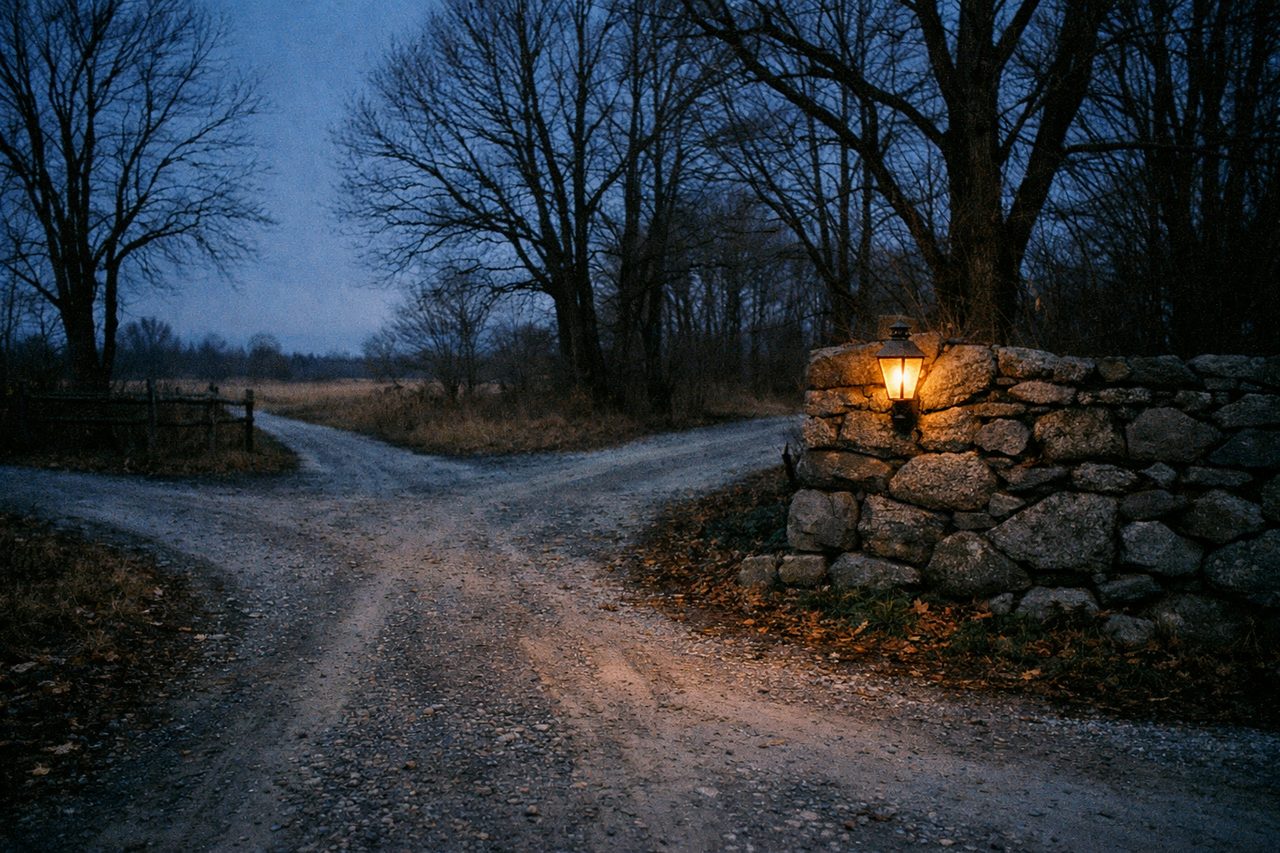
On the night of November 16, candles are lit for Hecate in homes, gardens and at crossroads all over the world.
The Night of Hecate has become one of the most loved dates in modern witchcraft. It falls in the dark half of the year, a couple of weeks after Samhain, when the nights are long and many of us feel drawn to the goddess of the crossroads, keys and torches. If you're new to her, start with our full guide to Hecate, the goddess of witchcraft, which covers her myths, symbols and how to begin working with her.
This article is about the night itself. We'll cover what the Night of Hecate is, where the November 16 date comes from (the honest answer is more interesting than the usual story), how it differs from her monthly supper, and a complete beginner's ritual you can do at home with a key, a candle and a small offering.
How to Celebrate the Night of Hecate in 6 Steps
- Clean and clear. Tidy your altar or a small table, and sweep your front step if you can.
- Set out her symbols. A candle for her torch, an old key, and a small dish for an offering.
- Light the candle after dark and greet Hecate in your own words.
- Stand at your crossroads. Name one choice or change in front of you and ask for light on it.
- Give your offering and spend a few quiet minutes listening.
- Close and journal. Thank her, put the candle out safely and write down what you noticed.
The full ritual, with words to say, is further down. First, a little background.
What Is the Night of Hecate?
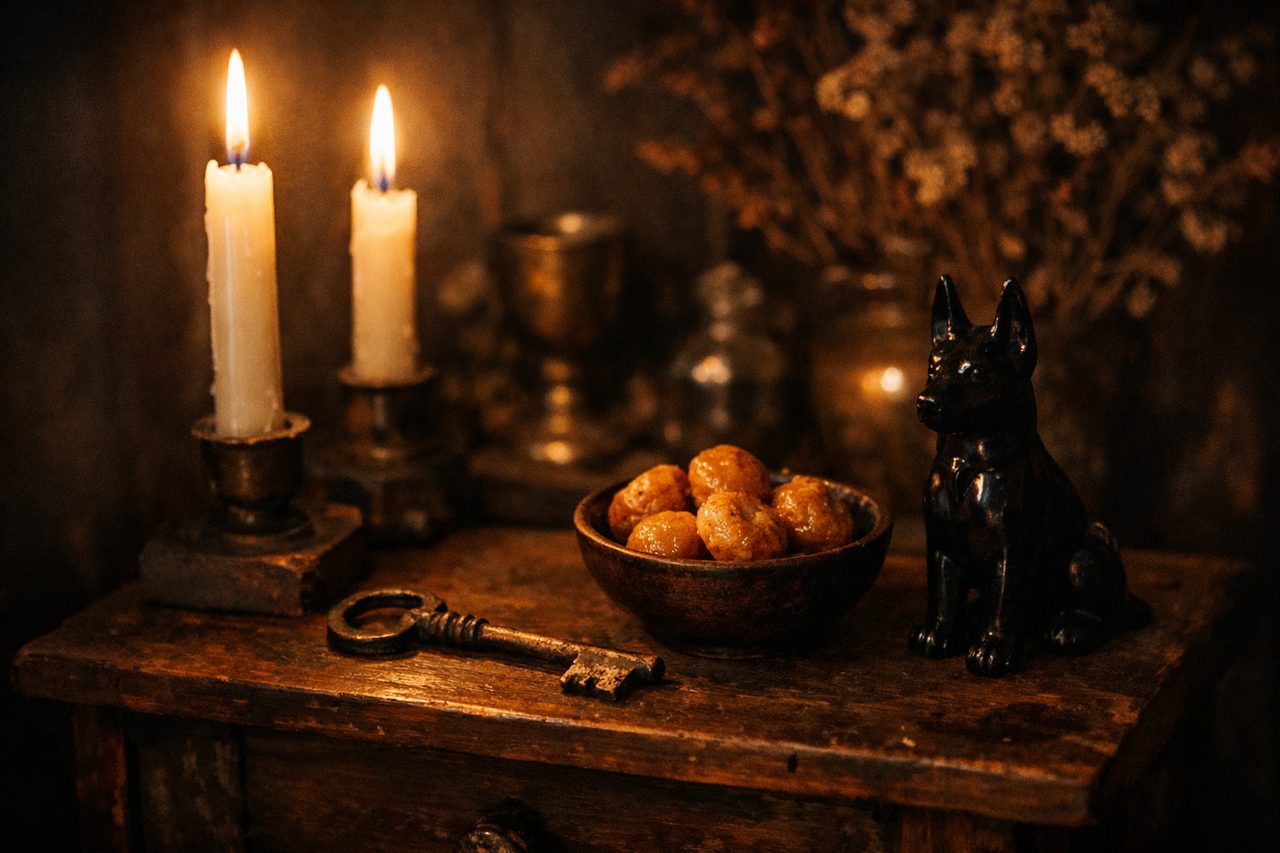
The Night of Hecate is a yearly evening set aside to honor Hecate on November 16. People mark it in very different ways. Some hold a full ritual. Some leave an offering at a crossroads. Many simply light a candle, say a prayer of thanks and ask Hecate to guide them through the dark months ahead.
Hecate is a fitting goddess for this time of year. In ancient Greek art she carries torches, and later writers linked her with the night, the moon, ghosts and magick. She stands at crossroads and doorways, the places between one thing and the next. In mid-November, with the harvest in and winter coming, many of us are standing at exactly that kind of threshold.
Where Does the November 16 Date Come From?
You'll often read that the Night of Hecate is an ancient Greek festival. We looked, and we couldn't find November 16 in any ancient calendar or text. Historians of ancient Greek religion don't list it either. The ancient Greeks didn't use our calendar at all; their months followed the moon, so a fixed date like "November 16" wouldn't have meant anything to them.
The date seems to be a modern custom that grew up in the pagan and witchcraft community and spread through books, groups and, more recently, social media. One common explanation is that a monthly Hecate observance once happened to fall on that date and was kept as a yearly celebration, but no one has traced it for certain.
Does that make it less meaningful? Not at all. Many dates we love are recent, and a celebration kept by thousands of people every year is a real tradition in its own right. It just helps to know the true story, so you can tell friends the facts and decide for yourself how you want to keep it.
The Night of Hecate and the Deipnon: What's the Difference?
There is an ancient observance for Hecate, and it's monthly. In Athens, households held the Deipnon ("supper") at the very end of each lunar month, just before the new moon. They cleaned house and left a meal for Hecate, often at a crossroads. Our Hecate guide walks through how to keep a simple Deipnon today, so we won't repeat it here.
| Night of Hecate | The Deipnon | |
|---|---|---|
| How often | Once a year | Every month |
| When | November 16 (a fixed modern date) | The last night of the lunar month, before the new moon |
| How old | Modern custom | Ancient Athenian practice |
| Main focus | Honoring Hecate, guidance for the dark half of the year | Cleaning house, a meal for Hecate and the restless dead, a fresh start |
| In 2026 | Monday, November 16 (the moon is a waxing crescent) | Evening of November 8, before the new moon on November 9 |
You can keep both. Many people use the Deipnon as a regular clearing and the Night of Hecate as a bigger, once-a-year evening of thanks. You can find the next new moon on our Moon and Magick Calendar.
What You'll Need
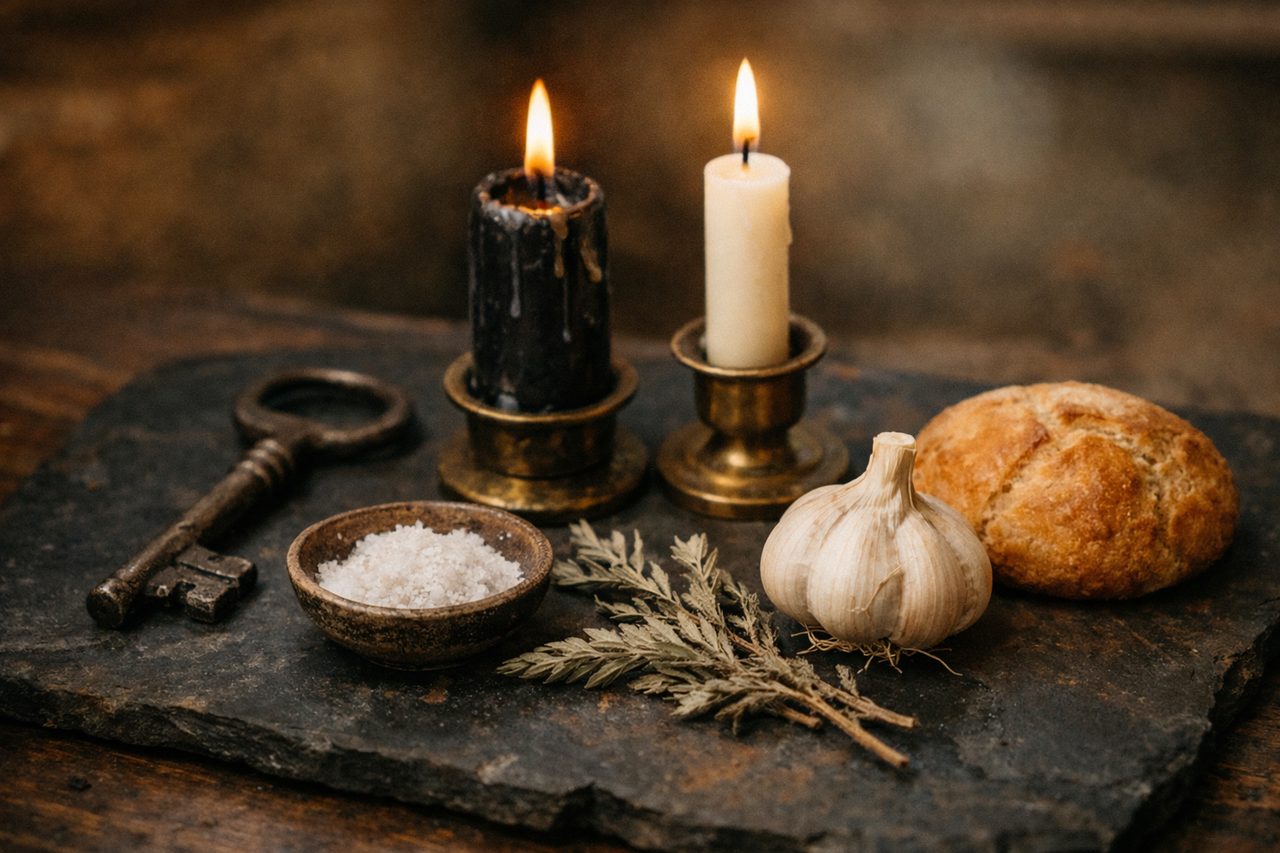
Nothing here has to be bought specially. Use what you have.
- A candle to stand for her torch. White, black or a dark purple all suit Hecate. Two candles are lovely if you have them, since she's often shown with a torch in each hand.
- A key. Any old key works, from a house key to an antique one. Keys are one of her oldest symbols.
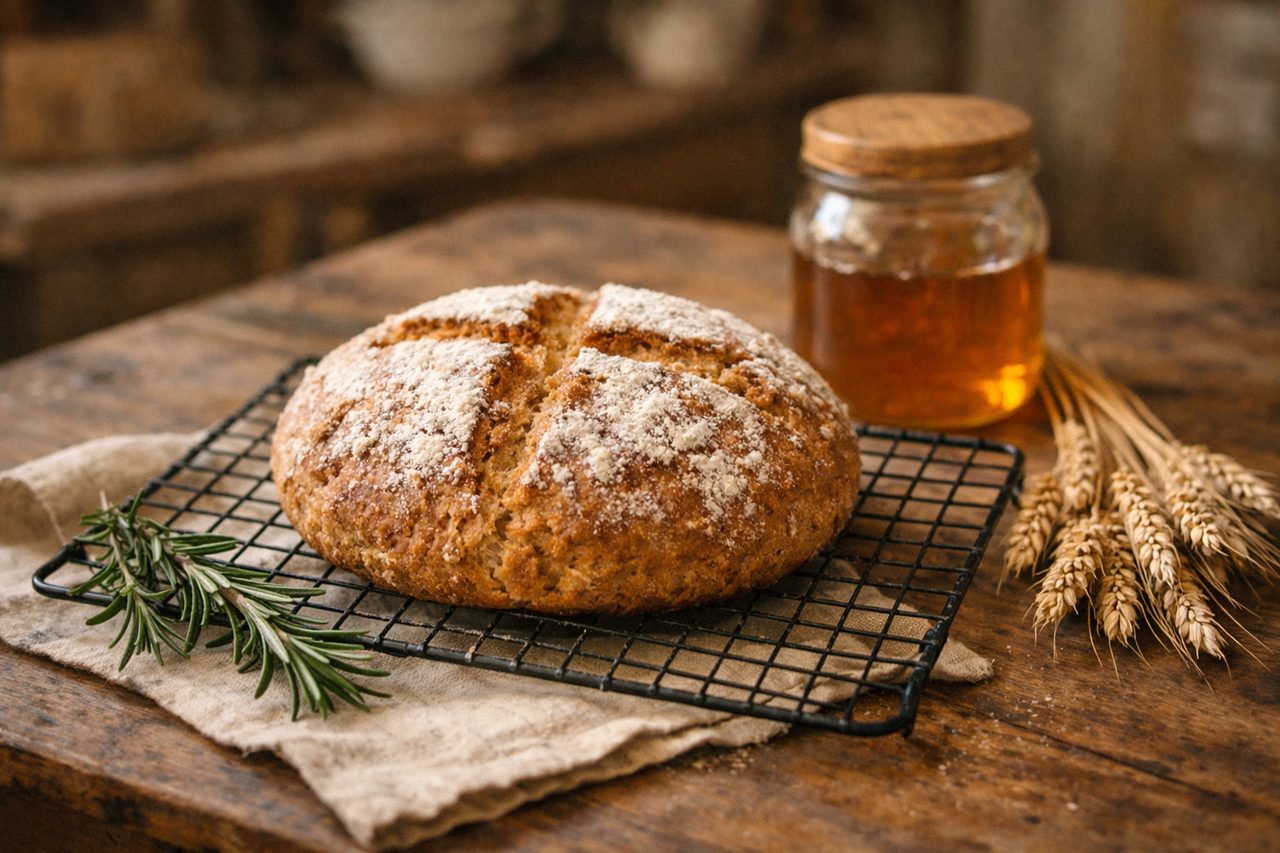
- A small offering. Bread, a little cake, honey, an egg or a sprinkle of garlic. See the safety note below if you'll leave it outdoors.
- Something for cleansing. A dish of salt water, or a sprig of rosemary or mugwort to wave through the air (unlit is fine).
- A journal and pen for the end of the ritual.
- Optional: a dog figurine or photo of a dog, myrrh incense, a crossroads drawn on paper if you can't get to a real one.
Look up any herb you're unsure of in The Witch's Cabinet, which lists its uses, what it pairs with and safety notes.
A Night of Hecate Ritual for Beginners
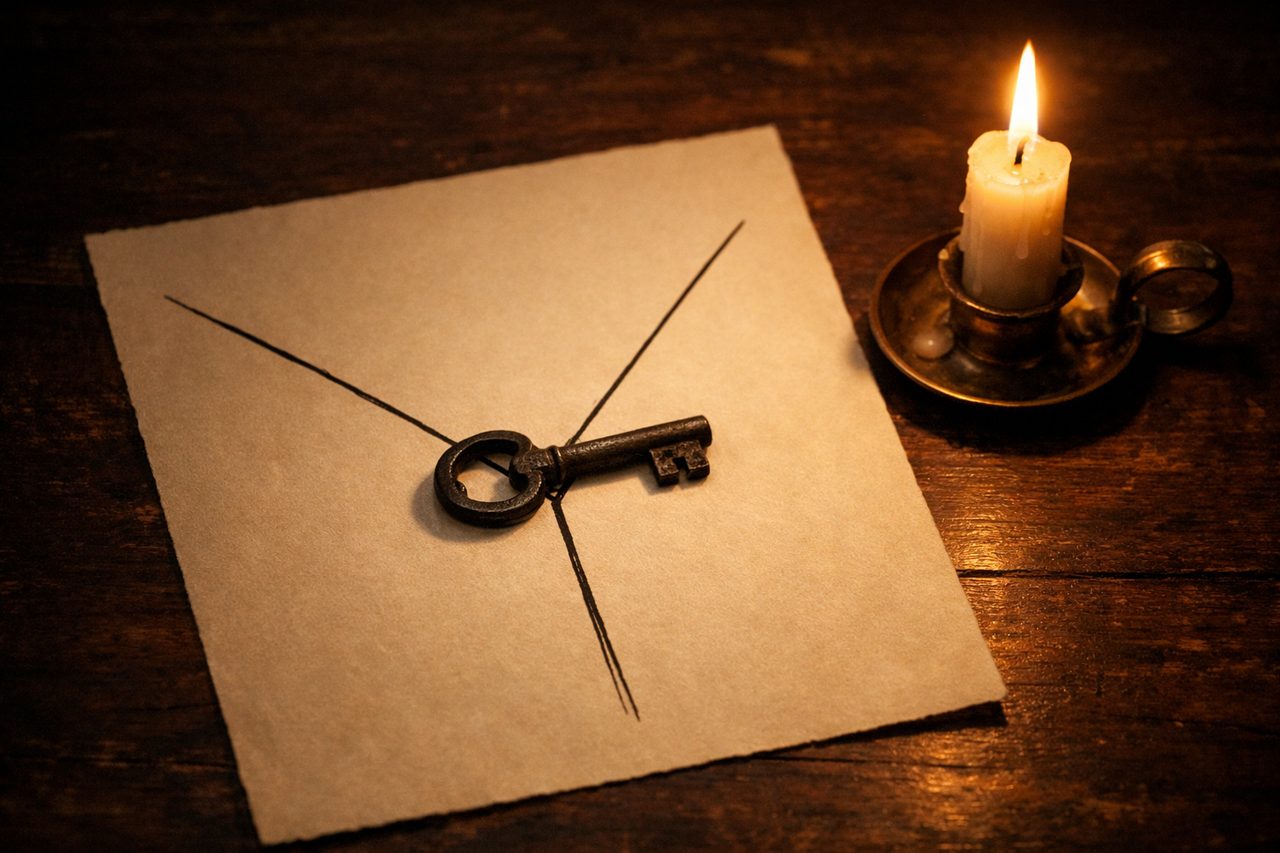
This ritual takes about 30 minutes. It works for solitary witches and small groups. Read it through once before you begin, and change any words so they sound like you.
Before you start
Choose your crossroads. If you can safely reach a real crossroads, a place where three roads or paths meet, you can do the offering part there. Most people do the whole ritual at home. In that case, draw three lines meeting in the middle on a sheet of paper, or set three small stones in a Y shape on your altar. That's your crossroads.
Steps:
- Cleanse. Sprinkle a few drops of salt water around your space, or pass the herb sprig through the air. Say: I clear this place. Only what is welcome may stay.
- Light the torch. Light your candle and say: Hecate, torch-bearer, keeper of the keys, lady of the crossroads, I light this flame in your honor. Be welcome here tonight.
- Hold the key. Sit with the key in your hands. Feel its weight. Think of a door in your life: something you want to open, or something you're ready to close and lock.
- Stand at the crossroads. Place the key where your three lines meet. Out loud, name the choice or change in front of you. Then say: Three roads before me, and one I cannot yet see. Hold up your light, Hecate, so I may choose well.
- Make your offering. Set the bread, cake or honey beside the crossroads and say: I give this freely, with thanks for your guidance through the dark half of the year.
- Listen. Sit quietly for five to ten minutes. Watch the flame. Don't hunt for signs; just notice what comes. A memory, a word, a feeling of calm or a clear "not yet" are all answers worth writing down.
- Give thanks and close. Say: Hecate, thank you for your light and your keys. Go if you must, stay if you will. Blessed be. Snuff the candle rather than blowing it out.
- Journal. Write the date, the question you brought and anything you noticed. Keep the key on your altar or on your keyring until the next new moon.
Leave the offering overnight. In the morning, bury or compost it, or put it in the trash. Offerings to Hecate are traditionally left for her and not eaten afterward.
A Key Spell for the Dark Half of the Year
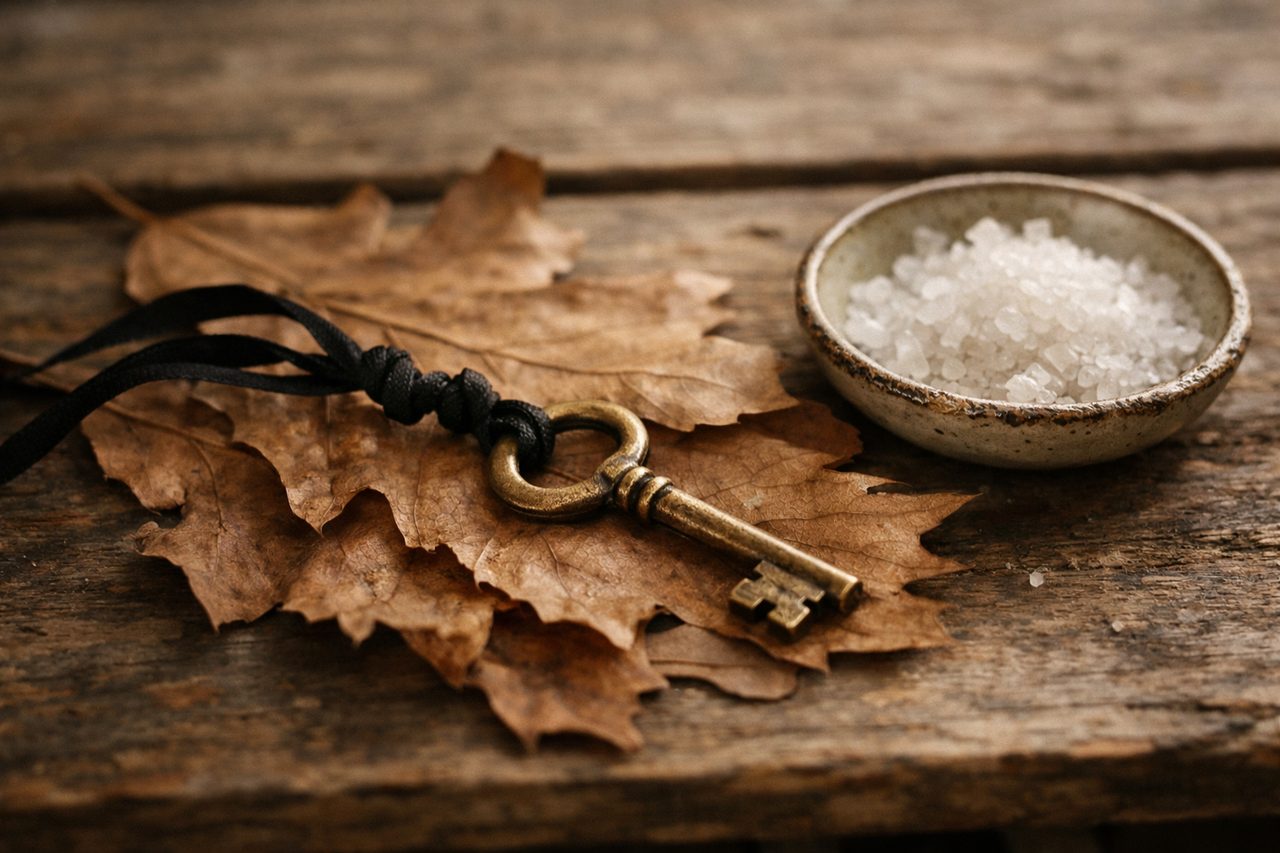
If a full ritual feels like too much this year, this five-minute spell still honors the night. It turns your key into a small charm to carry through winter.
You will need:
- A key that you can spare
- A length of black or purple ribbon or cord
- A candle and a pinch of salt
Steps:
- Light the candle and pass the key quickly through the salt, then (carefully, high above the flame) through the candle's light.
- Thread the key onto the ribbon. Tie three knots, one for each of Hecate's faces and each road at her crossroads.
- With each knot, say one line: One for the road behind me. One for the road beneath my feet. One for the road ahead.
- Hold the charm and ask Hecate to guard your home and open the right doors this winter.
- Hang it by your front door, or carry it with you. Untie it at Imbolc, when the light returns, and thank her.
Knots are an old way to bind a spell into something you can keep. Our guide to knot magick explains how it works, and if you'd like more protection for your home, try these protection spells for your home.
Other Ways to Honor Hecate on November 16
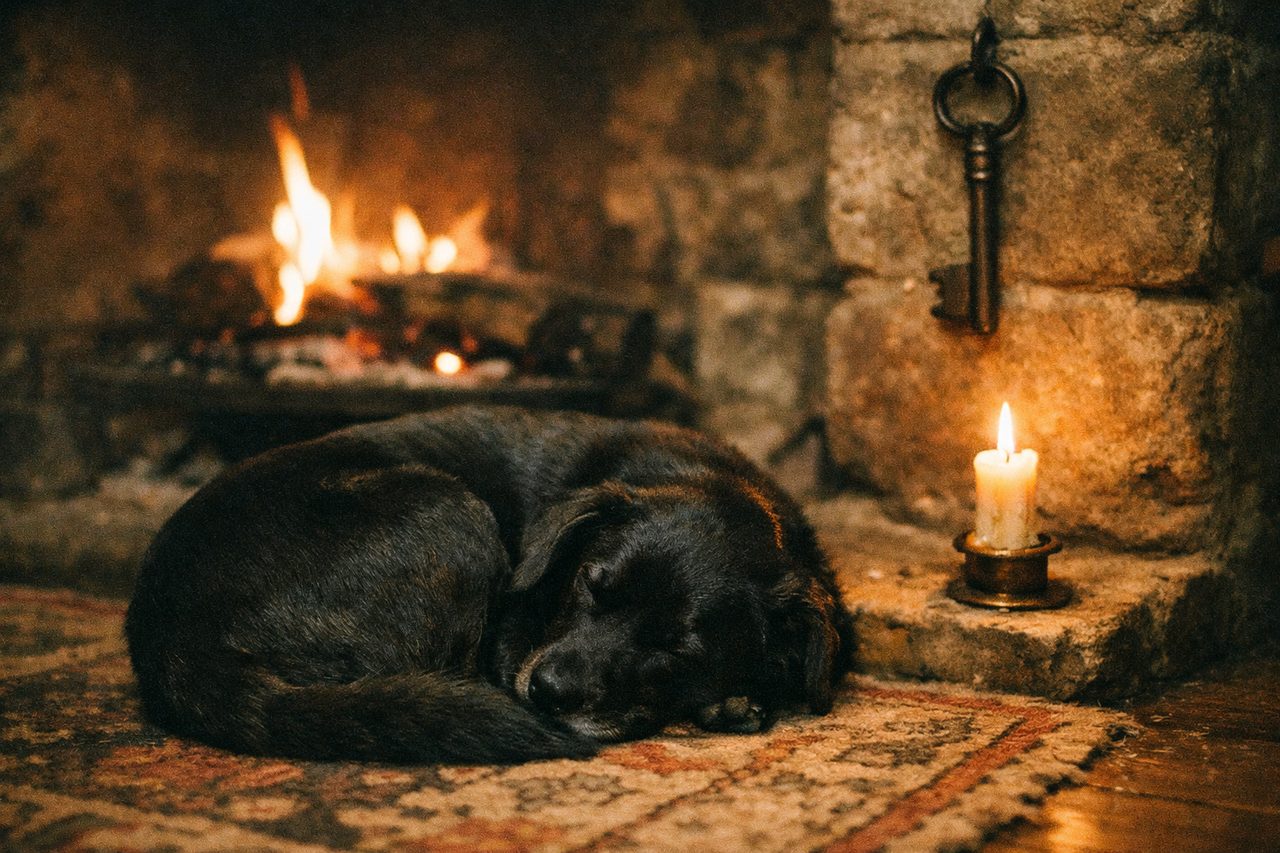
Not everyone can hold a ritual on a Monday night in November. These simple ideas still count.
- Help a dog in her name. Dogs are Hecate's best-known animal. Donate food or blankets to a local shelter, or give your own dog an extra-long walk.
- Feed someone. Ancient writers joked that poor people ate the suppers left for Hecate. Many devotees today give to a food bank in her honor, which seems very much in her spirit.
- Clean your thresholds. Sweep your doorstep, wipe the door and hang your key charm. Doorways are her places.
- Ask for guidance. Use a simple divination method you know, like a pendulum or a single tarot card, and ask what you need to understand before winter. Our guide to divination for beginners lists easy options. Members can also ask their question in a guided tarot reading, which you can try with our 7-day trial.
- Walk at dusk. Take a safe, short walk as the light fades, and pause at a crossing of paths to say thank you.
- Light a candle for the dead. Hecate was linked with ghosts and the spirit world. It's a gentle moment to remember someone you miss, much like the ideas in honoring your ancestors.
Safety Notes
- Never leave a candle burning unattended, and keep flames away from curtains, dried herbs and pets.
- If you leave an offering outdoors, keep it small and natural. Garlic, onions, grapes, raisins and chocolate are toxic to dogs, so leave those indoors on your altar instead.
- Only visit a real crossroads if it's safe and legal to stand there. A quiet path in a park is better than a busy road. Bring a friend and a flashlight.
- Burn incense in a ventilated room, and keep the smoke away from birds and small pets.
Final Thoughts
The Night of Hecate is young as festivals go, but it has grown because it meets a real need. In the darkest part of the year, it's good to stop, light a torch and ask for help choosing the road ahead. If you feel a pull toward Hecate or another goddess and want to understand it, our Discover Your Deity course will guide you through it step by step.
How will you mark the Night of Hecate this year? Tell us in the comments!
Sources
Hesiod, Theogony, trans. M. L. West (Oxford World's Classics, 1988).
Sorita d'Este, Circle for Hekate, Volume I: History and Mythology (Avalonia, 2017).
Stephen Ronan (ed.), The Goddess Hekate (Chthonios Books, 1992).
Sarah Iles Johnston, Restless Dead: Encounters Between the Living and the Dead in Ancient Greece (University of California Press, 1999).
Check out our other articles:
Hecate: Who She Is and How to Work With the Goddess of Witchcraft
Honoring Your Ancestors at Samhain
Moon Phases and Simple Rituals
Protection Spells for Your Home
See All Articles
Love this article? Share the magick with your friends and loved ones!
Night of Hecate FAQs
When is the Night of Hecate?
The Night of Hecate is celebrated on November 16 each year, usually after dark. In 2026 it falls on a Monday, with the moon a waxing crescent.
Is the Night of Hecate an ancient festival?
No ancient Greek calendar or text names November 16 as a festival of Hecate. The date appears to be a modern custom from the pagan and witchcraft community. The ancient observance for Hecate was the monthly Deipnon, held at the end of each lunar month.
What do you do on the Night of Hecate?
Most people light a candle for Hecate, set out a key and a small offering, ask for guidance at a real or symbolic crossroads, and give thanks. Others donate to a dog shelter or food bank in her name, or simply sweep their doorstep and say a prayer.
What offerings does Hecate like?
Traditional food offerings include bread, small cakes, honey, eggs and garlic. Many devotees also offer candlelight, myrrh incense, water or wine, or acts of kindness such as helping dogs or feeding people in need.
What color candle is used for Hecate?
White, black and dark purple are the most common choices. Many people light two candles because Hecate is often shown carrying a torch in each hand.
Can beginners celebrate the Night of Hecate?
Yes. A simple candle, a key and a few heartfelt words are enough. Approach Hecate with respect and thanks rather than demands, and keep the ritual short and safe.
Do I need a real crossroads?
No. Most people do the ritual at home, using three lines drawn on paper or three stones on the altar to stand for the crossroads. If you visit a real one, choose a quiet, safe place and bring a friend.