Of all the old midwinter customs, the Yule log may be the one that feels most like magick: a piece of the forest, brought indoors and set alight on the longest night to call back the sun.
It's simple, it's beautiful, and you don't need a fireplace to make one. In our main guide to Yule, we touch on the Yule log in a few lines. Here we go deeper: where the custom really comes from (and which parts of the story are modern), how it was kept in different parts of Europe, what it means for witches today, and how to choose, decorate, bless and burn your own.
How to Make a Yule Log in 6 Steps
- Choose a log. A dry, seasoned piece about 12 to 18 inches long. Oak, birch, ash or pine are traditional.
- Cleanse it. Brush it off and pass it through incense smoke or sprinkle it with salt water.
- Decorate it. Add evergreens, pine cones, cinnamon sticks, dried oranges and ribbon in Yule colors.
- Add your wishes. Write hopes for the coming year on slips of paper and tuck them into the decorations.
- Bless it. Hold your hands over it and ask that it bring light, warmth and protection to your home.
- Burn it, or light candles on it. Burn it safely on the solstice, or set candles into it if you don't have a fireplace. Keep a small piece for next year.
What Is the Yule Log?
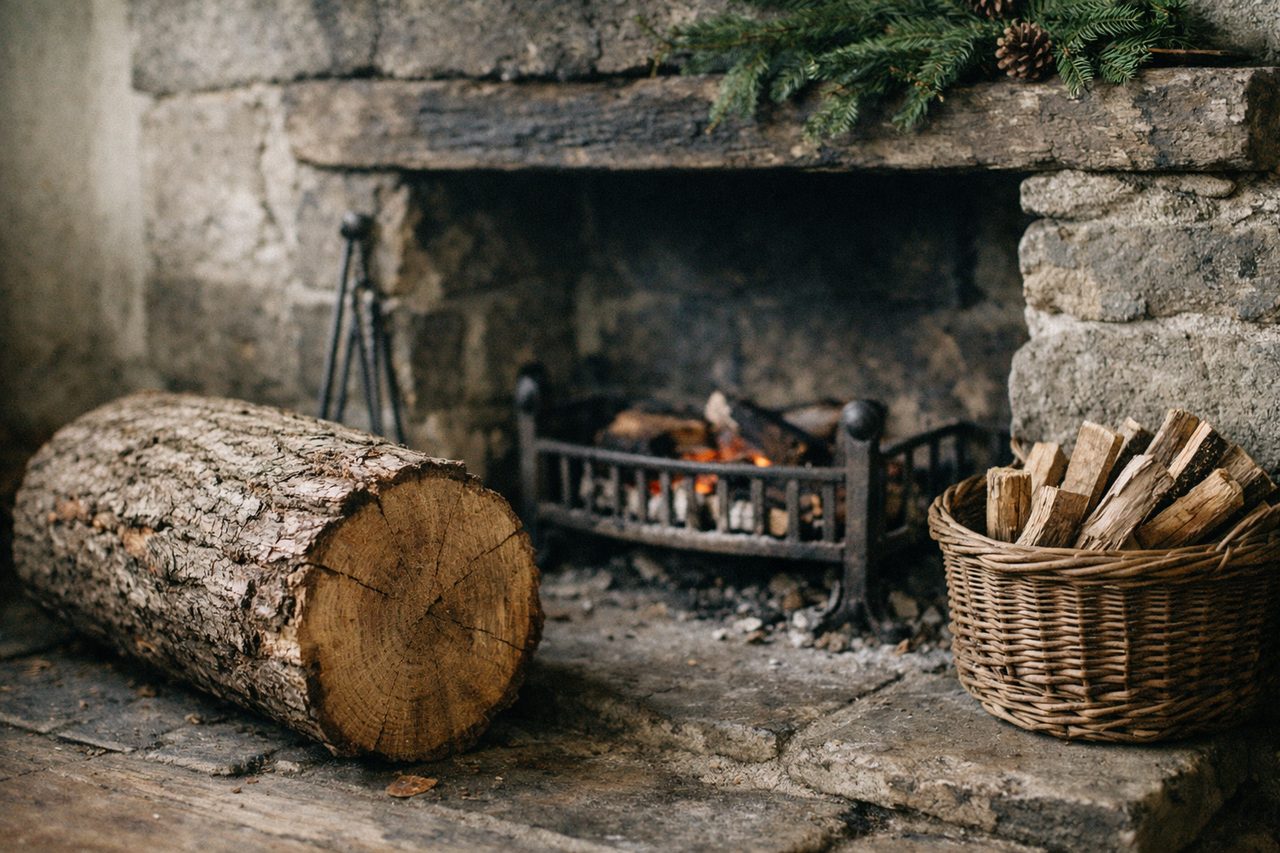
In its oldest form, the Yule log was a large log (sometimes a whole tree trunk) brought into the house at midwinter and burned in the hearth through the holiday. It was chosen with care, carried in with a little ceremony, and lit from a fragment of the previous year's log. A piece was then saved to protect the house and to light the next one, so the fire passed from year to year.
Today, "Yule log" means three different things, and all three are part of the tradition:
- The burned log: a real log burned in a fireplace or fire pit at Yule.
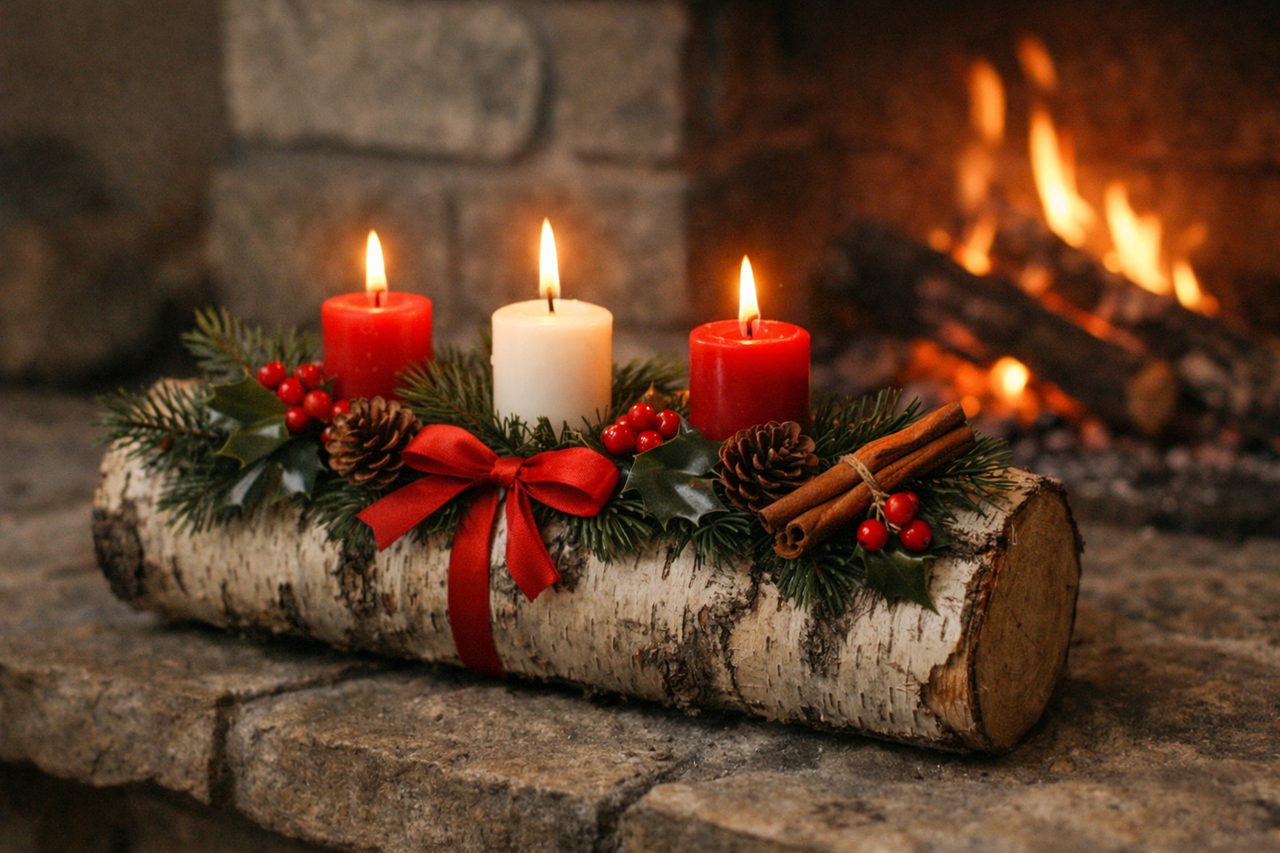
- The candle log: a decorated log with candles set into it, kept on the altar or table.
- The cake: the chocolate bûche de Noël, a rolled sponge decorated to look like a log. You'll find a recipe in our Yule recipes.
Where the Yule Log Comes From
You'll often read that the Yule log is an ancient Norse or Celtic rite. The truth is more interesting, and a bit more modest. Here's what the records actually show.
The first clear records
Historians, including Ronald Hutton in The Stations of the Sun, point out that the earliest clear written descriptions of a special midwinter log in England come from the 1600s. The poet Robert Herrick, writing in the mid-1600s, describes the Christmas log being brought in, lit from last year's brand, and a piece kept back to light the next. By the 1700s and 1800s, folklore collectors were recording Yule log customs across Britain and Europe.
That doesn't mean the idea was new in the 1600s. Midwinter fires and feasts are much older, and a big log on the hearth during the darkest, coldest weeks of the year is common sense as much as ritual. But no ancient text describes the Yule log as we know it, so it's honest to call it a folk custom of Christian-era Europe that witches and pagans have happily taken up and made their own.
Yule log customs around Europe
| Where | The custom |
|---|---|
| England | The Yule log or "Christmas brand" was brought in on Christmas Eve, lit with a saved piece of last year's log, and kept burning through the holiday. A fragment was stored to protect the house. |
| Serbia and the Balkans | On Christmas Eve, a young oak branch called the badnjak is brought in or burned, often with grain, wine and greetings to the household. Many families still keep this custom. |
| Catalonia (Spain) | The Tió de Nadal is a log with a painted face and a little blanket. Children "feed" it for days, then tap it with sticks on Christmas Eve while singing, and it "gives" sweets and small gifts. |
| France | The burning log gave its name to the bûche de Noël, the log-shaped cake that became popular with French bakers in the 1800s. |
| Northern England | The log was often called the "Yule clog". It was said to be unlucky if it went out before the holiday was over. |
| Scottish Highlands | In some places a stump was carved into the figure of an old woman, the Cailleach Nollaig or "Christmas Old Wife", and burned on Christmas Eve to drive away bad luck for the year ahead. |
Many of these customs share the same ideas: the log should be big enough to burn for a long time, it should never be bought (it was given or gathered), and a piece of it was kept to protect the home from fire and lightning until next year. In some places, the ashes were sprinkled on fields or kept as a charm.
What the Yule Log Means for Witches
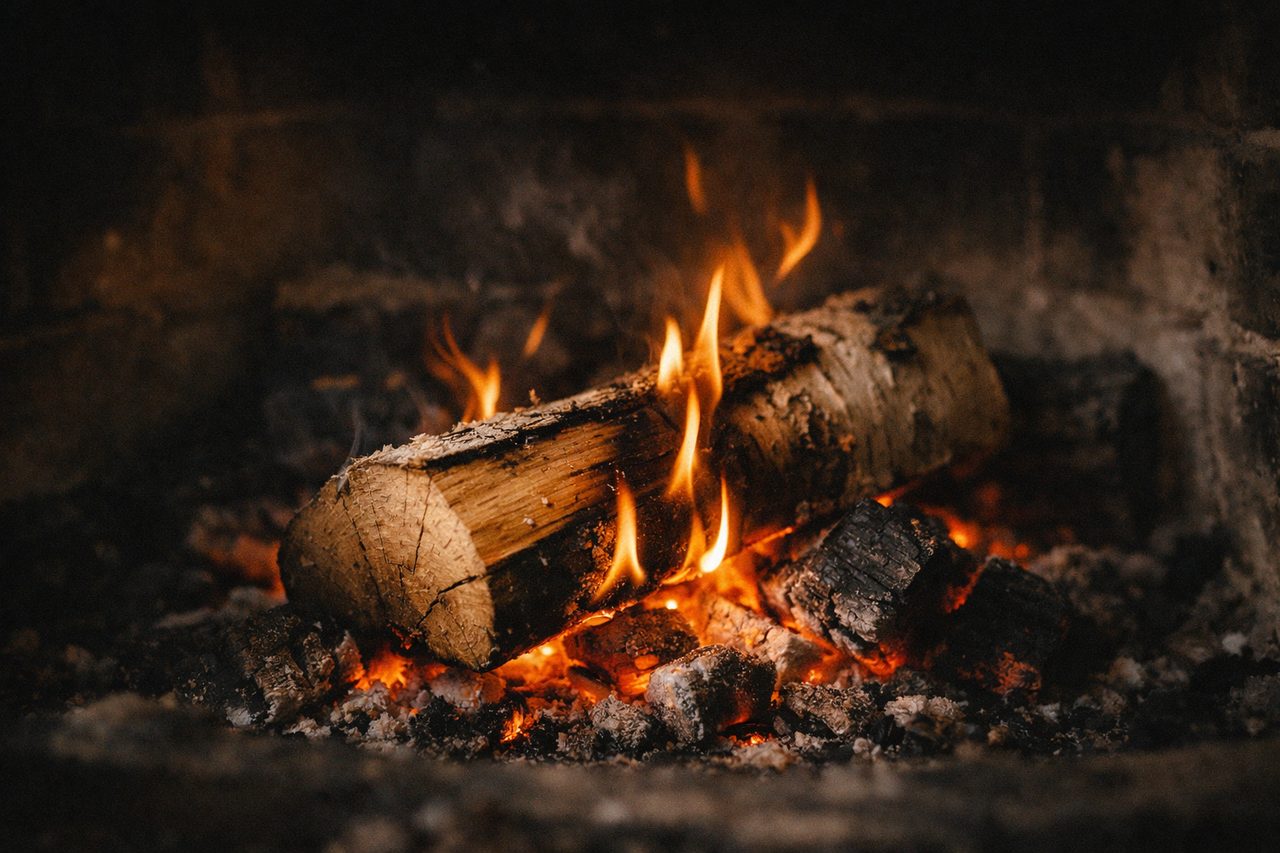
In modern Wicca, Yule celebrates the rebirth of the Sun God on the longest night, and the Yule log is a perfect symbol of that story. The fire stands for the returning sun. The log, a piece of the sleeping forest, stands for life that carries on through winter. In the old tale of the Holly King and the Oak King, Yule is the night the Oak King, lord of the growing year, takes the crown, which is one reason oak is such a popular choice.
Many witches also see the log as a spell of release and renewal. What burns away is the old year; what you keep (a piece of the log, the ashes, your written wishes) carries the blessing forward.
Choosing Your Log
Traditionally, the log should come to you as a gift or be gathered, never bought. If you can, find a fallen branch on a walk, or ask a friend with a woodpile. If you do buy firewood, that's fine: choose your piece with care and thank the tree it came from.
| Wood | Traditional meaning | Read more |
|---|---|---|
| Oak | Strength, endurance and the Oak King of the waxing year | Oak |
| Birch | New beginnings and cleansing; a classic choice for its white bark | Birch |
| Ash | Protection, healing and the World Tree of Norse myth | Ash |
| Pine | Peace, cleansing and evergreen life (burns quickly and sparks; best for outdoor fires) | Pine |
| Apple | Love, health and the otherworld; it burns with a sweet scent | Apple |
For burning, the log must be dry and well seasoned. Green wood smokes and spits. Never burn wood that's painted, varnished or treated.
How to Decorate and Bless Your Yule Log
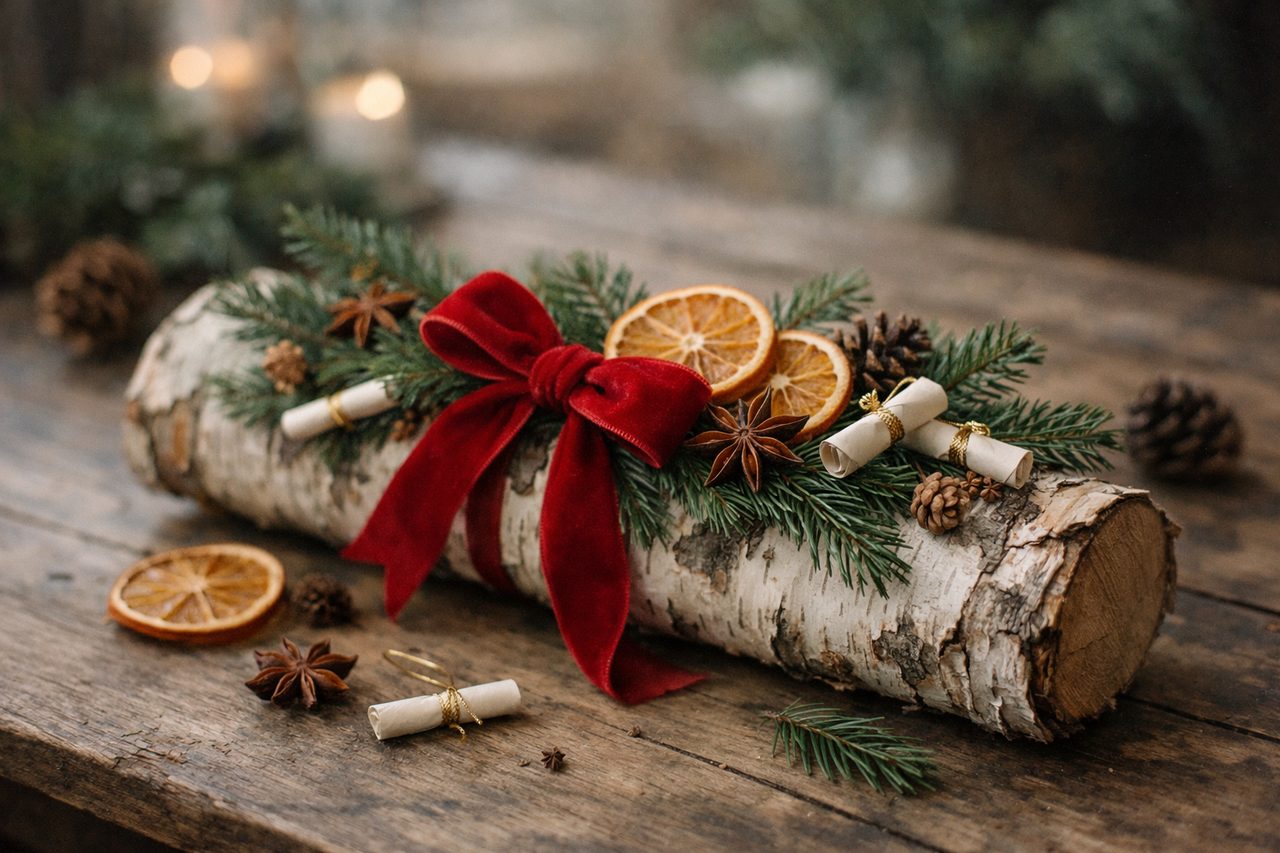
You will need:
- A dry log (12 to 18 inches is a good size for a home fireplace)
- Evergreen sprigs: pine, fir, cedar, rosemary or bay
- Pine cones, cinnamon sticks, star anise and dried orange slices
- Ribbon or natural twine in red, green, white or gold (natural fibers if you'll burn it)
- Small slips of paper and a pen
- Incense or a bowl of salt water for cleansing
- Optional: a drill and three candles, if you're making a candle log
Steps:
- Brush the log clean and pass it through incense smoke or sprinkle it with salt water. Say: I clear you of the old year. Be ready to carry the new light.
- Wrap ribbon or twine around it and tuck evergreens, cones and spices under the bindings. Each one can carry a wish: cinnamon for prosperity, pine for peace, orange for joy.
- On each slip of paper, write one hope for the coming year. Roll them up and tuck them into the decorations.
- If you're making a candle log, drill three shallow holes along the top and set a candle in each: for many witches, red for the Goddess, white for the newborn sun and green for the earth.
- Hold your hands over the log and say: Log of the forest, heart of the year, carry our wishes and bring the light near. Warm this house and all within. As the sun returns, may blessings begin.
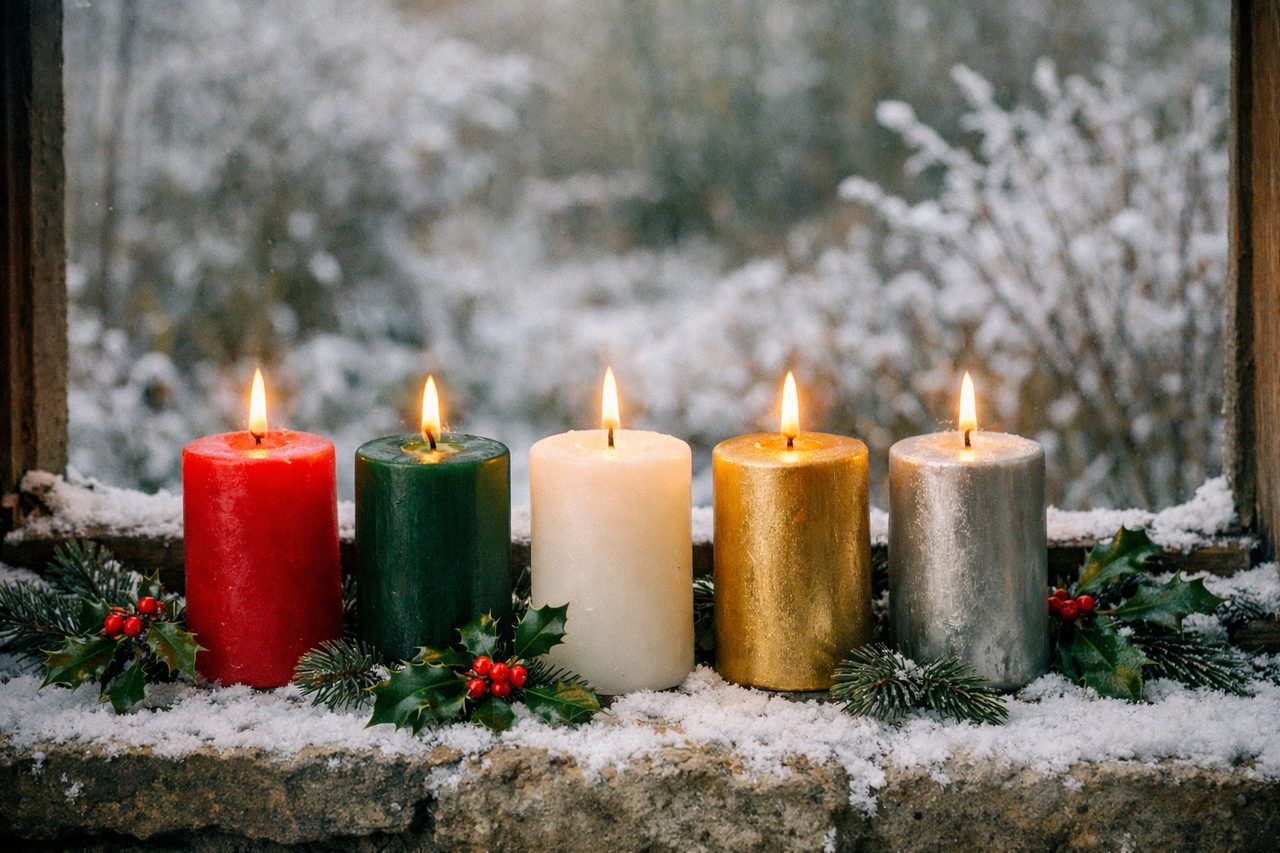
The colors you choose can carry meaning too. Our guide to the colors of Yule explains what each one brings.
A Yule Log Burning Ritual
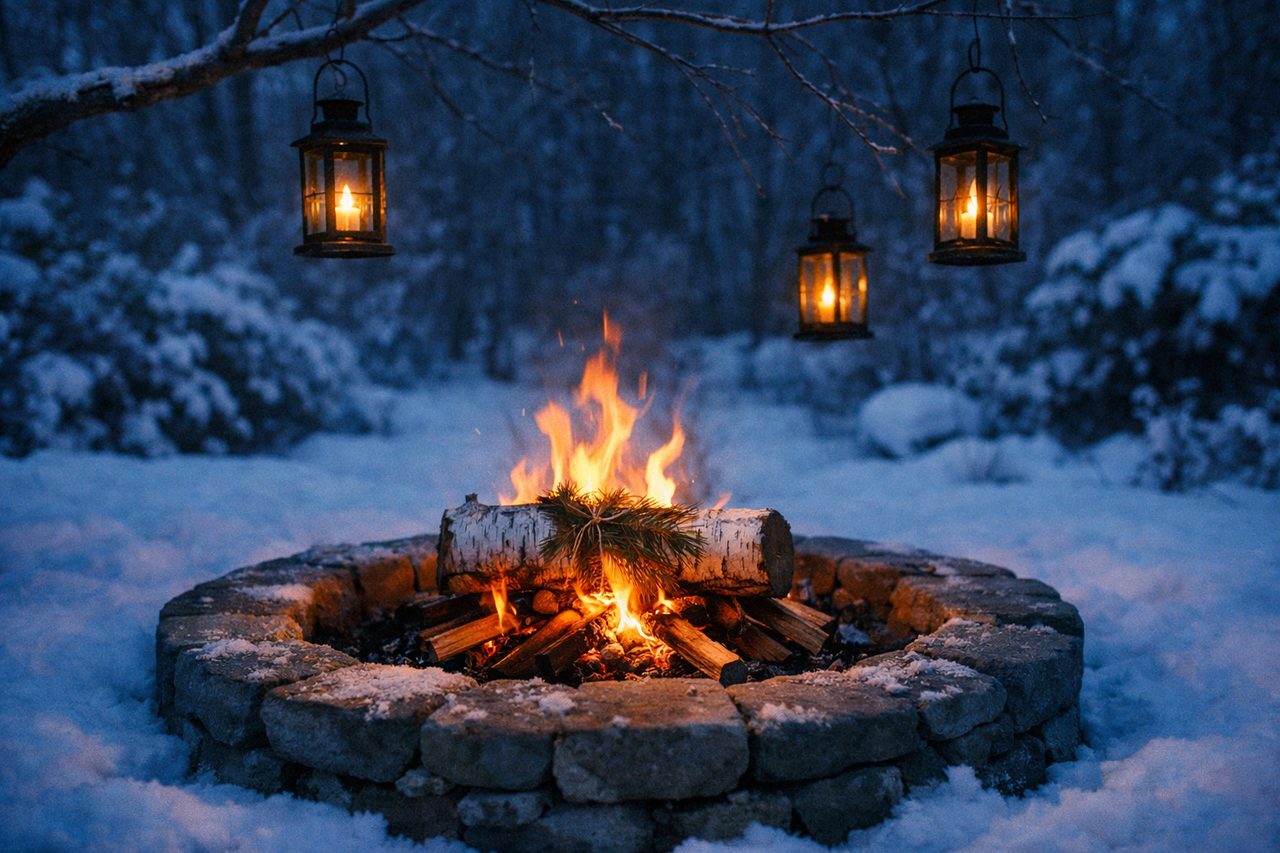
This short ritual is for the night of the solstice. In 2026, the winter solstice is on December 21 at 10:50 AM Eastern time, so many people burn their log on the evening of the 20th (the longest night) or the 21st. Check the time for your area on our Moon and Magick Calendar.
- Turn off the lights and sit with your household in the dark for a minute or two. Talk about what the past year brought, the hard parts and the good.
- If you saved a piece of last year's log, use it as kindling. If not, a little of this year's evergreens will do.
- Light the fire and say together: The longest night, the turning year. We light the fire; the sun is near.
- Place the decorated log on the fire. As it catches, each person can name one thing to leave behind and one thing to welcome.
- Share a warm drink and something sweet while it burns. Sing, tell stories, or sit quietly and watch the flames.
- When the fire has burned down and cooled completely (the next day), save a small piece of charred wood and a pinch of ash.
If you'd like a full solstice ceremony around this, from a vigil through the longest night to greeting the sunrise, see our guide to winter solstice rituals.
No Fireplace? Make a Candle Yule Log
Most of us don't have a hearth, and that's fine. A candle log on your table or altar keeps the same meaning.
- Ask an adult with a drill (or a hardware store) to drill two or three flat-bottomed holes along the top of a flat-bottomed log, just wide enough for your candles.
- Decorate it as above, keeping greenery well away from the candle holes.
- Set the candles in, ideally in small metal cups or tea-light holders so the wood can't catch.
- Light the candles on the solstice, say your blessing, and relight them on each of the twelve nights of Yuletide if you like.
Even simpler: lay three candles on a plate surrounded by pine cones and greenery. The symbol is what matters.
What to Do With the Ashes and the Saved Piece
- Keep the saved piece wrapped in cloth on your altar or near the hearth through the year as a charm for protection, then use it to light next Yule's fire.
- Scatter a pinch of ash in the garden as a blessing for the growing year, or mix it into potting soil.
- Add a little ash to a protection jar for the home. Our guide to witch bottles shows how.
- Return the rest to the earth with thanks.
Safety Notes
- Never leave a fire or lit candles unattended, and keep a fire screen in front of an open hearth.
- Burn only dry, untreated wood. Remove plastic ribbon, glitter, wire and anything that isn't natural before burning.
- Holly berries, mistletoe and ivy are poisonous to people and pets. Keep decorations out of reach, and don't burn large amounts of green holly or ivy indoors.
- Let ashes cool completely (at least a full day) in a metal container before handling them.
- Follow any local burn bans for outdoor fire pits.
Final Thoughts
The Yule log is a small, warm act of hope: a piece of the forest given to the fire so the light can come back. Whether you burn a great oak log with your whole family or light three candles on a birch branch in your apartment, you're keeping a lovely old custom alive. For more ways to celebrate, see our Yule guide, our Yule altar ideas and the Yule page in the Witch's Cabinet. Our Wiccan Holidays course explores every sabbat of the year in depth.
Will you burn a log this year, or make a candle log? Tell us in the comments!
Sources
Ronald Hutton, The Stations of the Sun: A History of the Ritual Year in Britain (Oxford University Press, 1996).
Clement A. Miles, Christmas in Ritual and Tradition, Christian and Pagan (T. Fisher Unwin, 1912).
Robert Herrick, Hesperides (1648).
Scott Cunningham, Wicca: A Guide for the Solitary Practitioner (Llewellyn, 1988).
Check out our other articles:
Yule: The Pagan Winter Solstice and How to Celebrate It
The Holly King and the Oak King
Winter Solstice Rituals
Yule Altar Ideas
See All Articles
Love this article? Share the magick with your friends and loved ones!
Yule Log FAQs
What is a Yule log?
A Yule log is a log brought into the home and burned at midwinter to welcome back the sun. Today it can also mean a decorated log with candles set into it, or the chocolate log cake called the buche de Noel.
Where does the Yule log tradition come from?
The earliest clear records of a special midwinter log in England date from the 1600s, and folklore collectors later recorded similar customs across Europe, such as the Serbian badnjak and the Catalan Tio de Nadal. Midwinter fires are much older, but the Yule log as we know it is a European folk custom.
What does the Yule log symbolize?
For witches, the fire stands for the returning sun and the log for life that carries on through winter. Burning it releases the old year, and keeping a piece carries protection and blessing into the new one.
What wood is best for a Yule log?
Oak, birch and ash are traditional favorites, and apple burns with a sweet scent. The wood must be dry, seasoned and untreated. Pine is lovely but sparks a lot, so it is best for outdoor fires.
When do you burn the Yule log?
Most witches burn it on the night of the winter solstice, around December 21 in the Northern Hemisphere. In 2026 the solstice is on December 21 at 10:50 AM Eastern time, so the evening of the 20th or 21st both work.
How do I make a Yule log without a fireplace?
Drill two or three shallow holes along the top of a flat-bottomed log, decorate it with greenery and ribbon, and set candles into the holes using small metal cups. Light the candles on the solstice and never leave them unattended.
What do you do with Yule log ashes?
Many witches keep a small charred piece to protect the home and light next year's fire, scatter a pinch of ash in the garden as a blessing, or add a little to a protection jar. Let ashes cool for at least a day first.