A witch bottle is one of the oldest protection spells we know about, and you can make one this week with a jar and a handful of things from your kitchen drawer.
For hundreds of years, people have sealed sharp things and a bit of themselves into a bottle and hidden it in the house to catch harm before it could reach them. Builders still find these bottles today, tucked under hearths and buried beside doorways in old homes.
In this guide, we'll look at where witch bottles come from, why they sit so comfortably in modern Wicca, what goes inside and why, how to make a traditional-style bottle step by step, a few gentler variations, where to put yours and what to do when it's time for a new one. With Samhain this Saturday and the moon starting to wane, the timing couldn't be better.
What Is a Witch Bottle?
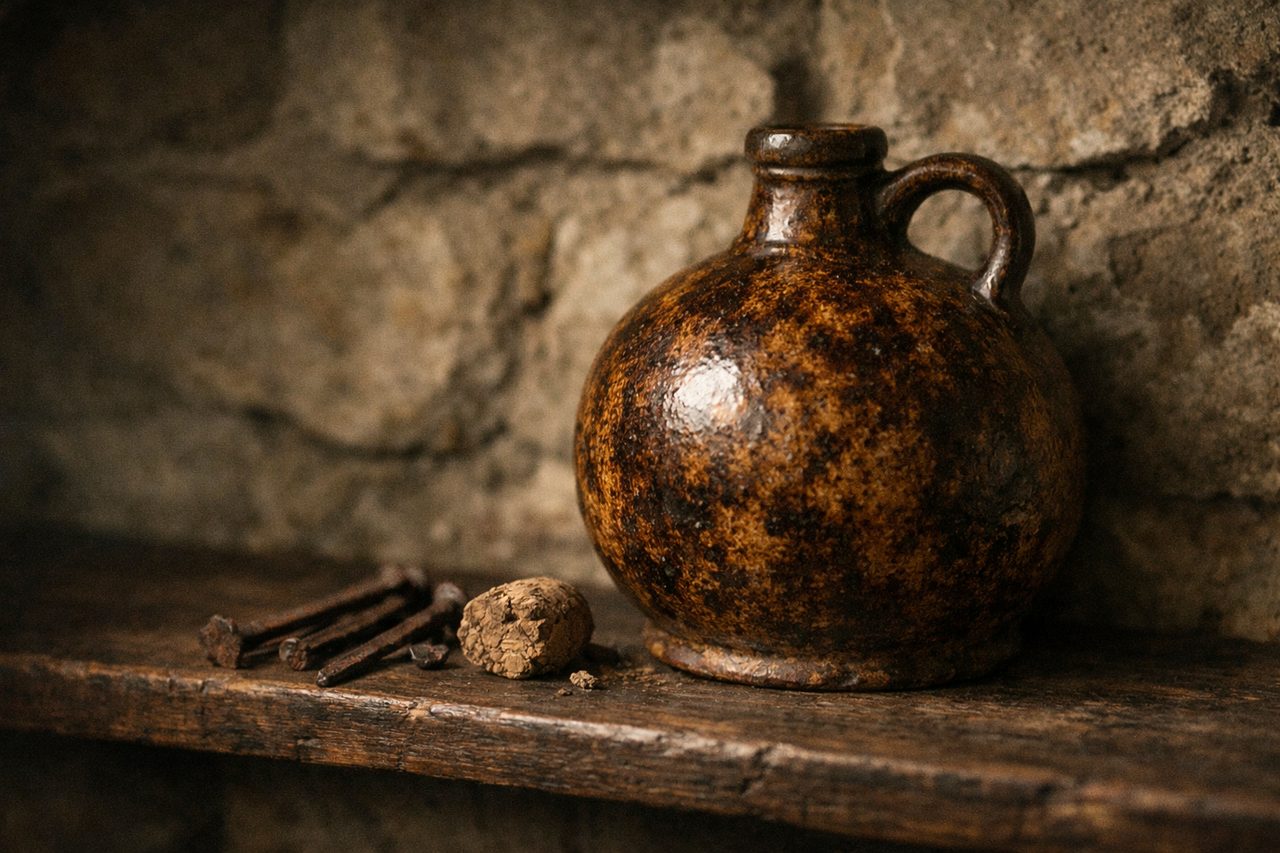
A witch bottle is a sealed container holding sharp objects, a liquid and something personal to the maker, hidden in or near the home as a magickal trap. The idea is simple: anything harmful sent your way gets drawn to the bottle instead of to you, and the pins and nails catch it there.
Most of the old ones come from 17th-century England. Many were brown stoneware jugs from Germany, often called Bellarmines, with a bearded face stamped on the neck. Later bottles were usually glass. Many have turned up in old English houses, and a few have been found at colonial sites in America too.
We even have a recipe from the time. In 1671 an astrologer from Reading, Joseph Blagrave, published The Astrological Practice of Physick, which tells someone who believes they've been bewitched to stop up their urine in a bottle with three nails, pins or needles and a little salt, then keep it warm. The belief was that this would turn the curse back on whoever sent it.
The Greenwich Witch Bottle
In 2004, workers in Greenwich, London, found a stoneware bottle that had been buried upside down and never opened. Scientists X-rayed and scanned it before looking inside. They found urine, iron nails (one driven through a small leather heart), brass pins, hair, fingernail clippings and even a bit of navel fluff. It matches Blagrave's recipe closely.
Why Witch Bottles Belong in Modern Wicca
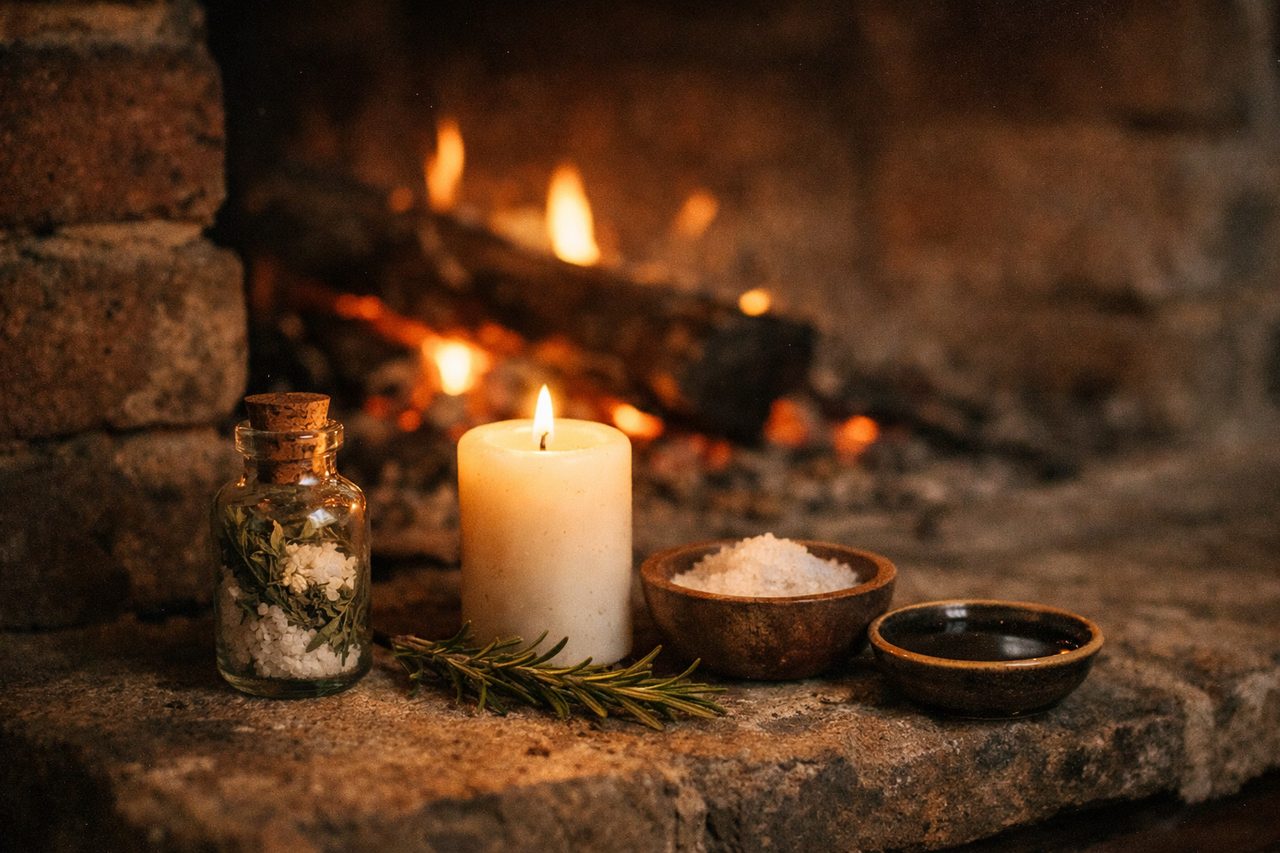
The people who made those early bottles weren't Wiccans. Most of them were afraid of witches. But the bottle itself is good, honest folk magick, and it fits beautifully into a Wiccan practice.
For one thing, it's hearth magick. The old bottles were placed at the weak points of a home, such as the fireplace, the threshold and the walls, which is exactly where we still focus our protection today. A witch bottle also holds all four elements: earth in the salt and herbs, water in the liquid, fire in the candle wax that seals it, and air in the breath of the words you speak over it.
The biggest change is in the intention. The old recipes were meant to hurt the person who cast the curse. Most modern witches, guided by the Wiccan Rede, prefer a bottle that simply catches and holds negativity so it can't reach the household. No punishment, no sending anything back.
What Goes Into a Witch Bottle
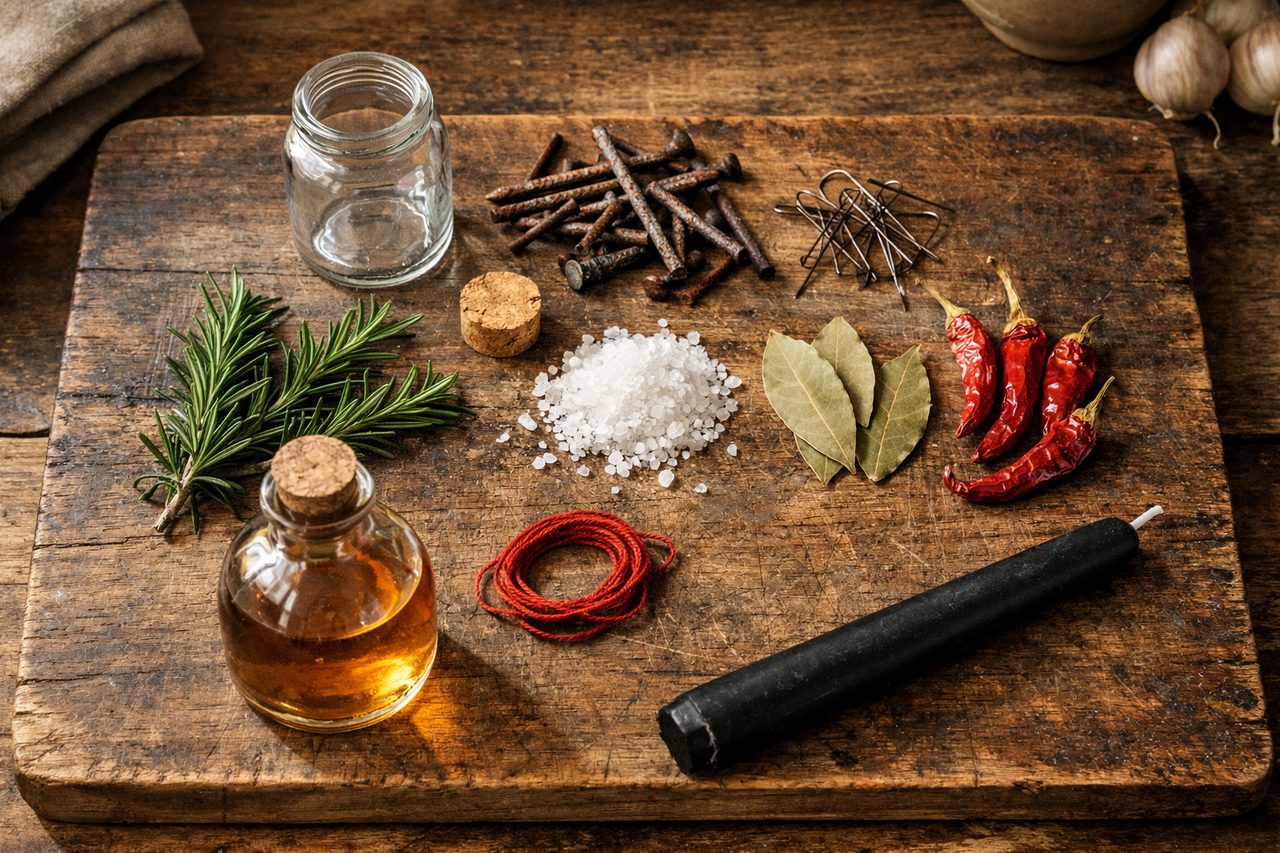
You don't need anything fancy. Each ingredient has a job, so pick what feels right and leave out what doesn't.
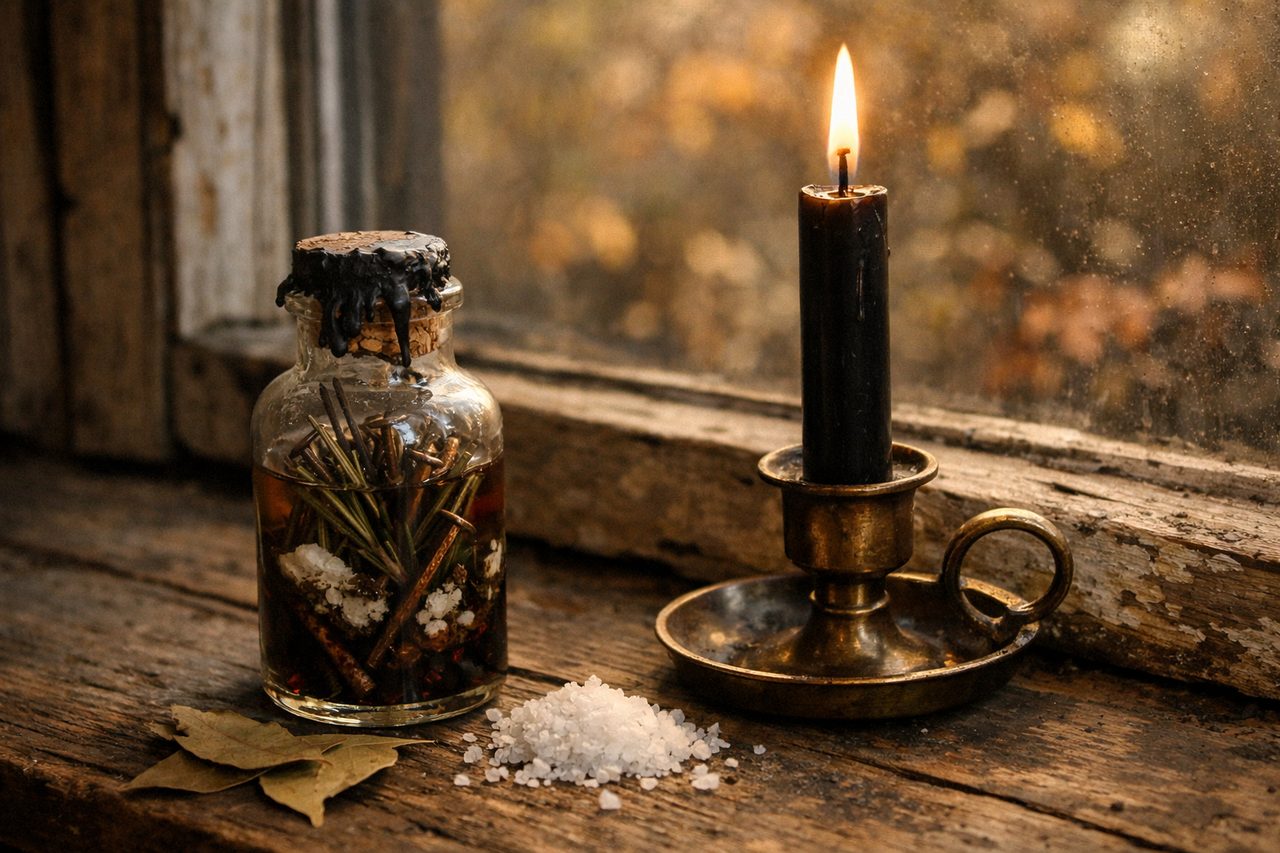
- Sharp things: iron nails, pins, needles, tacks or broken bits of mirror. These snag and hold harm. Bent pins are traditional, since bending them was thought to "kill" them for ordinary use.
- Iron: old nails do double duty. Iron has guarded doorways in European folk magick for centuries.
- Salt: for purifying and protection, just as in Blagrave's day.
- Protective herbs: rosemary, bay, garlic, dried chili or rue. Cunningham's herbal lists all of them for protection, and our guide to herbs for protection has plenty more.
- A liquid: urine was the old choice. Today most witches use vinegar, red wine or a little salt water instead. Vinegar sours what comes near; wine has a long history as an offering.
- A personal link: a few strands of your hair or a nail clipping, so the bottle knows who it's protecting. If you're making it for the whole household, a pinch of dust from your front step works well.
- A seal: a cork or lid, closed with candle wax. Black is the usual color for protection and absorbing negativity; see our candle color meanings if you'd like another.
How to Make a Traditional-Style Witch Bottle
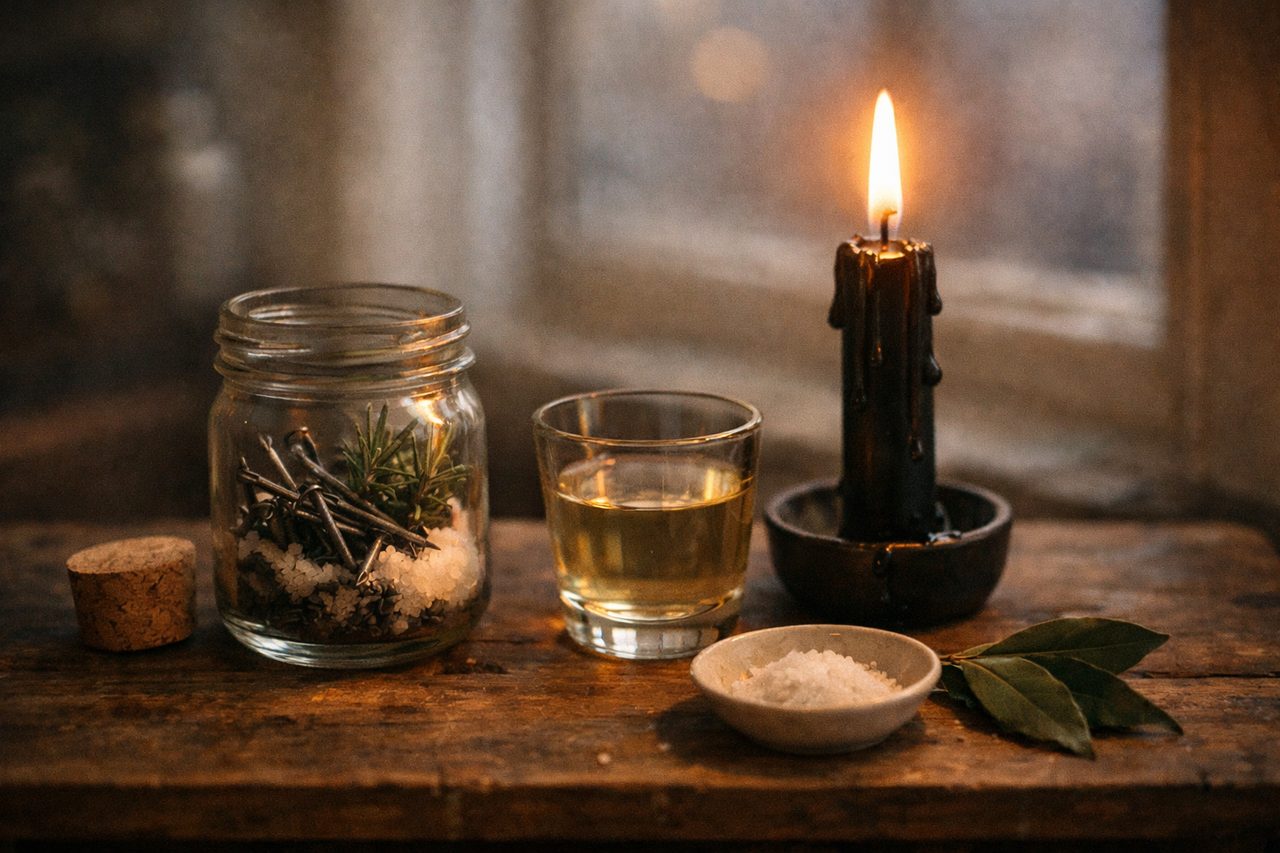
This is a modern version of the classic recipe. It's a lovely first spell for anyone starting out with practical magick. The waning moon is the traditional time for protection and banishing work. This month, the moon is full on October 26 and wanes until the new moon on November 9, with Samhain right in the middle. Check our moon calendar for future months.
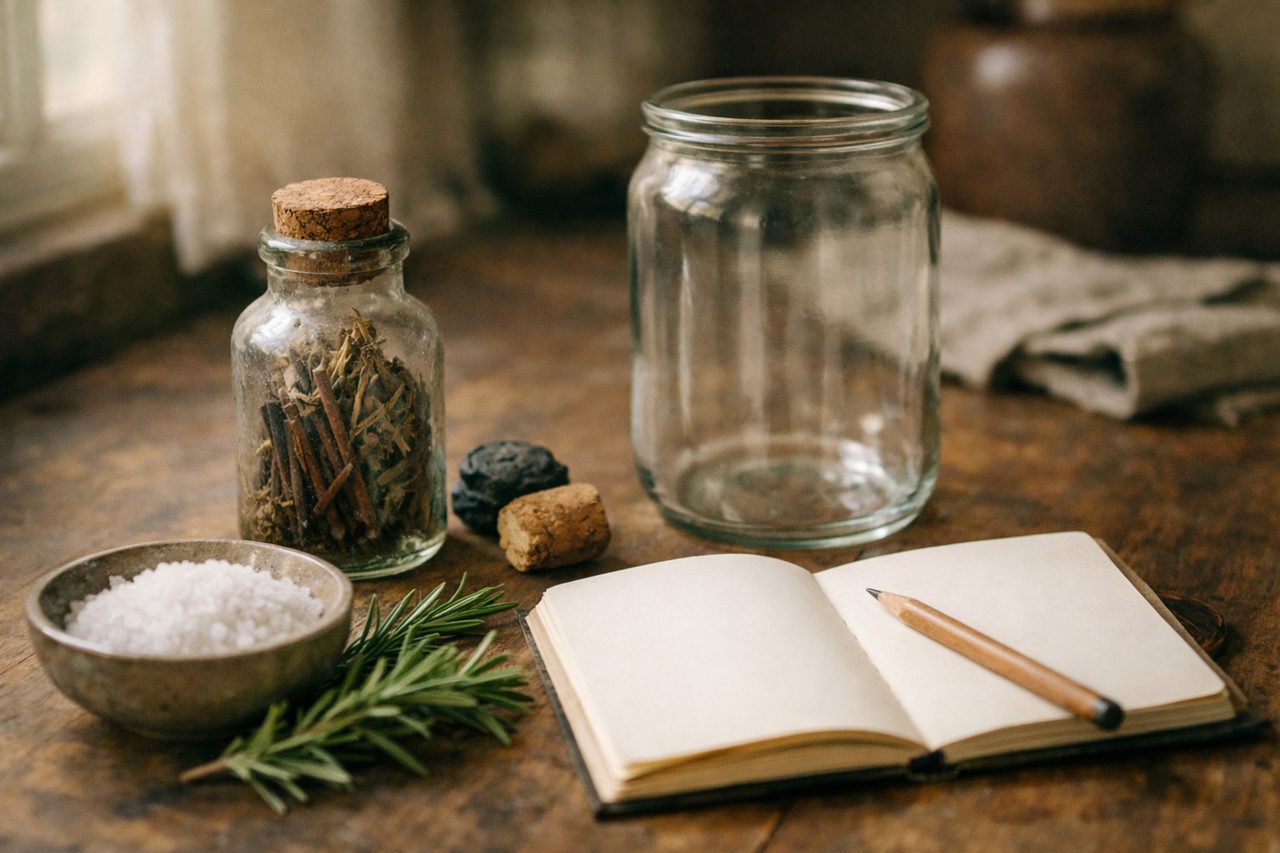
You will need:
- A small glass jar or bottle with a cork or tight lid
- Three iron nails and a handful of pins or needles
- A tablespoon of coarse salt
- A sprig of rosemary and a bay leaf (or other protective herbs)
- A few strands of your hair or a nail clipping
- Enough vinegar or red wine to cover everything
- A black candle and a heat-safe holder
Steps:
- Cleanse your space and your jar first. A little smoke, a sprinkle of salt water or our spiritual cleansing methods all work.
- Light the candle. Take a few slow breaths and think about the home and people you want to keep safe.
- Drop the nails and pins in one at a time. With each one, say: Sharp and strong, you guard this home.
- Add the salt, then the herbs, then your hair or clipping.
- Pour in the vinegar or wine until everything is covered. Hold the jar in both hands and say: Bottle of iron, salt and green, catch what harms, seen and unseen. Hold it fast and let it rest, so all within this home are blessed. So mote it be.
- Close the lid tightly and drip wax from the candle around it to seal it.
- Let the candle burn down while you stay nearby, or snuff it out and use it again when you refresh the bottle.
Write the date, your ingredients and the words you used in your Book of Shadows. Keeping a record like this is a big part of crafting your own spells, and it makes the next bottle easier to make.
Other Kinds of Witch Bottles
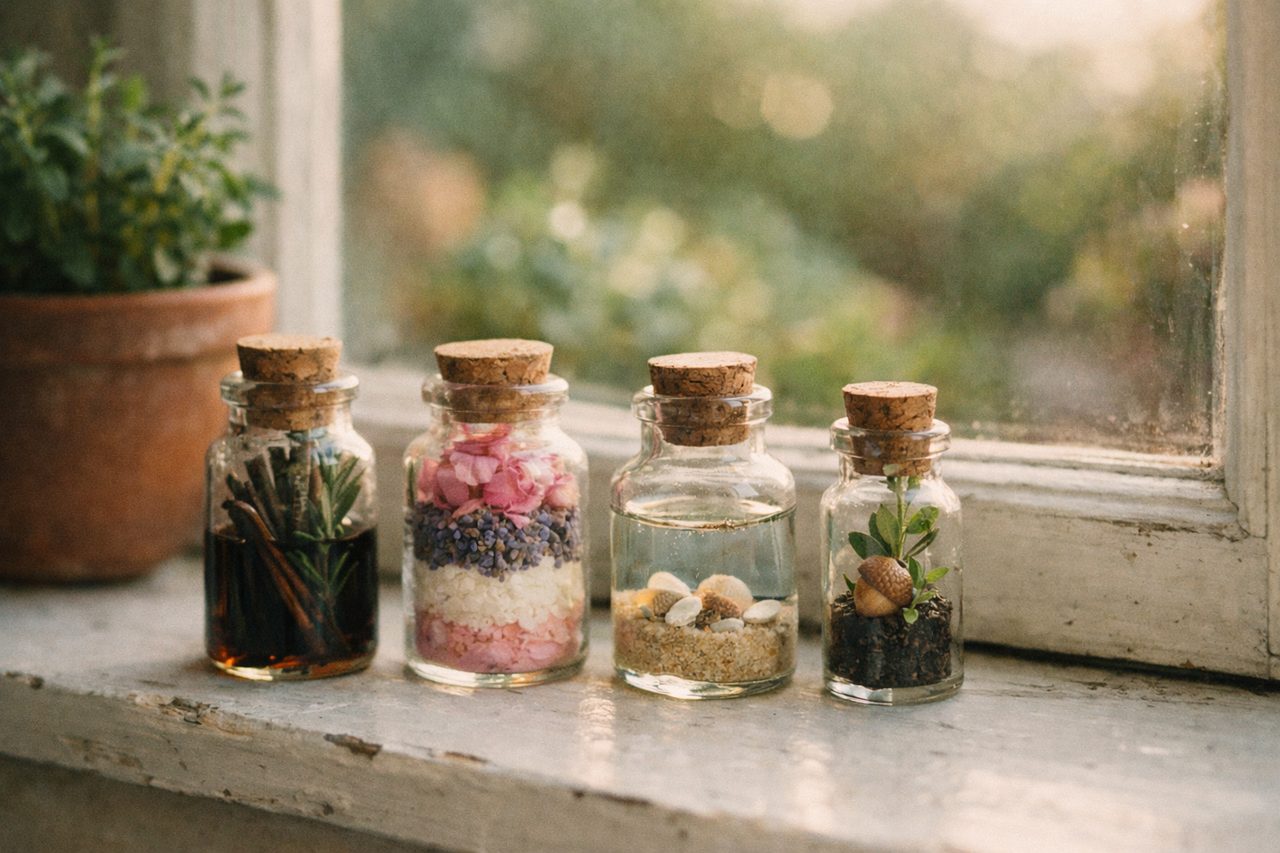
Once you know the basic shape of the spell, you can adapt it. Witch bottles are really a type of jar spell, and our article Jar Spells Made Simple covers the wider family. Here are a few variations to try:
- Home blessing bottle: swap the sharp things for sugar, dried rose petals, lavender and a cinnamon stick. Instead of catching harm, it invites peace and sweetness.
- Travel bottle: a tiny vial with a pinch of salt, a sliver of rosemary and a single pin, kept in the glove box or your bag.
- Garden bottle: soil from your garden, a few seeds, an acorn and a small iron nail, buried at the edge of a flower bed to protect your plants.
- Sea witch bottle: sand, tiny shells and a little seawater, for anyone who feels most protected by the ocean. Only collect empty shells, and check local rules before taking sand from a beach.
Where to Put Your Witch Bottle
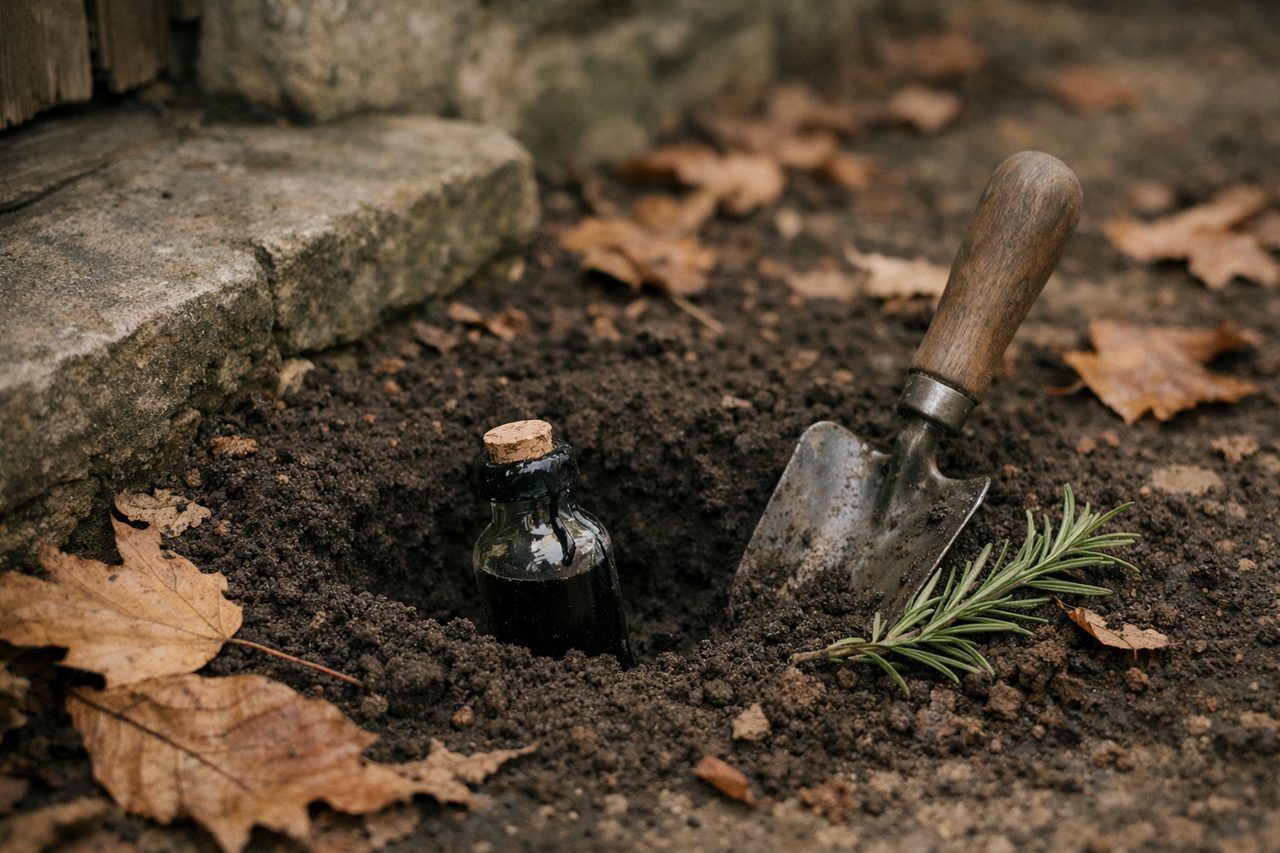
Traditionally, witch bottles went under the hearth, beneath the doorstep or inside a wall, and many were buried upside down like the Greenwich bottle. Today you have plenty of choices:
- Buried near your front door or at the corner of your property. This is the classic choice.
- In a flowerpot by the entrance, tucked under the soil. Ideal for apartments and balconies.
- At the back of a cupboard near the front door, or high on a shelf where no one will knock it over.
- Near the hearth or stove, the heart of the home, if you'd like to follow the old custom.
If you rent, a flowerpot or cupboard spot is the respectful choice, since digging up a landlord's garden or hiding things in walls isn't yours to do. Once your bottle is in place, the old advice is to leave it alone and let it work.
How Long Does a Witch Bottle Last?
There's no fixed rule. Buried bottles were meant to stay put for good, and the ones archaeologists find today have been quietly sitting there for centuries. Many modern witches make a new one each year, often at Samhain, when the Wheel of the Year turns over and it feels natural to renew protection. You might also make a fresh bottle when you move house, after a hard stretch of life or simply when your intuition tells you it's time.
When you retire an old bottle, thank it first. If it's sealed, bury it somewhere away from your home, or wrap it well and put it out with the rubbish. If you'd rather empty it, pour the liquid down the drain with running water, and rinse and recycle the glass. Wash your hands afterward, and give the spot where it sat a quick cleansing.
Our article Protection Spells for Your Home has a salt threshold blessing and other spells that pair well with a new bottle.
A Few Safety Notes
- Glass and sharp things: handle nails and pins carefully, and label or hide your bottle well out of reach of children and pets.
- Fire: never leave a burning candle unattended, and keep it away from curtains and dried herbs.
- Hygiene: if you follow the old recipe and use urine, seal the bottle well and wear gloves when you dispose of it. Vinegar does the same job without the mess.
- Where you bury it: only on your own property or with permission, and never on public land.
- If you find an old one: leave it sealed and contact a local museum or historical society. Old witch bottles are rare and help historians learn about everyday life in the past.
Final Thoughts
A witch bottle is small, cheap and wonderfully practical. It links you to centuries of ordinary people protecting their homes the best way they knew how, and it asks for nothing more than a jar, a few nails and a clear intention. Make one this waning moon, tuck it somewhere safe and let it keep watch while you get on with your life.
Have you ever made a witch bottle, or found an old one? Tell us what you put in yours in the comments!
Sources
Blagrave, Joseph. The Astrological Practice of Physick. London, 1671.
Merrifield, Ralph. The Archaeology of Ritual and Magic. Batsford, 1987.
Hoggard, Brian. Magical House Protection: The Archaeology of Counter-Witchcraft. Berghahn Books, 2019.
Cunningham, Scott. Cunningham's Encyclopedia of Magical Herbs. Llewellyn Publications, 1985.
Cunningham, Scott. Wicca: A Guide for the Solitary Practitioner. Llewellyn Publications, 1988.
Check out our other articles:
Protection Spells for Your Home
Jar Spells Made Simple
Herbs for Protection
Wiccan Holidays - Samhain
See All Articles
Love this article? Share the magick with your friends and loved ones!