Two of the brightest full moons of 2026 are on their way, and they're bookends for the darkest stretch of the year.
The Beaver Moon rises on November 24, and the Cold Moon follows on December 23, just two days after Yule. Both are supermoons this year, so they'll hang a little larger and brighter than usual over frosty gardens and early snow.
Here are the dates, where the names come from, why these moons matter in Wicca, a simple spell for each, and how to spend the quiet month between them.
Dates and Times for 2026
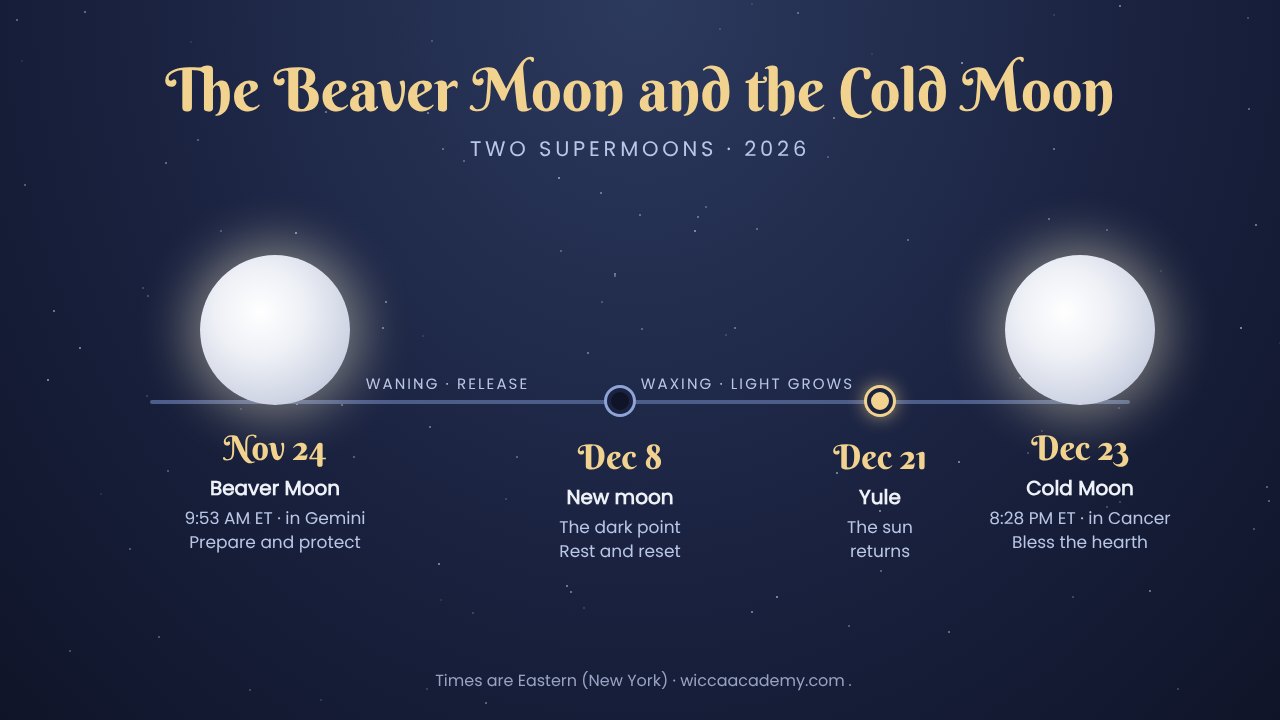
Here are the moments to mark in your Book of Shadows (all times Eastern):
- Beaver Moon: Tuesday, November 24, at about 9:53 AM, in Gemini. It's a supermoon.
- New moon: Tuesday, December 8, at about 7:53 PM, in Sagittarius. This is the dark point between the two.
- Yule, the winter solstice: Monday, December 21.
- Cold Moon: Wednesday, December 23, at about 8:28 PM, in Cancer. It's the closest full moon of 2026, so it's the biggest-looking one of the year.
The moon looks full for a night or so on either side, so hold your rite on whichever evening suits you. If you're west of the Eastern time zone, the Cold Moon's peak falls earlier on the 23rd; in Europe and beyond it's already December 24. Our moon calendar shows the times for your own location.
A supermoon is simply a full moon that happens near the moon's closest point to Earth. The difference is real but gentle: it can look up to about 14% bigger and 30% brighter than a full moon at its farthest. You'll notice it most just after moonrise.
Where the Names Come From

Beaver Moon and Cold Moon are part of the set of full moon names made popular by The Old Farmer's Almanac, which gathered them from Algonquin and other Native American sources and from colonial American usage. Treat the stories behind them as tradition rather than recorded history.
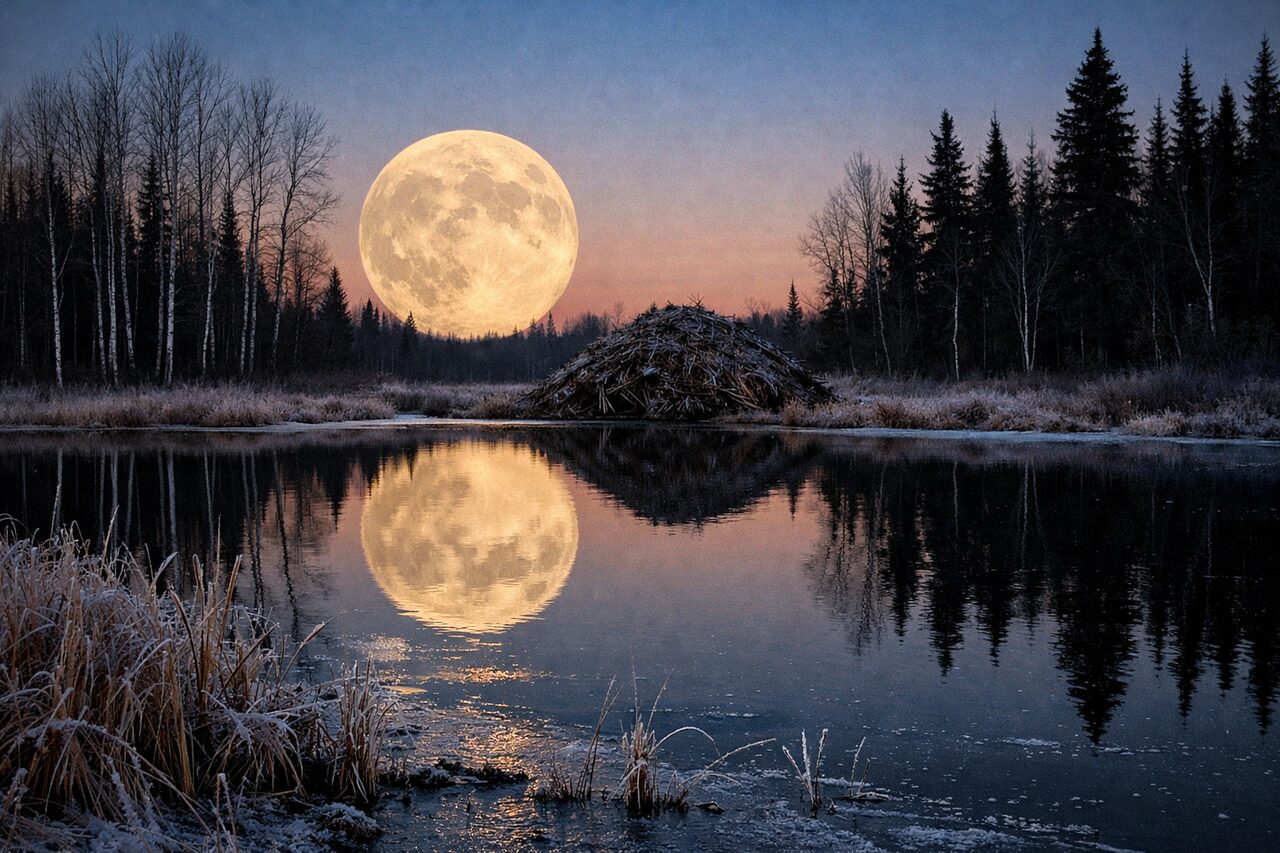
- Beaver Moon: November is when beavers finish their lodges and stock up on branches before the ponds freeze. It was also the season for setting beaver traps in colonial North America. You'll also hear it called the Frost Moon.
- Cold Moon: the name just means what it says, as winter settles in. Its other common name, the Long Night Moon, fits beautifully, because it falls near the longest nights of the year.
Many Wiccan and pagan books use their own names too, such as the Mourning Moon for November and the Oak Moon for December. None of these is the "correct" one. Each month's full moon has its own page in our full moon guide, including the Beaver Moon and the Cold Moon.
Why These Two Full Moons Matter in Wicca
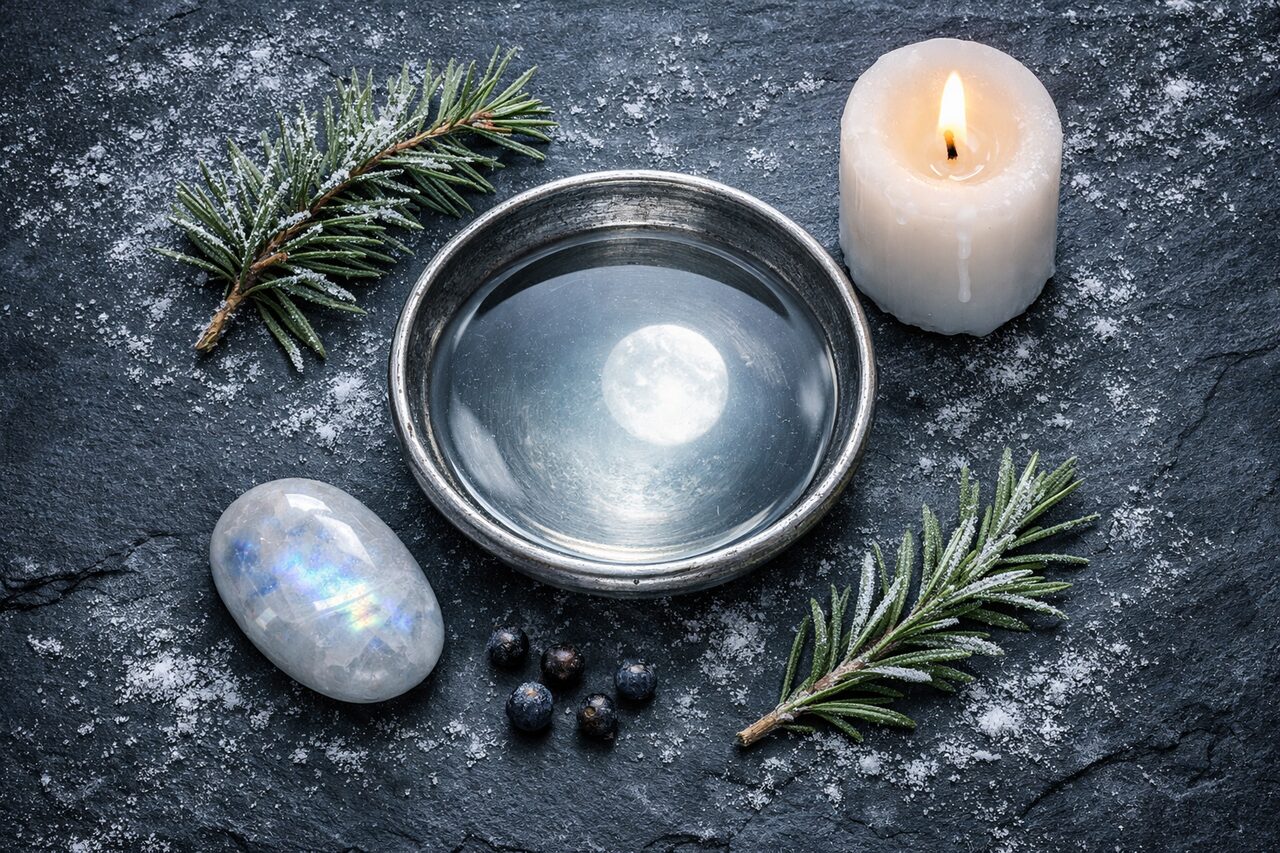
Wiccans gather at the full moon for an esbat, a ritual that honors the Goddess in her fullness. Where the sabbats follow the sun around the Wheel of the Year, esbats follow the moon. As Scott Cunningham explains in Wicca: A Guide for the Solitary Practitioner, the full moon is a time to honor the Goddess and to work magick. If you'd like a refresher on who she is, read Who Are the Moon Goddess and the Horned God?
These two moons have a special place on the Wheel. Samhain has passed and we're deep in the dark half of the year. The Beaver Moon is about getting ready, while the Cold Moon shines just after the sun is reborn at Yule. Between them runs the darkest month of the year, a time to rest, look inward and trust that the light is coming back. Our course on the Wiccan holidays walks through the whole cycle if you want to go deeper.
Beaver Moon Magick (November 24)
Think like the beaver: practical, steady and a little bit ahead of the weather. This full moon is perfect for magick about home, security, money, and finishing what you started before the year closes. It falls in Gemini, an air sign of words and ideas, so it's also a great night to write things down, make lists and have that honest conversation you've been putting off.
A Winter Stores Jar
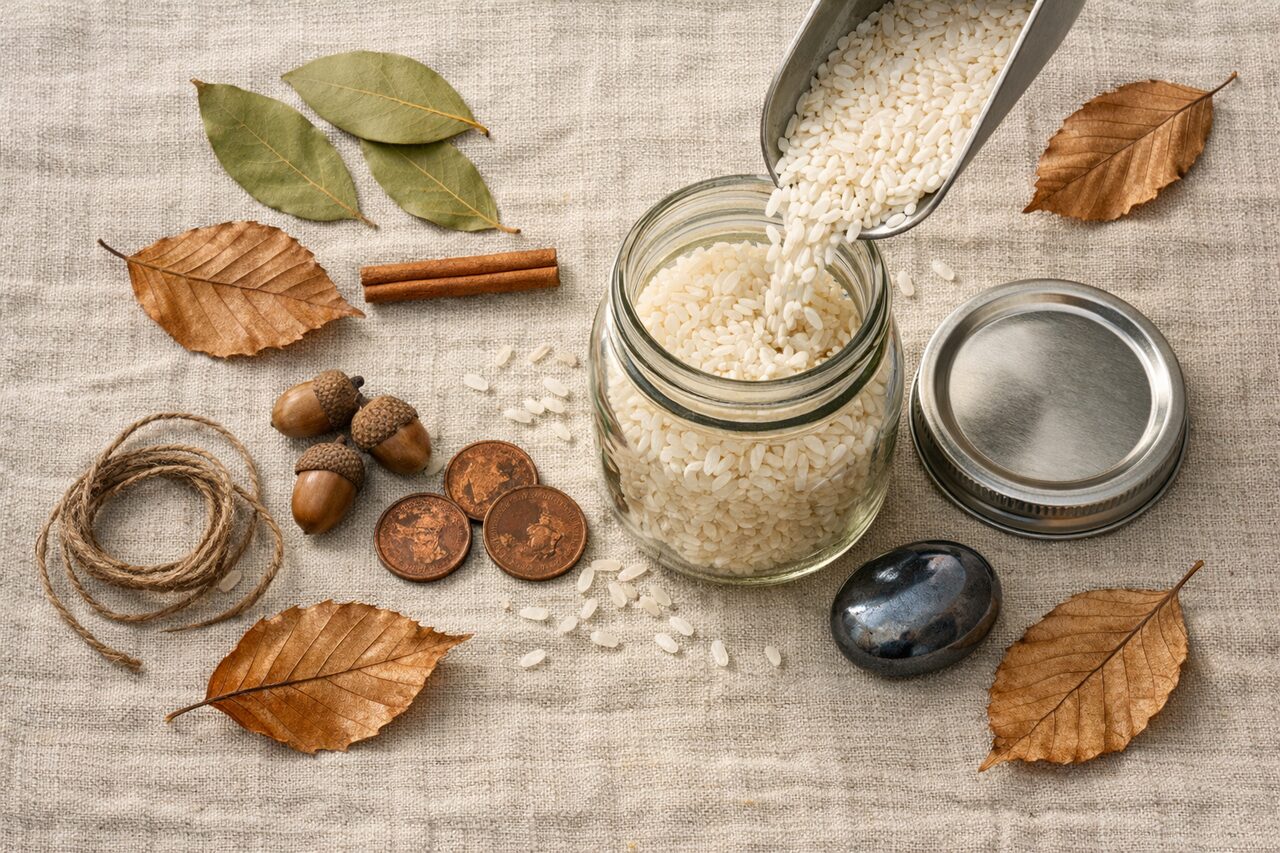
This simple jar spell asks for a well-stocked, secure winter, in your cupboard and in your life. If you've never made one, our guide to jar spells made simple covers the basics.
You will need:
- A small clean jar with a lid
- Uncooked rice (enough to fill most of the jar)
- Three bay leaves and a cinnamon stick
- Three coins and a few acorns or other nuts (optional)
- A hematite or any stone that feels steadying
- A pen and a strip of paper
Steps:
- On the night of the full moon, tidy one small space first, like a shelf or a drawer. The beaver builds before it rests.
- On the paper, list three things you need for a secure winter: a paid bill, a warm home, a steady job, rest. Be specific.
- Write one word on each bay leaf for your three needs. Bay is traditionally linked with protection and success.
- Layer the rice, bay leaves, cinnamon, coins and acorns into the jar, then fold the paper and push it into the middle. Set the stone on top.
- Hold the jar and say: Like the beaver at the water's edge, I build, I gather, I prepare. My home is warm, my stores are full, my winter safe in the Goddess's care. So mote it be.
- Close the lid and keep the jar in your kitchen until spring. When the days are long again, return the rice and leaves to the earth or the compost and give thanks.
Between the Moons: The Darkest Month

After November 24 the moon wanes, shrinking a little each night until the new moon on December 8. Waning moon time is traditionally for release: clearing, cleansing and letting go. It's a natural moment for a home cleansing before the holidays, and our guide to spiritual cleansing has easy ways to do it.
From December 8 the moon waxes again, growing toward the Cold Moon. That waxing fortnight lines up with the run-up to Yule, so the light is growing in the sky at the very time we celebrate the sun's return. Try these small practices to stay connected through the month:
- Step outside each clear evening and notice the moon's shape, even for a minute. Note it in your journal.
- Rest on purpose. Go to bed a little earlier in the dark weeks. Rest is part of the cycle, not a failure to keep up.
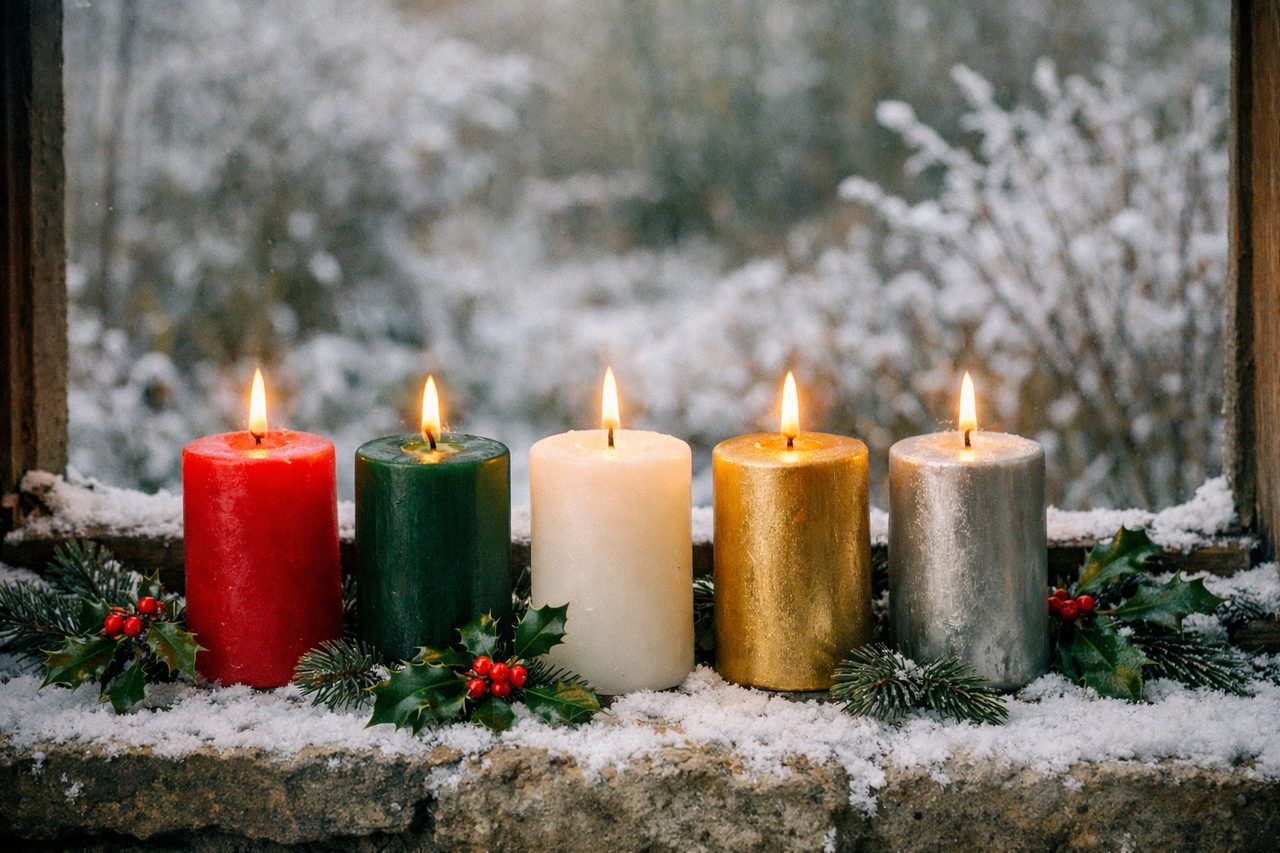
- Light a candle at dusk on the shortest days as a small promise that the light returns. Our winter solstice rituals build on this beautifully.
Cold Moon Magick (December 23)
The Cold Moon falls in Cancer, the sign the moon itself rules, so this is the moon at home. Cancer is about family, the hearth and feeling safe. Coming two days after Yule, in the middle of the holiday season, this full moon asks you to bless your home and the people in it, and to name a hope for the year to come.
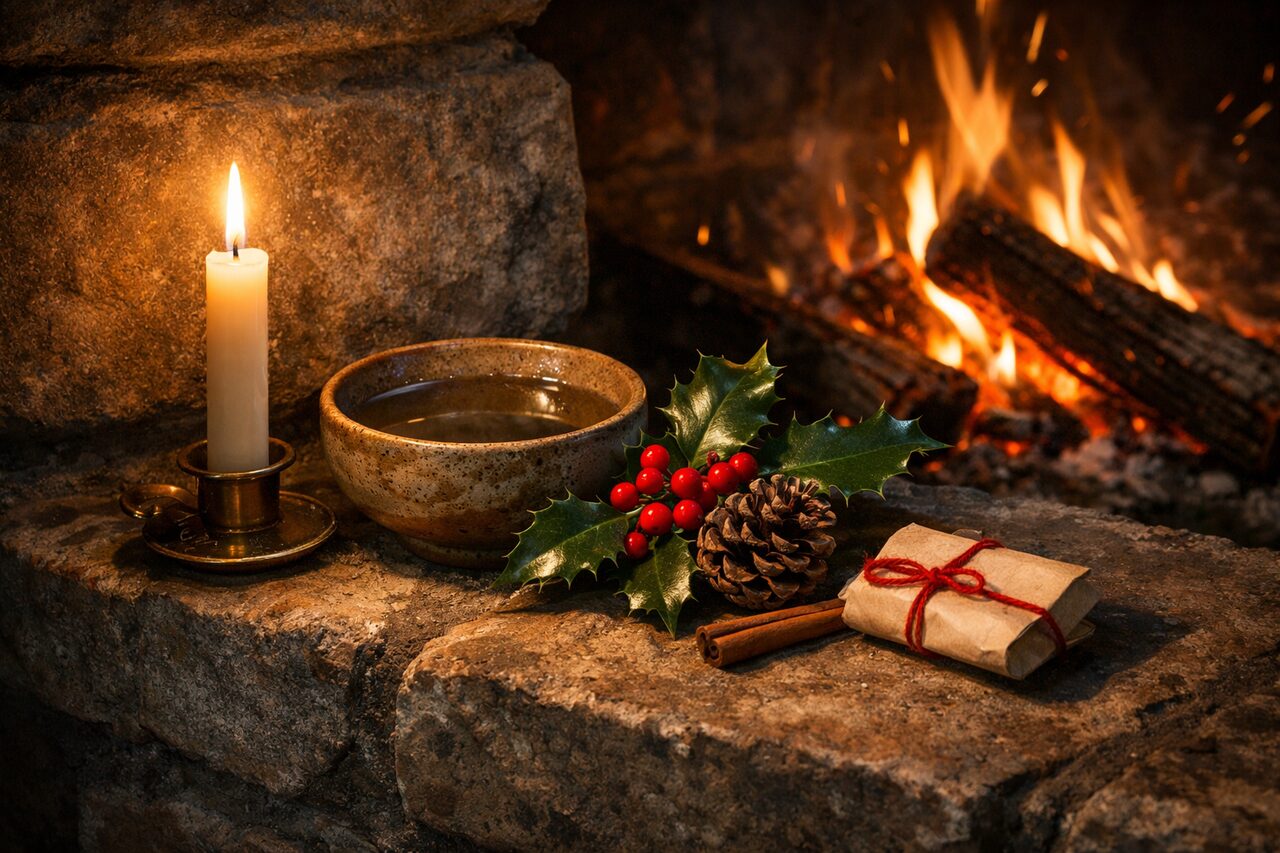
A Long Night Hearth Blessing
You will need:
- A white or silver candle on a fire-safe dish
- A bowl of water
- A sprig of evergreen (pine, fir or holly) and a cinnamon stick
- A small slip of paper, a pen and a piece of red thread
Steps:
- Set everything near the heart of your home: a fireplace, the kitchen table or wherever people gather.
- Light the candle and say: Lady of the Long Night, shining full above the snow, bless this hearth and all who gather here. Keep us warm, keep us kind, keep us close.
- Dip the evergreen in the water and lightly sprinkle it at your front door and in each main room, or simply hold it up in each room if you'd rather keep things dry.
- Return to the candle. On the paper, write one hope for the new year. Roll it around the cinnamon stick, tie it with the red thread and set it by the candle.
- Sit quietly for a few minutes, then snuff the candle. Keep the cinnamon bundle on your altar until your first full moon of 2027.
If you can, leave a jar of water on a windowsill or doorstep overnight under this extra-bright moon. Our article on moon water explains how to make it and use it all winter. For more candle work, our magick and spells course takes you step by step.
Crystals and Herbs for the Beaver Moon and Cold Moon
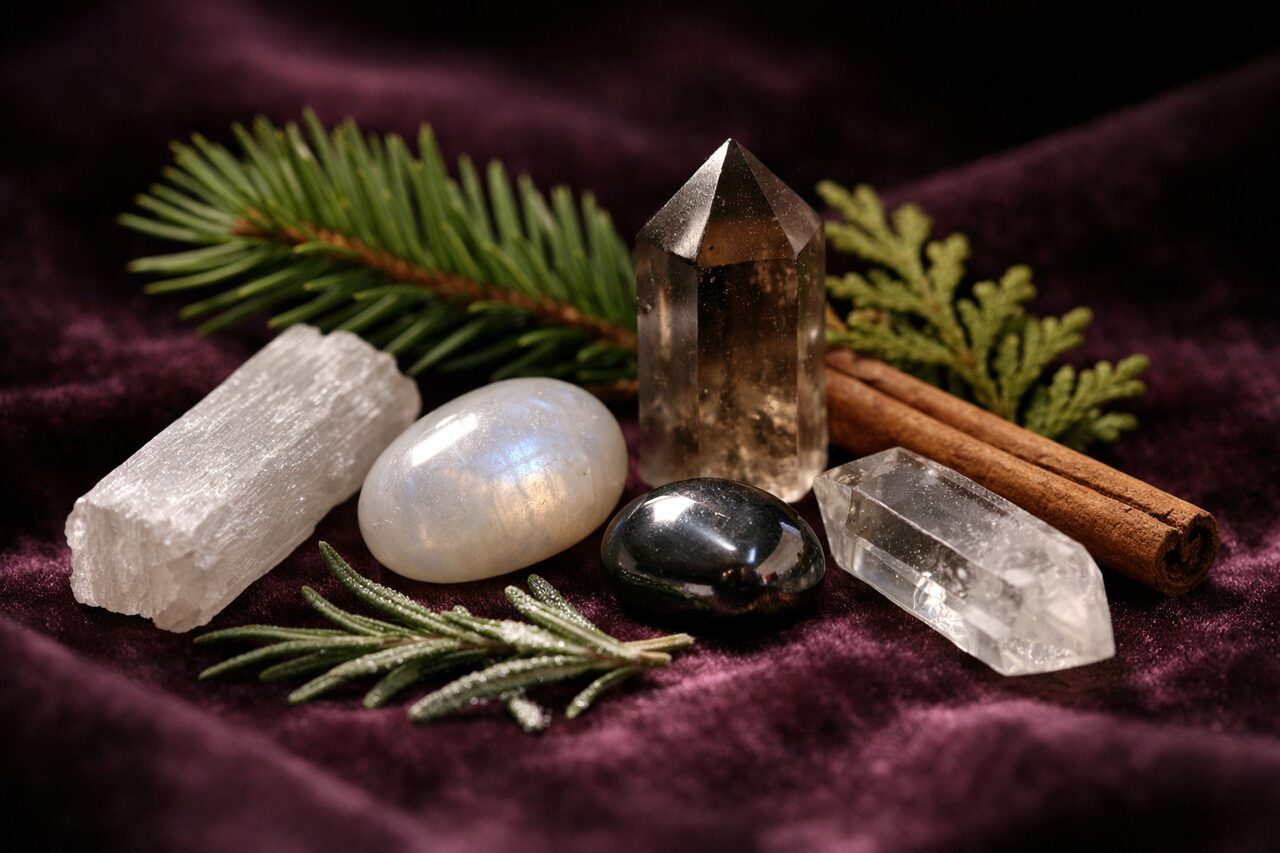
Use what you already have. These are simply good companions for the season:
- Hematite: grounding and steady, a Beaver Moon stone for practical work.
- Smoky quartz: for letting go during the waning weeks between the moons.
- Moonstone: the classic moon stone, for the Goddess, intuition and dreams.
- Selenite: named after Selene, the Greek moon goddess. Keep it dry, since it's soft and dissolves in water.
- Clear quartz: for clarity and a bright new intention at the Cold Moon.
- Cedar and pine: evergreens for protection, cleansing and endurance through winter.
- Cinnamon and bay: warmth, success and prosperity, straight from the spice rack.
- Rosemary: protection and remembrance. A pot on the windowsill is a lovely winter companion.
For more on keeping your home safe this season, see our herbs for protection and protection spells for your home.
If You Live in the Southern Hemisphere
Below the equator these same moons shine on late spring and the summer solstice. The Beaver Moon suits growth and momentum, and the Cold Moon, near Litha, is a moon of celebration and the sun at its height. Follow the season outside your door.
A Few Safety Notes
- Fire: never leave a candle burning unattended, and keep it away from evergreens, dried herbs, curtains and holiday decorations.
- Pets and children: holly berries are toxic if eaten, and some essential oils are harmful to pets, so keep both out of reach.
- Cold nights: moon-gazing in December is magical, but dress warmly, watch for ice and keep outdoor rituals short.
- Renters: if open flames aren't allowed, use a battery candle. The intention is what matters.
Final Thoughts
The Beaver Moon and the Cold Moon hold the darkest weeks of the year between them, like two lanterns on either side of a long path. One asks you to prepare, the other asks you to rest and hope. A tidy shelf, a candle and a few honest words under a bright winter moon are more than enough.
How will you spend these two full moons this year? Do you have a favorite name for them? Tell us in the comments.
Sources
Cunningham, Scott. Wicca: A Guide for the Solitary Practitioner. Llewellyn Publications, 1988.
Cunningham, Scott. Cunningham's Encyclopedia of Magical Herbs. Llewellyn Publications, 1985.
Cunningham, Scott. Cunningham's Encyclopedia of Crystal, Gem & Metal Magic. Llewellyn Publications, 1988.
Conway, D. J. Moon Magick: Myth & Magic, Crafts & Recipes, Rituals & Spells. Llewellyn Publications, 1995.
Hutton, Ronald. The Stations of the Sun: A History of the Ritual Year in Britain. Oxford University Press, 1996.
Check out our other articles:
Moon Phases and Simple Rituals
Moon Water
Night of Hecate
Yule: The Winter Solstice
See All Articles
Love this article? Share the magick with your friends and loved ones!
Beaver Moon and Cold Moon FAQs
When is the Beaver Moon in 2026?
The Beaver Moon is on Tuesday, November 24, 2026, reaching full at about 9:53 AM Eastern time. It is a supermoon in Gemini, and it looks full the night before and the night after as well.
When is the Cold Moon in 2026?
The Cold Moon is on Wednesday, December 23, 2026, at about 8:28 PM Eastern time (December 24 in Europe and UTC). It is a supermoon in Cancer, two days after Yule, and the closest full moon of 2026.
Why is it called the Beaver Moon?
The name comes from the North American full moon names popularized by The Old Farmer's Almanac. November is when beavers finish their lodges before the ponds freeze, and it was also beaver trapping season in colonial times. It is also called the Frost Moon.
What is the Cold Moon good for in magick?
The Cold Moon, also called the Long Night Moon, suits rest, reflection, home and family blessings, releasing the old year and setting a hope for the new one. Falling right after Yule, it pairs naturally with welcoming the returning light.
What should I do on the Beaver Moon?
The Beaver Moon is a practical full moon for home, security and preparation. Tidy and bless your home, make a protection or prosperity jar, finish an unfinished task, and set intentions for a safe, well-supplied winter.