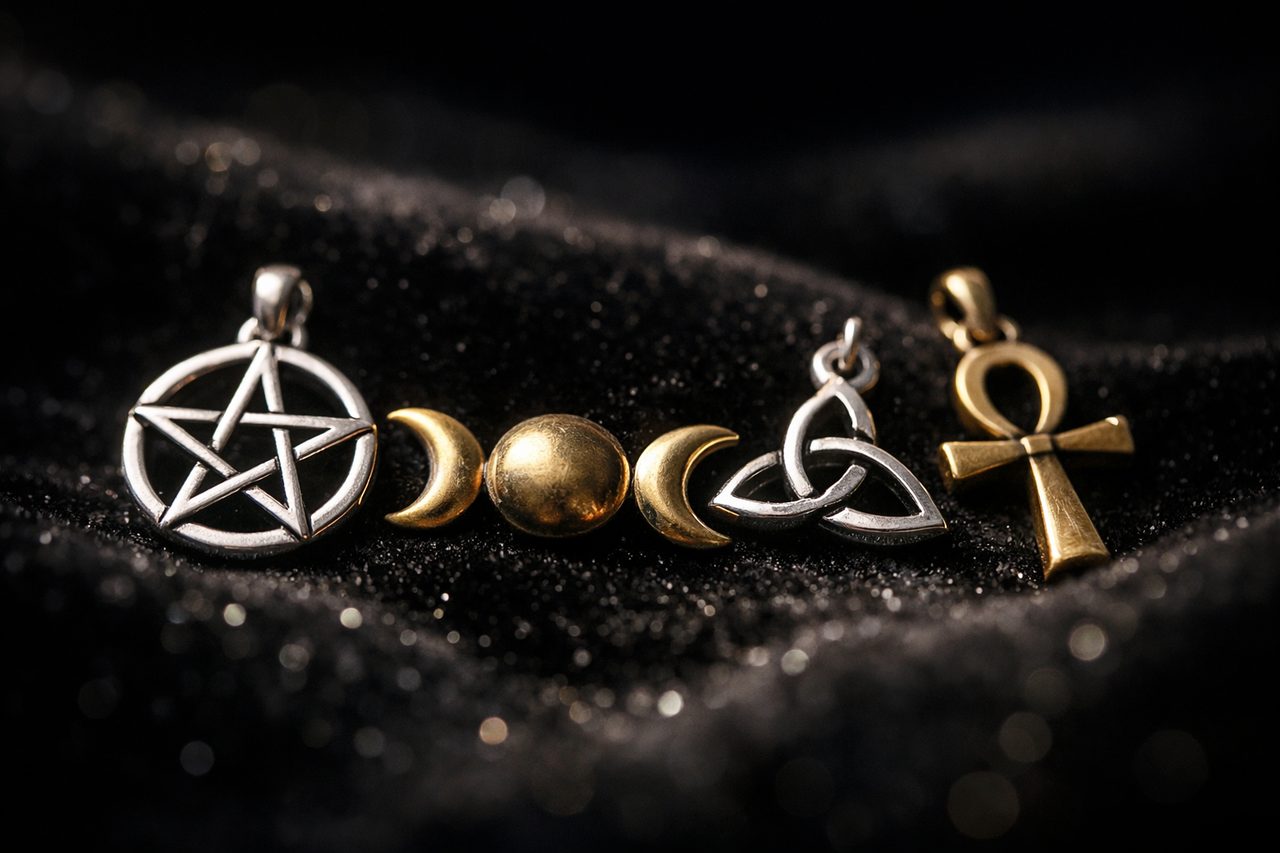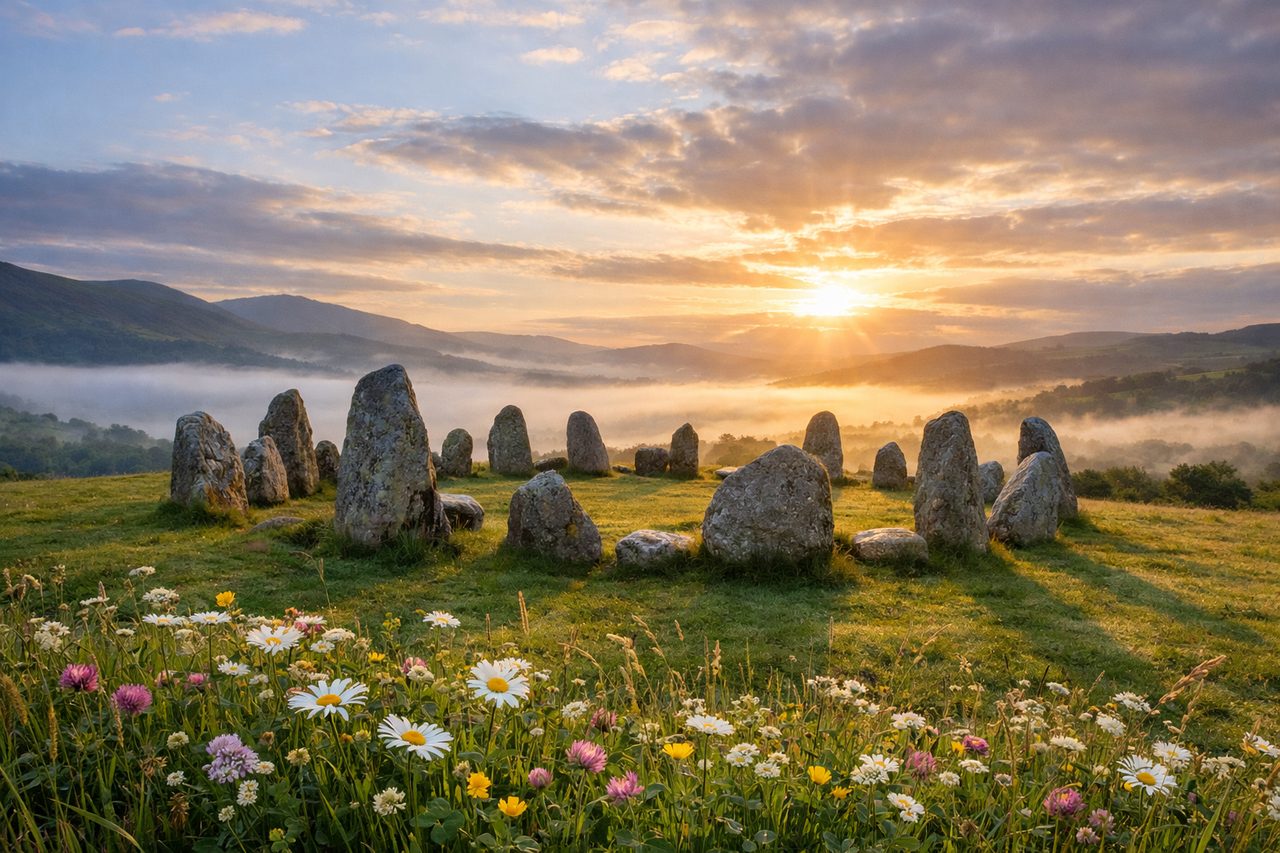
Paganism is a family of nature-centered religions, some ancient and many modern, that honor the Earth, the cycles of the seasons and, for most followers, more than one god or goddess.
If you've ever felt closer to the sacred in a forest than in a building, or found yourself marking the solstice without quite knowing why, you're in good company. Millions of people around the world call themselves Pagan today, and they follow a surprisingly wide range of paths.
In this guide, we'll cover the paganism definition and where the word comes from, how modern Paganism differs from the religions of the ancient world, the main pagan religions people follow today, what most Pagans believe, which holidays are pagan, a few common myths and some gentle ways to start exploring for yourself.
Paganism in a Nutshell: Quick Answer
What is paganism? Today, Paganism is an umbrella term for modern religions inspired by the pre-Christian beliefs of Europe and the Mediterranean, such as Wicca, Druidry, Heathenry and Hellenism. Most Pagans see nature as sacred, celebrate the turning seasons, honor gods and goddesses or the divine in many forms, and value personal experience over fixed doctrine. Historically, "pagan" was simply a label for people who weren't Christian, Jewish or Muslim.
Paganism Definition and Pagan Meaning
The word pagan comes from the Latin paganus, which originally meant someone from a pagus, a rural district. In everyday Latin it came to mean a villager or country person, and Roman soldiers also used it for a civilian.
From around the 4th century, Latin-speaking Christians began using paganus for people who followed the old gods. Historians still debate exactly why. One popular idea is that the old religions held on longest in the countryside, while another is that Christians saw themselves as "soldiers" of their faith and everyone else as civilians. Either way, the word started as an outsider's label, not a name any ancient religion chose for itself.
Today, the pagan meaning has two main senses:
- Historical pagans: the many polytheistic religions of the ancient world, such as those of the Greeks, Romans, Celts, Norse and Egyptians. These people didn't think of themselves as "pagan" at all. They simply honored their own gods.
- Modern Pagans: people today who have chosen a nature-centered, often polytheistic spiritual path. Many write it with a capital P, the same way you would write Christian or Buddhist. Scholars also call this contemporary Paganism or Neopaganism.
Our article how to explain paganism to non-pagans has friendly ways to share this definition with family and friends who are curious.
Modern Paganism vs Historical Paganism
It's tempting to imagine that modern Pagans are carrying on an unbroken religion from ancient times, but that isn't the case, and most Pagans are happy to say so. The old religions of Europe faded as Christianity spread, and much of what they practiced was never written down.
Modern Paganism grew out of a revival. From the 18th and 19th centuries, poets, folklorists and romantic thinkers became fascinated with Druids, fairy lore and the old gods. In the 20th century that interest became living religion. Wicca went public in England in the 1950s through Gerald Gardner, and other paths followed. Historian Ronald Hutton tells this whole story in his book The Triumph of the Moon.
So modern Pagans draw on three things: what scholars know about ancient religion from texts and archaeology, folk customs that survived in the countryside, and their own experience in the present day. Being honest about that mix is part of a healthy practice. A path doesn't need to be thousands of years old to be meaningful.
What Religions Are Pagan? The Main Pagan Paths
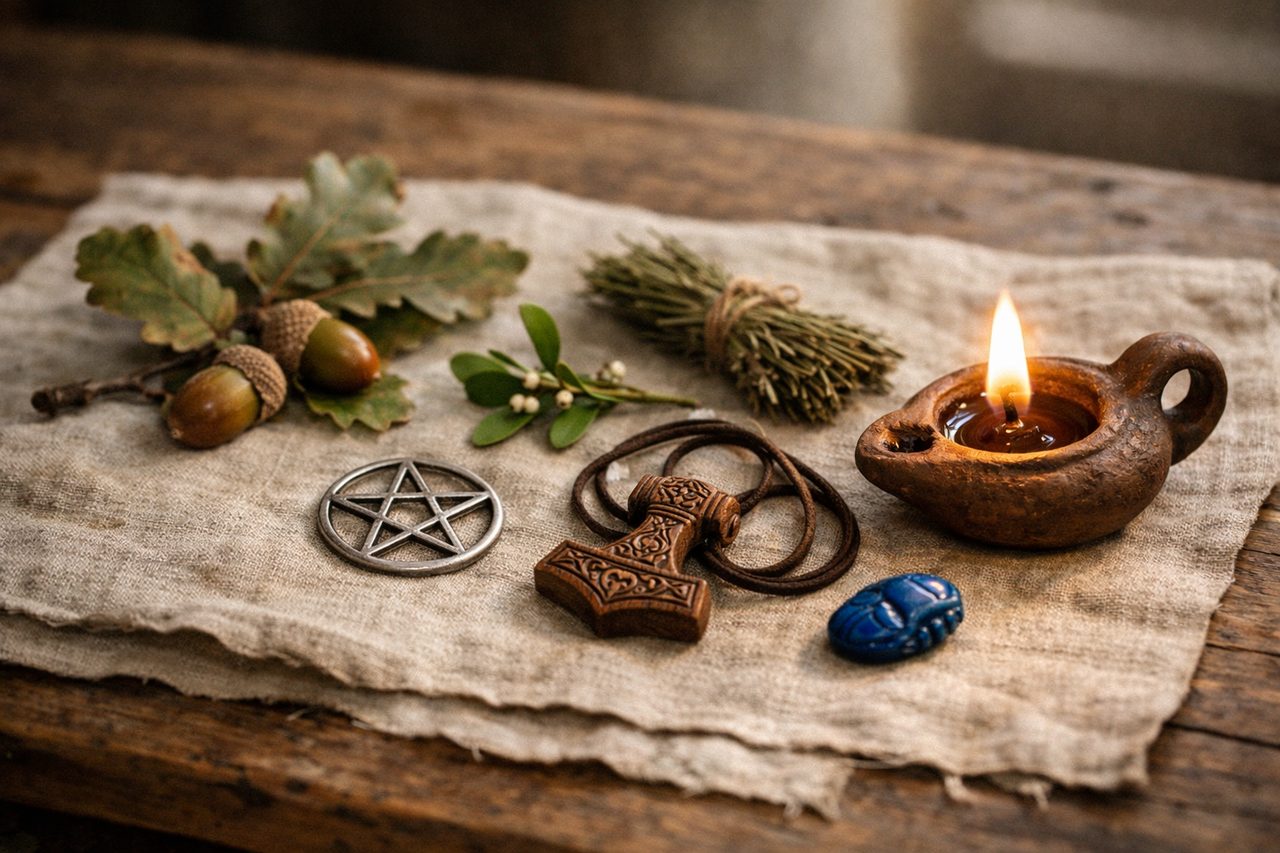
When people ask "what religions are pagan?", they usually mean the modern pagan religions below. Each has its own gods, holidays and customs, and there's lots of variety inside each one too.
Wicca
Wicca is a modern witchcraft religion that honors the Goddess and the God, works magick, and celebrates eight seasonal festivals called sabbats along with full moon gatherings called esbats. It can be practiced in a coven or alone. Our guide what is Wicca is the best place to start, and the difference between Wicca and paganism explains how the two fit together: all Wiccans are Pagan, but not all Pagans are Wiccan.
Druidry
Modern Druidry is inspired by the Druids of the ancient Celtic world, the priestly class described by Roman and Greek writers, and by the Welsh and Irish literature of later centuries. Druids today focus on nature, creativity, poetry and the sacred land. Many celebrate the same eight seasonal festivals as Wiccans. Well-known groups include the Order of Bards, Ovates and Druids and Ár nDraíocht Féin.
Heathenry and Asatru
Heathenry is the revival of the religion of the Norse and other Germanic peoples. Heathens honor gods such as Odin, Thor, Frigg, Freyja and Freyr, as well as ancestors and land spirits. In Iceland, the Ásatrú Fellowship was officially recognized as a religion in 1973, and "Asatru" (faith in the Aesir gods) is a common name for the path. Gatherings often include a blót, an offering to the gods, and a sumbel, a ritual round of toasts. Most Heathen groups welcome anyone drawn to the gods. If you're looking for one, choose a group that clearly says it's open to people of every background.
Hellenism
Hellenic polytheism, or Hellenism, honors the gods of ancient Greece, such as Zeus, Athena, Apollo, Artemis and Hestia. Practice centers on offerings, prayers, hymns and festivals from the old Athenian calendar, along with values like hospitality and reverence. Many Hellenists also mark the new moon at the start of each lunar month.
Kemeticism
Kemeticism is the modern revival of ancient Egyptian religion. Kemetic comes from Kemet, "the black land", an ancient name for Egypt. Followers honor deities such as Ra, Isis, Osiris, Hathor, Bastet, Anubis and Thoth, and many value ma'at, the Egyptian idea of truth, balance and right order. Some follow organized groups, while others practice on their own.
Eclectic Witchcraft and Eclectic Paganism
Many Pagans don't follow a single tradition. Eclectic Pagans and witches combine what speaks to them, maybe a Wiccan circle casting, Norse runes and herbal folk magick. It's one of the most popular ways to practice today, especially for solitary beginners. Read more in the rise of eclectic Wicca and solitary practice, and remember that not all witches are Wiccan, or even Pagan.
Pagan Paths Compared
| Path | Inspired by | Gods and spirits | Key holidays | Typical practice |
|---|---|---|---|---|
| Wicca | Modern English witchcraft (1950s), folk magick, older ceremonial traditions | The Goddess and the God, often seen in many named forms | Eight sabbats of the Wheel of the Year, full moon esbats | Casting a circle, spellwork, seasonal rituals, coven or solitary |
| Druidry | Ancient Celtic Druids, Welsh and Irish literature, 18th-century revival | Celtic deities, nature spirits, the land itself | Eight seasonal festivals, especially solstices and equinoxes | Outdoor ceremony, meditation, poetry, tree lore |
| Heathenry / Asatru | Norse and Germanic religion, the Eddas and sagas | Odin, Thor, Frigg, Freyja, Freyr, ancestors, land spirits | Yule, Midsummer, Winter Nights | Blót offerings, sumbel toasts, runes, community |
| Hellenism | Ancient Greek religion | The Olympian gods, heroes, household spirits | Athenian festivals, monthly new moon | Prayer, hymns, offerings, hospitality |
| Kemeticism | Ancient Egyptian religion | Ra, Isis, Osiris, Hathor, Bastet, Thoth and others | Egyptian New Year (Wep Ronpet) and temple festivals | Shrine offerings, prayer, living by ma'at |
| Eclectic | A personal mix of traditions | Whichever deities or spirits you feel called to, or none | Often the Wheel of the Year and the moon phases | Self-designed rituals, spells, nature walks, journaling |
Not sure where you fit? Our free witch type quiz is a fun way to see which styles of practice pull at you.
What Do Pagans Believe?
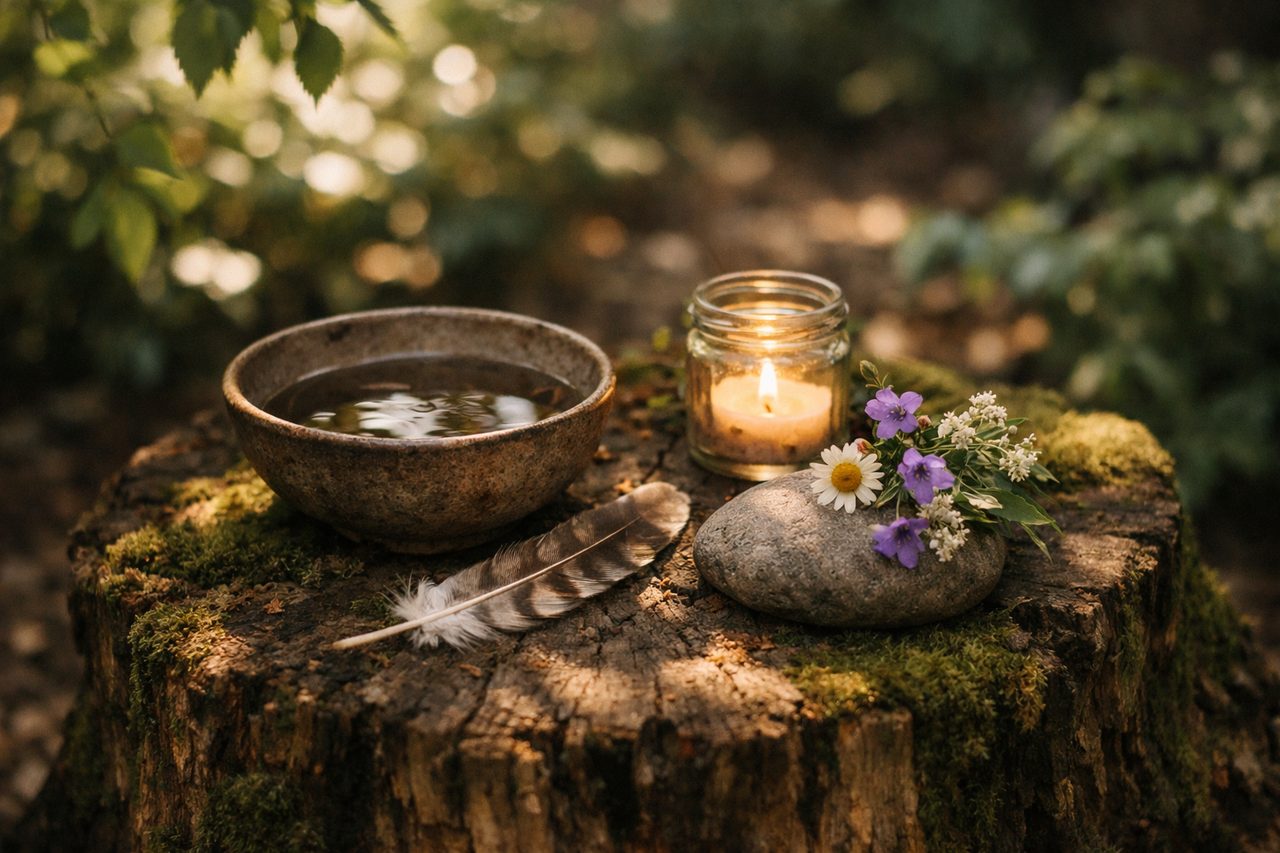
There's no single Pagan creed, and no central authority telling people what to believe. Still, most Pagans share a few core ideas:
- Nature is sacred. The Earth, the sun, the moon, rivers and trees are worthy of reverence and care, not just resources to use.
- The divine has many faces. Many Pagans are polytheists who honor several gods and goddesses. Others are duotheists, like many Wiccans who honor the Moon Goddess and the Horned God, and some are pantheists or animists who see spirit in all living things.
- The divine feminine matters. Goddesses are honored alongside gods, which many people find healing and freeing.
- Time moves in cycles. Birth, growth, death and rebirth repeat through the seasons, the moon and our own lives.
- Experience comes first. Personal practice, intuition and direct connection with the gods or nature count for more than a fixed holy book.
- Personal responsibility. Pagans generally believe you're responsible for your own actions. Wiccans often express this through the Wiccan Rede, "An it harm none, do what ye will."
Many Pagans also practice magick, but not all do. For some, Paganism is purely about devotion, seasonal celebration and living gently on the Earth. Trust what feels true for you.
Holidays That Are Pagan: The Wheel of the Year
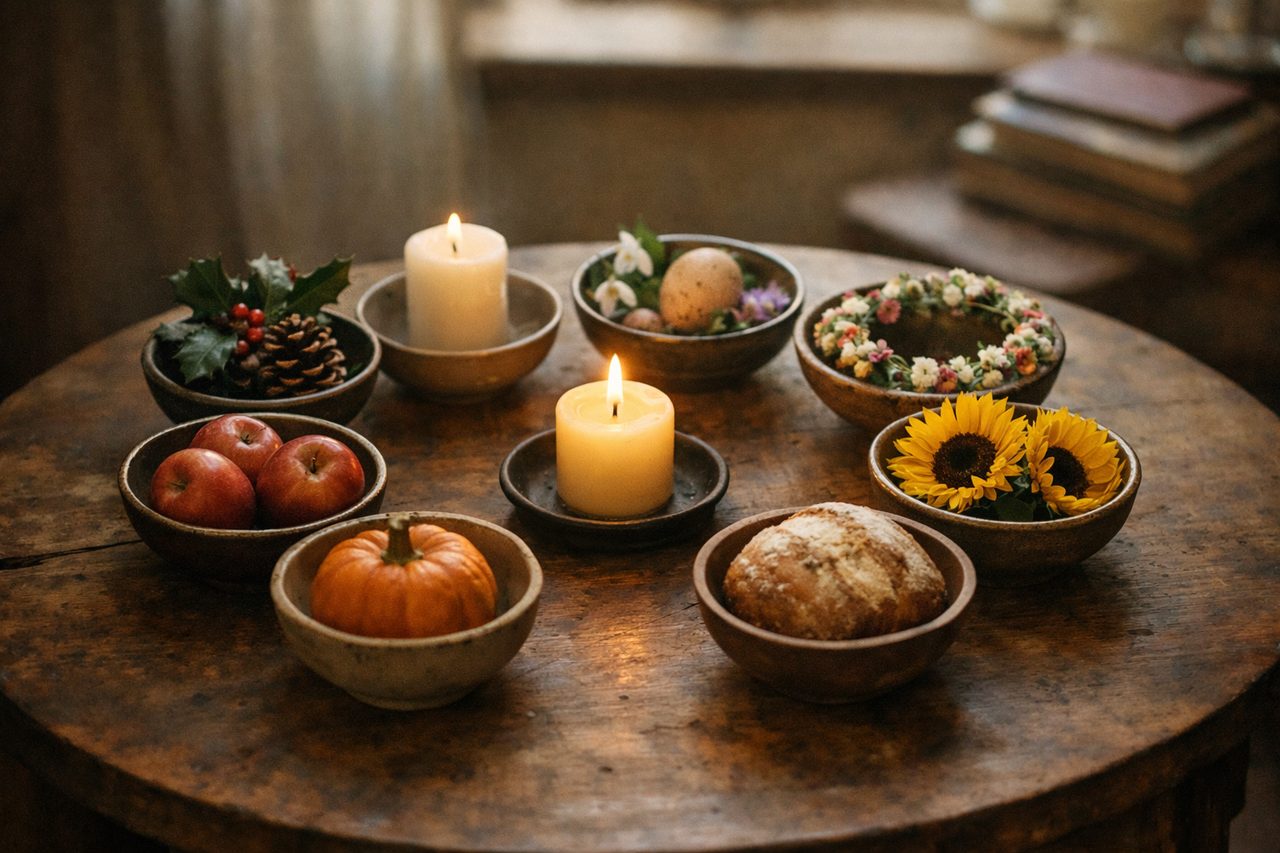
Many modern Pagans, especially Wiccans and Druids, celebrate eight festivals known together as the Wheel of the Year. The individual festivals are old, but bringing these eight together into one yearly cycle was a mid-20th-century idea that took shape among early Wiccans and Druids in England.
- Samhain (October 31): the Gaelic festival at summer's end, a time to honor the ancestors.
- Yule (Winter Solstice, around December 21): the return of the sun after the longest night.
- Imbolc (February 1): the first stirrings of spring, linked with the Irish goddess and saint Brigid.
- Ostara (Spring Equinox, around March 20): balance of light and dark, eggs and new growth.
- Beltane (May 1): the Gaelic start of summer, with fire, flowers and fertility.
- Litha (Summer Solstice, around June 21): the longest day and the peak of the sun's power.
- Lughnasadh or Lammas (August 1): the first harvest, named for the Irish god Lugh.
- Mabon (Autumn Equinox, around September 22): the second harvest and a time of thanks.
These dates are for the Northern Hemisphere. Pagans in the Southern Hemisphere usually flip the wheel to follow their own seasons.
Pagan Roots of Familiar Holidays
Some customs in mainstream holidays have pagan or pre-Christian roots, though the story is often more mixed than social media suggests:
- Christmas: "Yule" was the name of a midwinter season among Germanic peoples, and evergreens, feasting and the Yule log all have long folk histories around the solstice.
- Halloween: it began as All Hallows' Eve, the night before the Christian feast of All Saints, but many of its customs are tied to the Gaelic festival of Samhain.
- Easter: the English name may come from Eostre, a goddess the 8th-century monk Bede said gave her name to an Anglo-Saxon spring month. Little else is known about her.
- May Day: maypoles and May flowers carry on the spirit of Beltane and other old spring celebrations.
If you'd like to celebrate the sabbats in depth, our Wiccan Holidays course walks you through each one with rituals, recipes and lore.
Common Myths About Paganism
- "Pagans are evil or dark." Paganism is centered on nature, the seasons and the divine. Its ethics value honesty, hospitality, courage and harming none.
- "All Pagans are witches." Some are, many aren't. Plenty of Pagans never cast a spell.
- "Paganism is anti-Christian." Paganism is about what Pagans honor, not what they oppose. Many Pagans have Christian family and friends and get along just fine.
- "It isn't a real religion." Pagan paths have clergy, rituals, ethics and communities. Pagan chaplains serve in some prisons and hospitals, and the pentacle is among the emblems the U.S. Department of Veterans Affairs allows on veterans' headstones.
- "Paganism is an unbroken ancient religion." As we saw above, it's a modern revival inspired by the past, and that's nothing to hide.
- "Every indigenous or non-Christian religion is pagan." Hinduism, Shinto and Indigenous traditions have their own names and identities, and most of their followers don't call themselves pagan. It's respectful to use the names people choose.
How to Explore Paganism as a Beginner

You don't need permission, a teacher or special tools to start exploring Paganism. Here's a gentle way to begin:
- Spend time in nature. Walk the same park or garden each week and notice how it changes. This simple habit is the root of almost every Pagan path.
- Follow the moon. Watch the phases with our free moon calendar and take a quiet moment at each full moon.
- Celebrate the next sabbat. Light a candle, cook a seasonal meal or decorate your table. Small is fine.
- Read widely. Try one book on Pagan history and one on practice. The sources below are a great start.
- Learn about the gods. If you feel drawn to a particular pantheon, read its myths from good sources. Take your time, and notice which stories stay with you.
- Keep a journal. Write down your experiences, questions and feelings. Over time, it becomes your own Book of Shadows.
- Find community when you're ready. Look for open circles, Pagan Pride events, moots (casual meetups) or welcoming online groups.
If Wicca calls to you in particular, our guide on how to become a witch covers the next steps, and our Wicca 101 course teaches the foundations one lesson at a time.
A Note on Closed Traditions
Some spiritual practices belong to particular cultures and are passed down within those communities, such as Hoodoo, many Indigenous ceremonies and several African diaspora religions. They aren't part of Paganism, and it's respectful to learn about them from their own practitioners rather than borrowing their rituals. Our article what is Hoodoo explains why.
Final Thoughts
Paganism isn't one religion but a big, welcoming family of paths that share a love of nature, the turning seasons and the many faces of the divine. Some people find their home in a single tradition, while others weave their own way. There's no rush and no wrong door. Start by stepping outside, looking up at the moon and paying attention.
Which pagan path are you most drawn to, and what first sparked your interest? Tell us in the comments!
Sources
Hutton, Ronald. The Triumph of the Moon: A History of Modern Pagan Witchcraft. Oxford University Press, 1999.
Hutton, Ronald. The Stations of the Sun: A History of the Ritual Year in Britain. Oxford University Press, 1996.
Adler, Margot. Drawing Down the Moon. Viking Press, 1979.
Harvey, Graham. Listening People, Speaking Earth: Contemporary Paganism. Hurst, 1997.
Cunningham, Scott. Wicca: A Guide for the Solitary Practitioner. Llewellyn Publications, 1988.
Check out our other articles:
What Is the Difference Between Wicca and Paganism?
How to Explain Paganism to Non-Pagans
Wheel of the Year: The 8 Wiccan Holiday Festivals
What is Wicca?
See All Articles
Love this article? Share the magick with your friends and loved ones!
Paganism FAQs
What is the simple definition of paganism?
Paganism is an umbrella term for nature-centered religions, most of them polytheistic. Today it usually means modern paths inspired by pre-Christian Europe and the Mediterranean, such as Wicca, Druidry, Heathenry and Hellenism.
What does the word pagan mean?
Pagan comes from the Latin paganus, meaning a person from a rural district, a villager or a civilian. From around the 4th century, Christians used it for people who followed the old gods. Modern Pagans have reclaimed it as a positive name.
What religions are pagan?
The main modern pagan religions are Wicca, Druidry, Heathenry (Asatru), Hellenism, Kemeticism, Roman and Baltic revivals and eclectic Paganism. Historically, the ancient Greek, Roman, Celtic, Norse and Egyptian religions are also described as pagan.
Do pagans believe in God?
Most Pagans believe in the divine, but usually not in one single God. Many honor several gods and goddesses, many Wiccans honor a Goddess and a God, and some Pagans see the divine in nature itself.
What holidays are pagan?
Many Pagans celebrate the eight festivals of the Wheel of the Year: Samhain, Yule, Imbolc, Ostara, Beltane, Litha, Lughnasadh and Mabon. Some customs of Christmas, Halloween and May Day also have pagan or pre-Christian roots.
Is Wicca the same as paganism?
No. Wicca is one religion within the larger family of Paganism. All Wiccans are Pagan, but many Pagans follow other paths such as Druidry or Heathenry.
Can you be pagan without being a witch?
Yes. Many Pagans never practice witchcraft or cast spells. For them, Paganism is about honoring the gods, celebrating the seasons and living in harmony with nature.
How do I start practicing paganism?
Start by spending regular time in nature, following the moon phases and celebrating the next seasonal festival in a simple way. Read about Pagan history and the paths that interest you, keep a journal and look for welcoming community when you feel ready.