Shadow work is the practice of gently looking at the parts of yourself you usually keep hidden, so you can understand them, heal them and stop letting them run your life from the dark.
It has become one of the most talked-about practices in modern witchcraft, and for good reason. A lot of what holds us back in our magick (and in life) isn't a lack of spells or tools. It's old fears, old hurts and old habits we haven't looked at yet.
In this article, we'll explain what the shadow is, why so many witches make shadow work part of their practice, how to begin safely, journal prompts to get you started, and a simple ritual for the dark moon.
What Is the Shadow?
The idea of "the shadow" comes from the Swiss psychiatrist Carl Jung. He used the word for the parts of our personality we push out of sight because we were taught they were wrong, embarrassing or unacceptable. Anger, jealousy, neediness, ambition, sadness and even our talents can end up in the shadow if, at some point, it didn't feel safe to show them.
The shadow isn't evil. It's simply the part of you that you haven't made friends with yet. But what we hide doesn't disappear. It tends to show up sideways: as a strong reaction to someone that seems out of proportion, a pattern that keeps repeating in relationships, or a goal you keep sabotaging without knowing why.
Shadow work means turning toward those parts with curiosity instead of shame. The aim isn't to get rid of them. It's to understand where they came from, take back the energy you've been spending keeping them hidden, and choose more freely how you act.
Why Witches Do Shadow Work
Witchcraft has always honored the dark as much as the light. The Wheel of the Year turns into winter as surely as it turns into summer, and the moon spends as many nights waning as waxing. Wicca teaches that both halves are sacred, and shadow work brings that same balance inside you.
There are practical reasons too:
- Clearer intentions. When you know what you really want (and what scares you about getting it), your spells become more focused.
- Less self-sabotage. Many witches find a spell "didn't work" because a hidden part of them didn't want it to.
- Stronger intuition. It's easier to hear your inner voice when you're not drowning it out with old stories.
- Deeper connection with deity. Many witches work with goddesses of the dark, like Hecate or the Morrigan, during shadow work. If you'd like to find a patron deity to walk beside you, this is a lovely place to start.
Before You Begin: Going Gently
Shadow work can stir up strong feelings. That's part of the process, but it means you should take it slowly and look after yourself.
- Start small. Ten or fifteen minutes is plenty. You don't have to dig into your whole life in one evening.
- Ground before and after. A few minutes of breathing or meditation, a hand on the earth, or a warm drink helps you arrive and come back.
- Be kind to yourself. Talk to yourself the way you would talk to a friend who told you the same thing.
- Stop when you need to. It's fine to close the journal and come back another day.
- Get support for big things. Shadow work is not a replacement for therapy. If you're dealing with trauma, grief, depression or anything that feels too heavy to hold alone, please reach out to a counselor or therapist. Many are happy to work alongside a spiritual practice.
5 Ways to Practice Shadow Work
1. Shadow Work Journaling

Journaling is the most popular way to begin, because writing slows your thoughts down enough for you to notice them. Pick one prompt, set a timer for ten minutes, and write without stopping or editing. Don't worry about spelling or whether it makes sense.
Many witches keep their shadow work in a section of their Book of Shadows, so they can look back and see how far they've come. Here are eight prompts to start with:
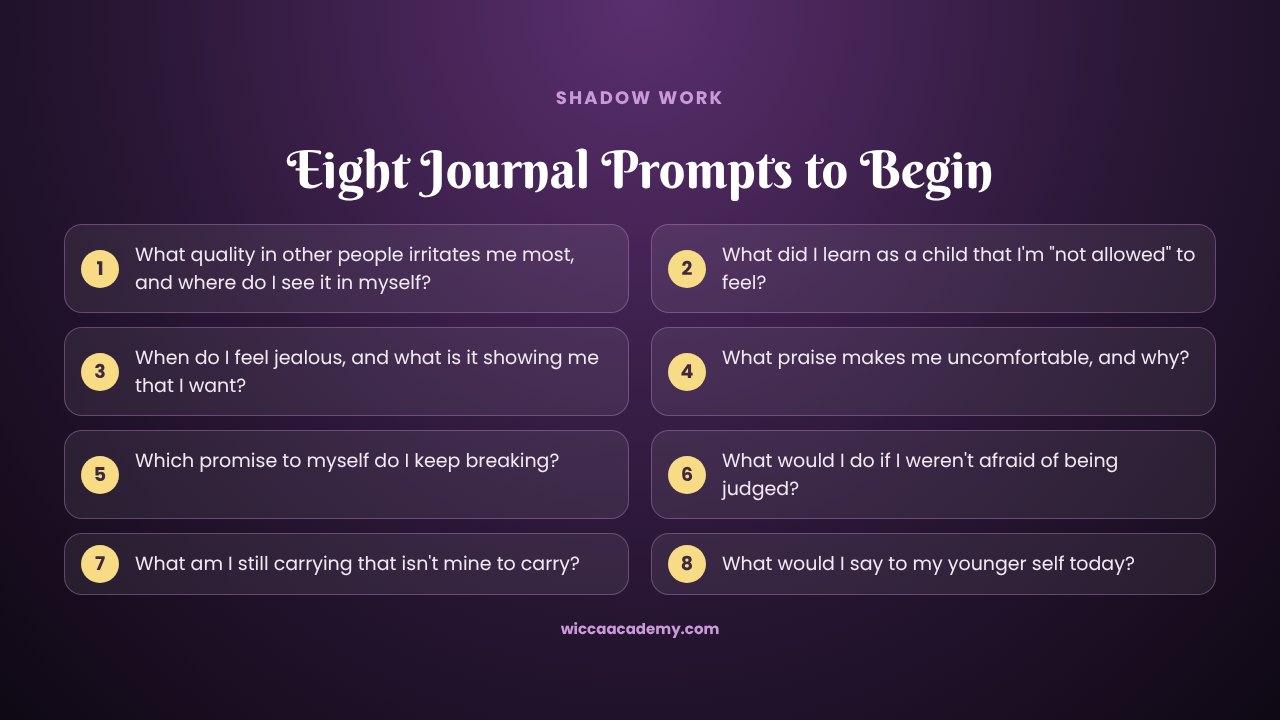
- What quality in other people irritates me most, and where do I see it in myself?
- What did I learn as a child that I'm "not allowed" to feel?
- When do I feel jealous, and what is it showing me that I want?
- What praise makes me uncomfortable, and why?
- Which promise to myself do I keep breaking?
- What would I do if I weren't afraid of being judged?
- What am I still carrying that isn't mine to carry?
- What would I say to my younger self today?
2. Notice Your Triggers
Your strongest reactions are some of your best teachers. When someone or something annoys, hurts or upsets you more than seems reasonable, make a quick note: what happened, what you felt, and what it reminded you of. Over a few weeks, patterns start to appear. You might notice, for example, that people who ask for help easily make you uncomfortable because you were taught never to need anyone.
3. Mirror Work
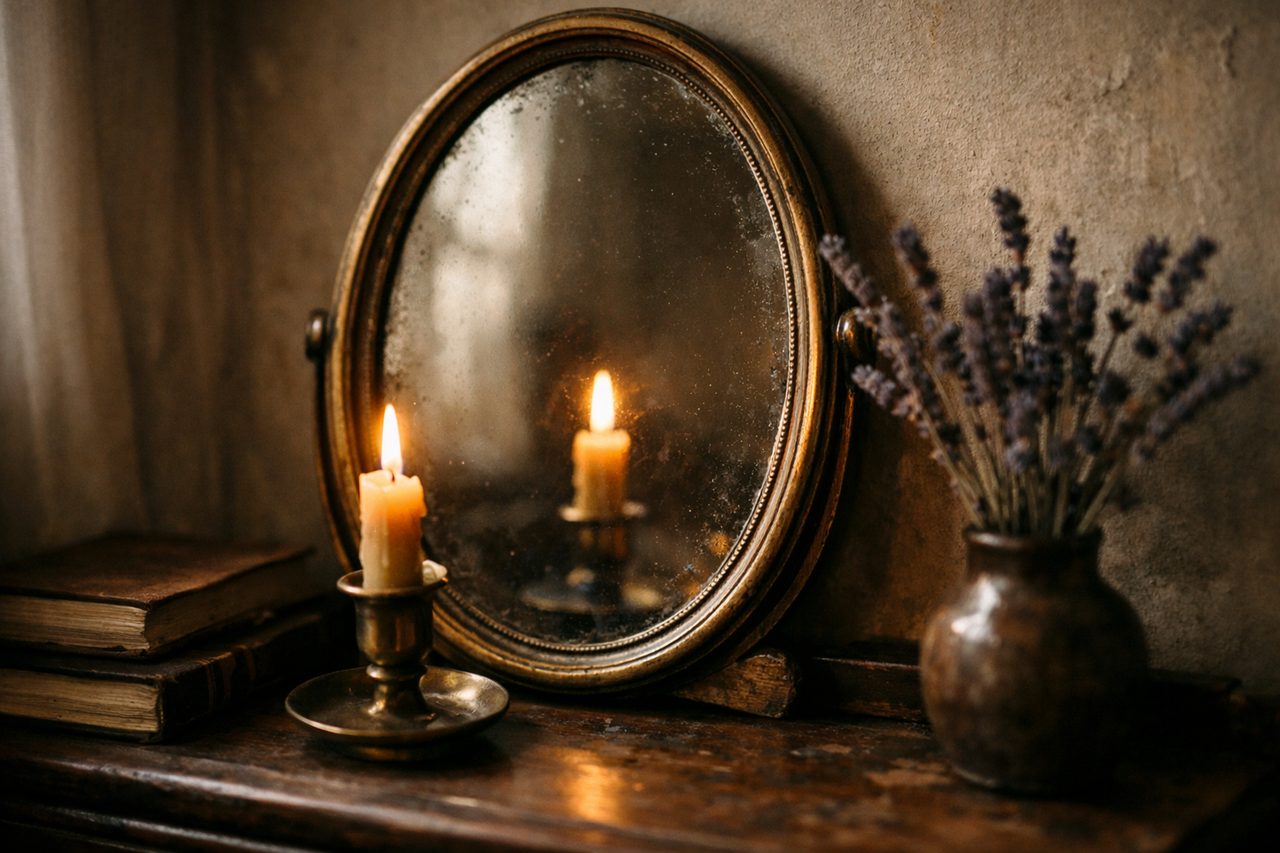
Sit in front of a mirror by candlelight. Look into your own eyes for a minute or two, breathing slowly. Then say something kind and true out loud, like "I see you, and you are allowed to be here." It often feels awkward at first, and that awkwardness is worth noticing. Write down anything that comes up afterwards.
4. Tarot for Shadow Work
Tarot is a gentle way to open a conversation with yourself. Try a simple three-card spread: What am I hiding from myself? / Where did it come from? / How can I welcome it? Cards like the Moon, the Devil and the Tower often show up in shadow readings. They're not bad omens. They point to fears and patterns that are ready to be seen.
5. Working With Stones

Black obsidian is the classic shadow work stone. It's often called a mirror stone because it's said to reflect back what's hidden. Smoky quartz is softer and grounding, and good for releasing heavy feelings. Hold one while you journal or keep it on your altar during a period of shadow work. You can read more about both in The Witch's Cabinet.
A Dark Moon Release Ritual
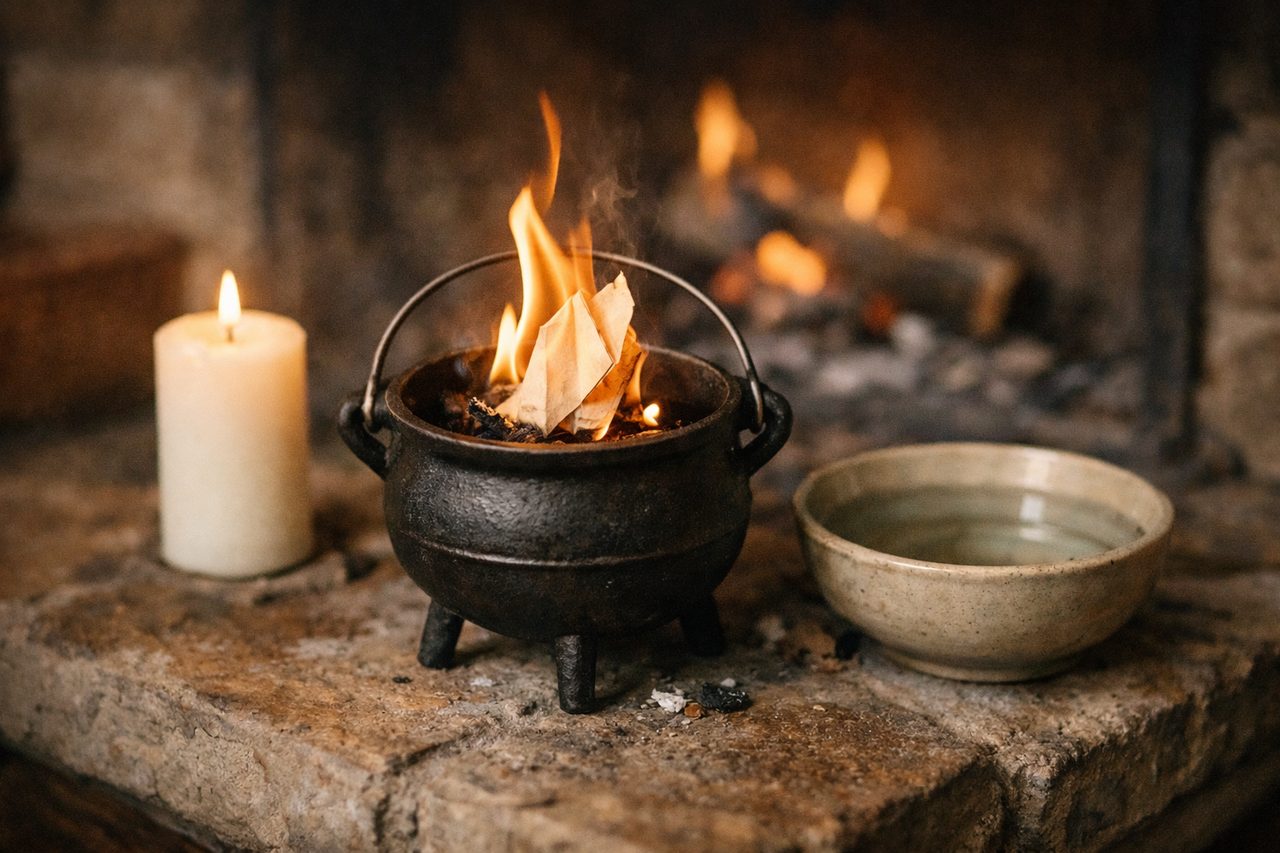
The dark of the moon, the night or two before the new moon, is a natural time for shadow work. The sky is at its darkest, and the energy is quiet and inward. (You can find the next new moon on our Moon and Magick Calendar.) Try this simple ritual after a few weeks of journaling.
You will need: a white or black candle, a slip of paper, a pen, a fireproof dish or small cauldron, and a bowl of water.
- Clear your space and light the candle. Sit quietly for a few breaths.
- Read back over your recent journal entries. Choose one pattern, fear or old belief you're ready to loosen its grip on.
- Write it on the paper in a single sentence, for example: "I am afraid people will leave if I say no."
- Hold the paper and say: "I see you. I thank you for trying to protect me. I don't need you to lead anymore."
- Carefully light the paper from the candle and drop it into the fireproof dish. Keep the bowl of water close by.
- When it has burned out, write a new sentence in your journal that you'd like to grow instead, such as "I can say no and still be loved."
- Let the candle burn for a while if it's safe, then snuff it out. Scatter the cooled ashes outside or flush them away.
Remember that releasing a pattern is a process, not a single moment. The ritual marks your intention. The journaling, noticing and kindness afterwards do most of the work.
Taking Care of Yourself Afterwards

After a session, do something that brings you back into your body: eat something warm, take a walk, have a shower or a spiritual bath, or spend a few minutes with a pet. A short cleansing of your space can help too.
Then balance it out with some light. Many witches pair shadow work with gratitude: for every hard thing you write down, write one thing about yourself you're proud of. You are not only your shadow, and the point of this work is to become more whole, not more critical.
Safety Notes
- Shadow work is not therapy. If you feel overwhelmed, stuck or unsafe, please stop and talk to a mental health professional.
- If you ever have thoughts of harming yourself, contact a crisis line or emergency services right away. In the US you can call or text 988.
- Never leave candles or burning paper unattended, and always use a fireproof dish.
- Go at your own pace. There's no deadline and no "right" amount of digging.
Final Thoughts
Shadow work asks you to be brave and gentle at the same time. It isn't always comfortable, but every part of yourself that you bring into the light gives you more freedom, clearer magick and a deeper sense of who you are. Like the moon, you don't have to be full and bright all the time to be whole.
Have you tried shadow work before? Which prompt are you going to start with? Tell us in the comments!
Sources
Jung, C. G. Aion: Researches into the Phenomenology of the Self. Collected Works, Vol. 9, Part II. Princeton University Press, 1959 (first published 1951).
Zweig, Connie, and Jeremiah Abrams, eds. Meeting the Shadow: The Hidden Power of the Dark Side of Human Nature. Tarcher, 1991.
Cunningham, Scott. Wicca: A Guide for the Solitary Practitioner. Llewellyn Publications, 1988.
Check out our other articles:
Hecate: The Divine Triple Goddess
Moon Phases and Simple Rituals
Spiritual Cleansing
You Are Not Alone
See All Articles
Love this article? Share the magick with your friends and loved ones!