There's a reason the smell of baking bread makes a house feel like home. Bread is one of the oldest kinds of kitchen magick there is.
For thousands of years, bread has meant survival, sharing and welcome. Grain is planted, grows, is cut down and turns into food that keeps people alive through winter, which is why the harvest loaf sits at the center of so many old festivals. When you bake with intention, you're joining that long story, and every step from mixing to slicing becomes part of a spell.
In this article, we'll cover why bread is sacred, what each common ingredient brings to your magick, how to knead, shape and mark a loaf with intention, an easy rosemary and honey soda bread you can make in under an hour, and a few simple bread spells for protection, plenty and thanks.
How to Bake Bread as a Spell in 6 Steps
- Choose your intention. Protection, plenty, love, healing or thanks.
- Pick ingredients to match. Add one herb or spice that carries your intention (see the chart below).
- Mix clockwise to draw your wish in, naming each ingredient as you add it.
- Knead or shape with focus, repeating a short chant or picturing the result.
- Mark the loaf with a symbol before it goes in the oven.
- Bless, share and offer. Give the first piece back to the earth with thanks.
Why Bread Is Sacred in Witchcraft
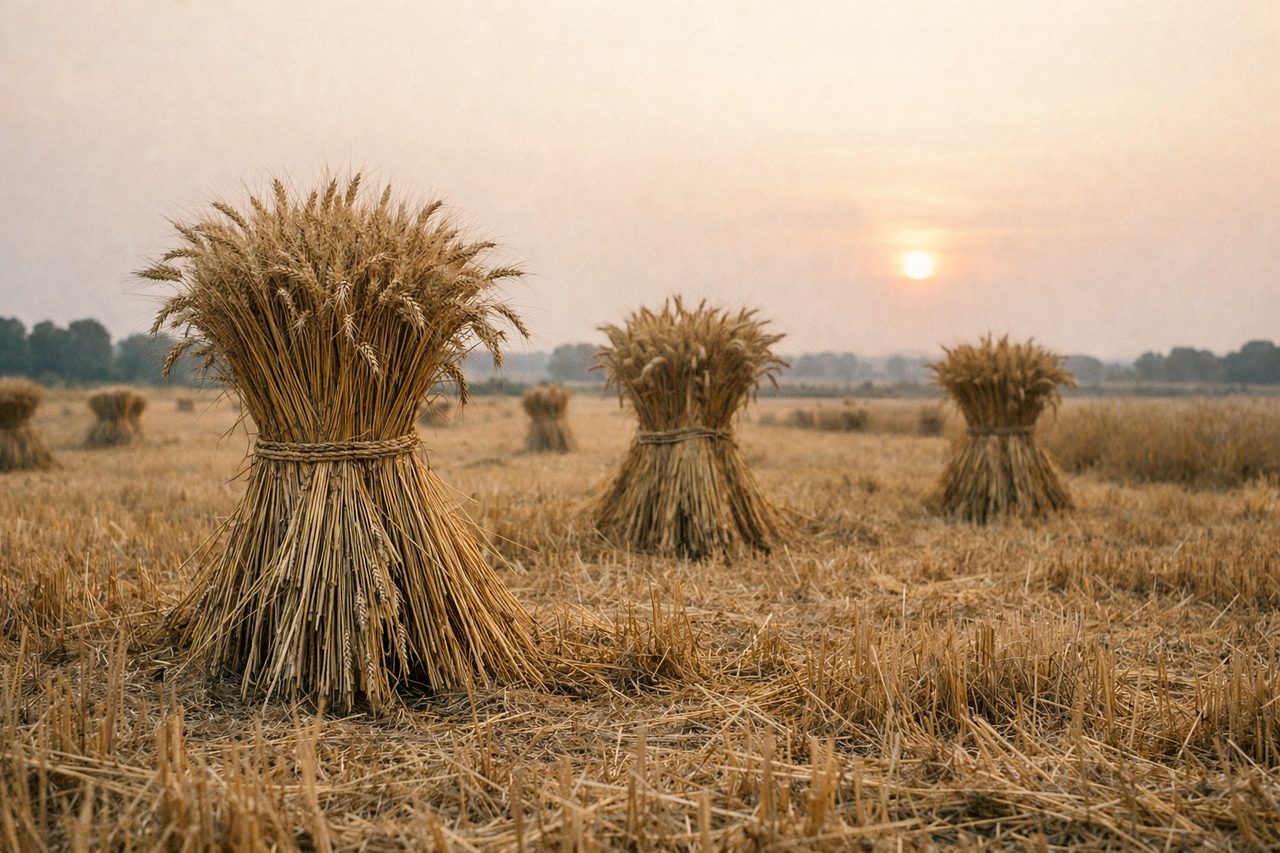
Grain is the heart of the old harvest year. The Wiccan festival of Lughnasadh is also called Lammas, from the Old English hlafmæsse, "loaf mass," a day when bread made from the first wheat was brought to be blessed. In Wiccan myth, the God is linked with the grain: he grows strong in summer, is cut down at the harvest and returns again in spring. The old English folk song "John Barleycorn" tells a similar story about the barley.
So when you knead dough, you're handling the gift of the whole growing year. Bread also carries a second meaning: welcome. In many Slavic and Eastern European homes, honored guests are still greeted with bread and salt, a sign that they're safe and cared for under that roof. Breaking bread with someone has meant friendship for a very long time.
If you're new to working magick in the kitchen, start with our guide to kitchen magick for beginners, which covers setting up a kitchen altar and cooking with intention. This article goes deeper into bread alone.
Bread Ingredients and Their Magickal Meanings
Every loaf starts with the same few things, and each one has its own meaning. Add one extra herb or spice to point the bread toward a particular intention.
| Ingredient | Magickal meaning | Good for |
|---|---|---|
| Wheat flour | The harvest, abundance and the God of the grain | Plenty, thanks, sabbat loaves |
| Oats | Nourishment and steady prosperity | Money, a full pantry |
| Salt | Protection and purity | Every protection loaf |
| Yeast or baking soda | Growth and rising energy | New beginnings, anything you want to grow |
| Honey | Sweetness, love and kindness | Love, friendship, family peace |
| Rosemary | Protection and remembrance | Guarding the home, honoring loved ones |
| Cinnamon | Warmth, success and speed | Prosperity, luck |
| Caraway or sesame seeds | Protection and opening doors | Protection, opportunity |
| Dill | Protection and good luck | Savory protection breads |
| Eggs and milk | Life, fertility and nurturing | Healing, family |
Look up any herb you're curious about in The Witch's Cabinet. Each entry lists its traditional uses, what it pairs with and any safety notes.
How to Knead, Shape and Mark a Loaf With Intention
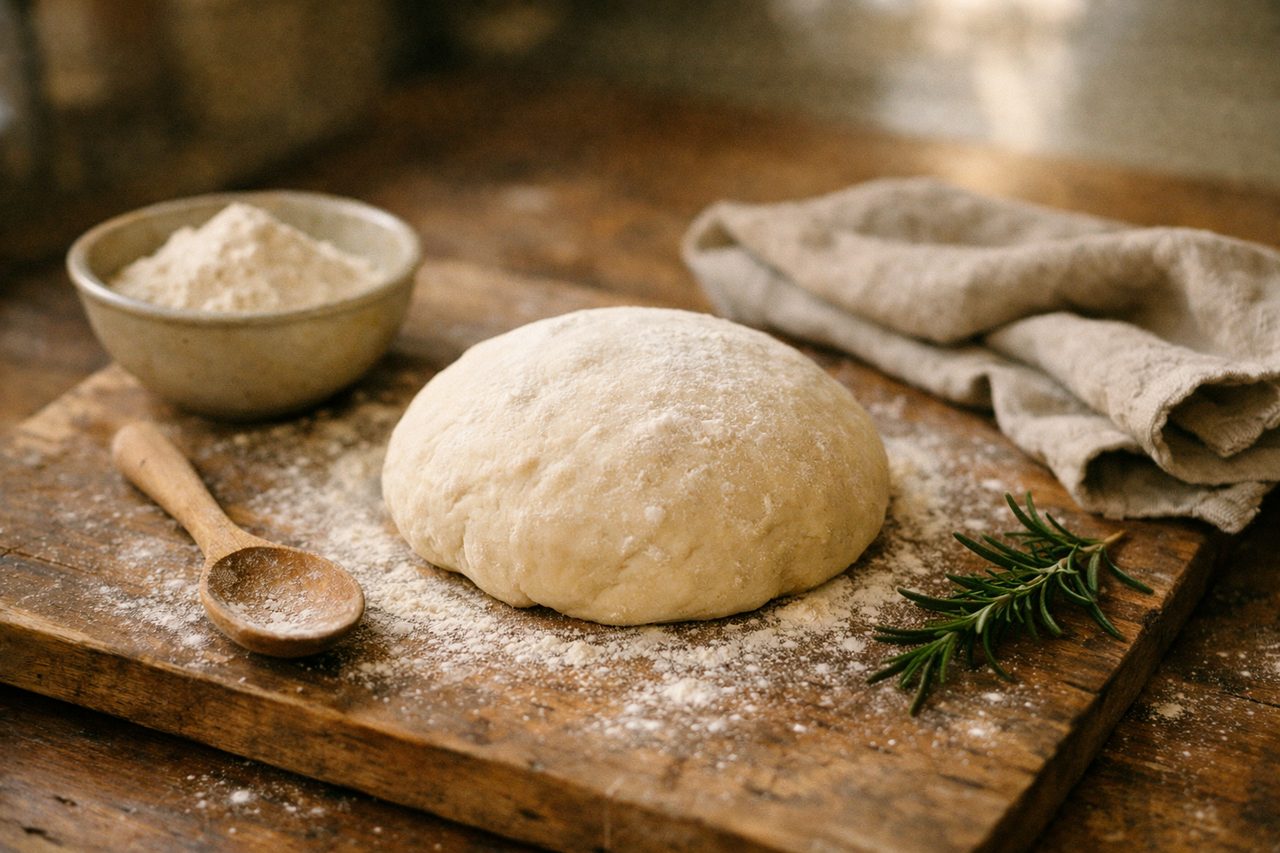
Mixing
Stir clockwise (sunwise) when you want to bring something in, like money, love or health. Stir counterclockwise if the loaf is for letting go of something. As you add each ingredient, say what it's for: Flour for plenty. Salt for protection. Honey to keep us kind.
Kneading
Kneading is the perfect time for a chant, because it's rhythmic and takes a few minutes. Push the dough away from you with the heel of your hand, fold it back and turn it, and repeat a simple line in time with your hands, such as:
Knead it in and fold it round, blessings rise from flour and ground.
If you're baking a no-knead or soda bread, put the same focus into a few slow turns of the spoon instead.
Rising
A yeasted dough rising under a cloth is a lovely picture of a spell growing. Some witches time their baking with the moon: bread for growth on a waxing moon, and bread for thanks at the full moon. Check the phase on our Moon and Magick Calendar if you'd like to try it.
Shaping
- A round loaf for the sun, the full moon and the turning Wheel of the Year.
- A three-strand braid for the Triple Goddess, or three people or wishes woven together.
- A wheat sheaf for the harvest and the God of the grain, perfect for Lammas.
- Small rolls, one for each person at the table, each with its own little blessing.
Marking
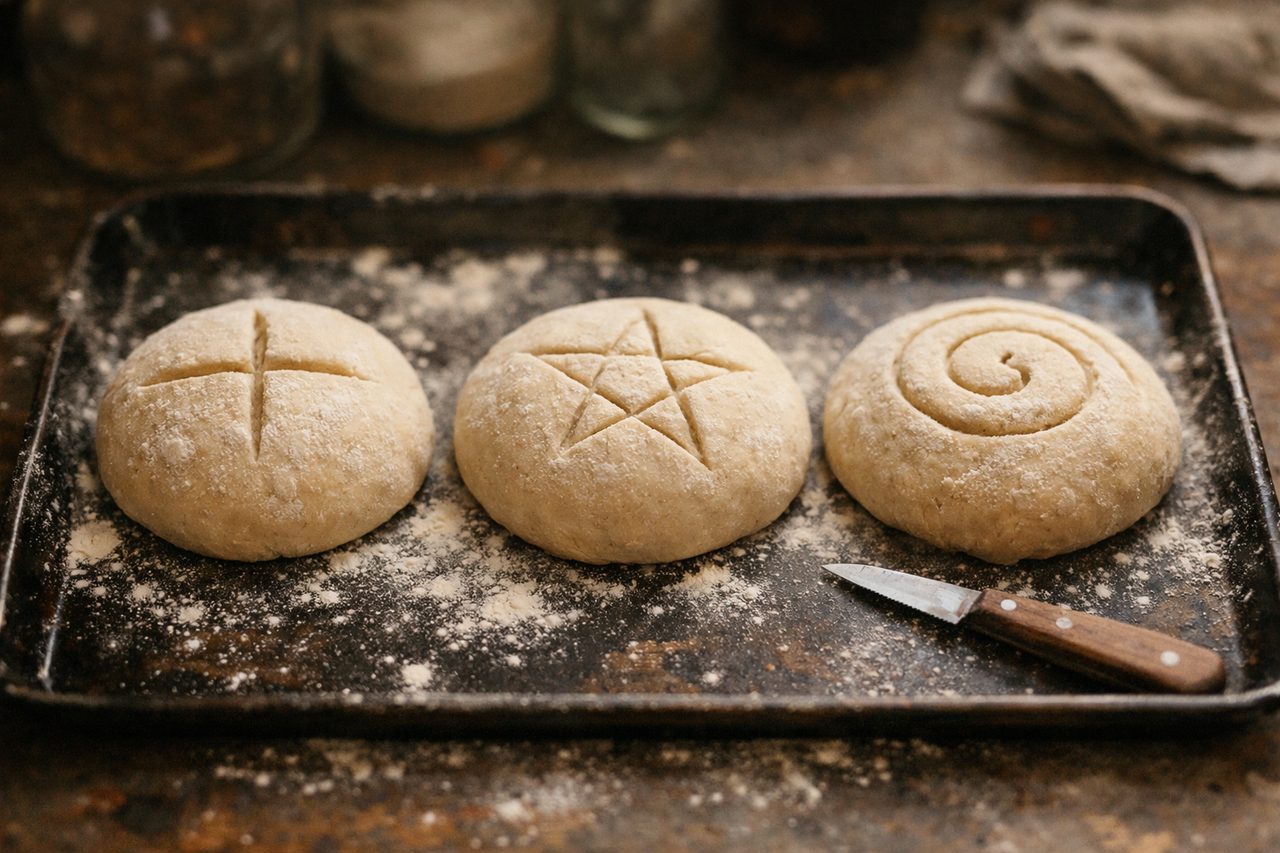
Just before baking, score a symbol into the top with a sharp knife. Many breads are scored anyway so they rise evenly, so this is quiet magick nobody needs to notice. Try an equal-armed cross for protection and the four elements, a pentagram for blessing, a spiral for growth, or your own sigil. Our guide to witchcraft symbols and their meanings has more ideas.
Easy Rosemary and Honey Harvest Soda Bread
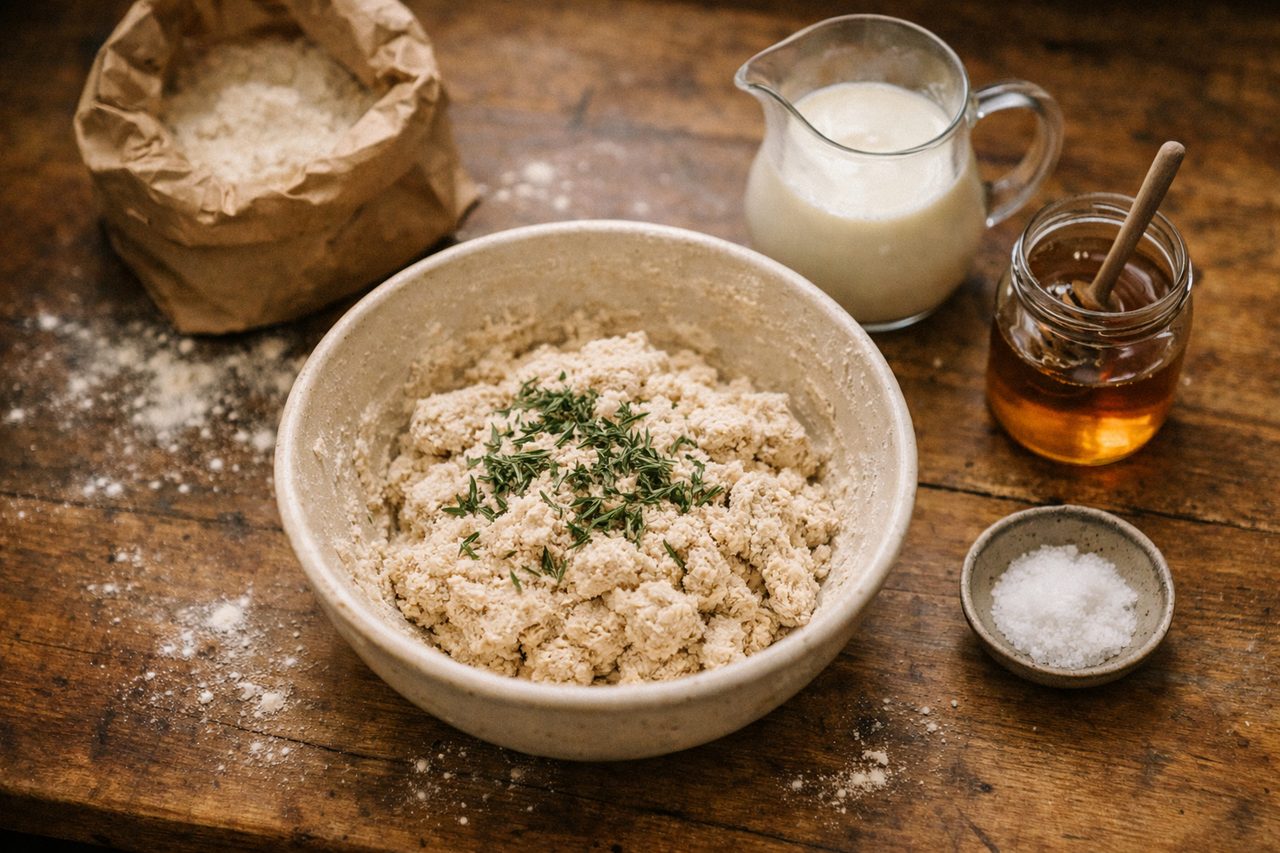
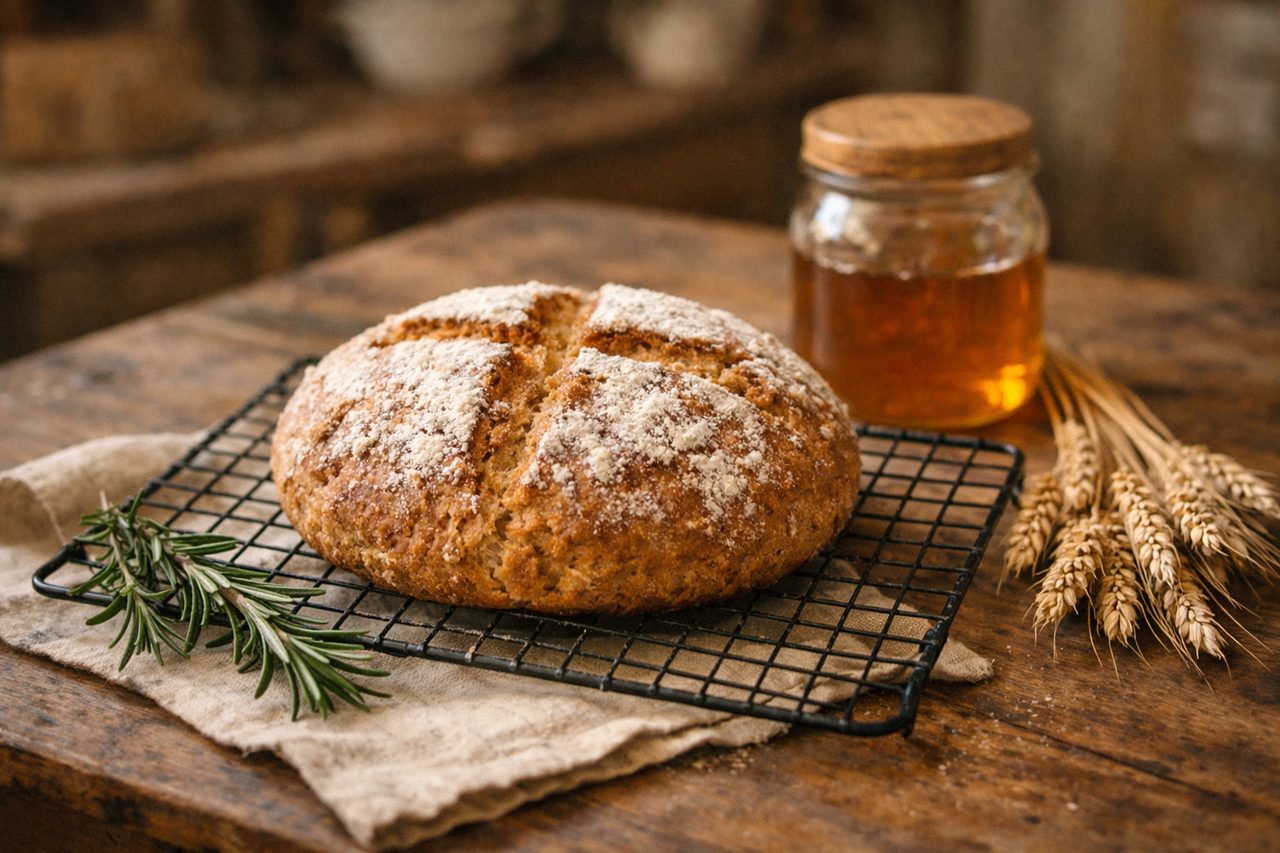
This bread needs no yeast, no rising time and no kneading, so it's ideal for beginners and busy weeknights. Soda bread is traditionally marked with a deep cross before baking. Bakers say it helps the thick loaf cook through, and Irish folklore adds that it blesses the bread, or lets the fairies out.
If you'd prefer a yeasted loaf, our Lughnasadh recipes include a honey oat Lammas bread, and our Mabon recipes have a marigold honey wheat bread and a bread cornucopia.
Ingredients
- 4 cups (500 g) all-purpose flour, plus a little for dusting
- 1 teaspoon baking soda
- 1 teaspoon salt
- 1 tablespoon fresh rosemary, finely chopped (or 1 teaspoon dried)
- 1 tablespoon honey
- About 1 3/4 cups (400 ml) buttermilk
- Optional: 1/2 cup (45 g) rolled oats in place of 1/2 cup of the flour
Directions
- Heat your oven to 400°F (200°C) and dust a baking tray with flour.
- In a large bowl, whisk the flour, baking soda, salt and rosemary. Name your intention as you stir clockwise.
- Stir the honey into the buttermilk, then pour most of it into the flour. Mix with a wooden spoon or your hand until it comes together as a soft, slightly sticky dough. Add the rest of the buttermilk if it's dry.
- Tip it onto a floured surface and gently shape it into a round about 2 inches (5 cm) high. Don't overwork it; a few folds is plenty.
- Set it on the tray. Cut a deep cross across the top, about a third of the way through, and say a short blessing as you do.
- Bake for 35 to 40 minutes, until it's golden and sounds hollow when you tap the bottom.
- Cool on a rack under a clean cloth for a soft crust, or uncovered for a crisp one. It's best eaten the same day.
Simple Bread Spells
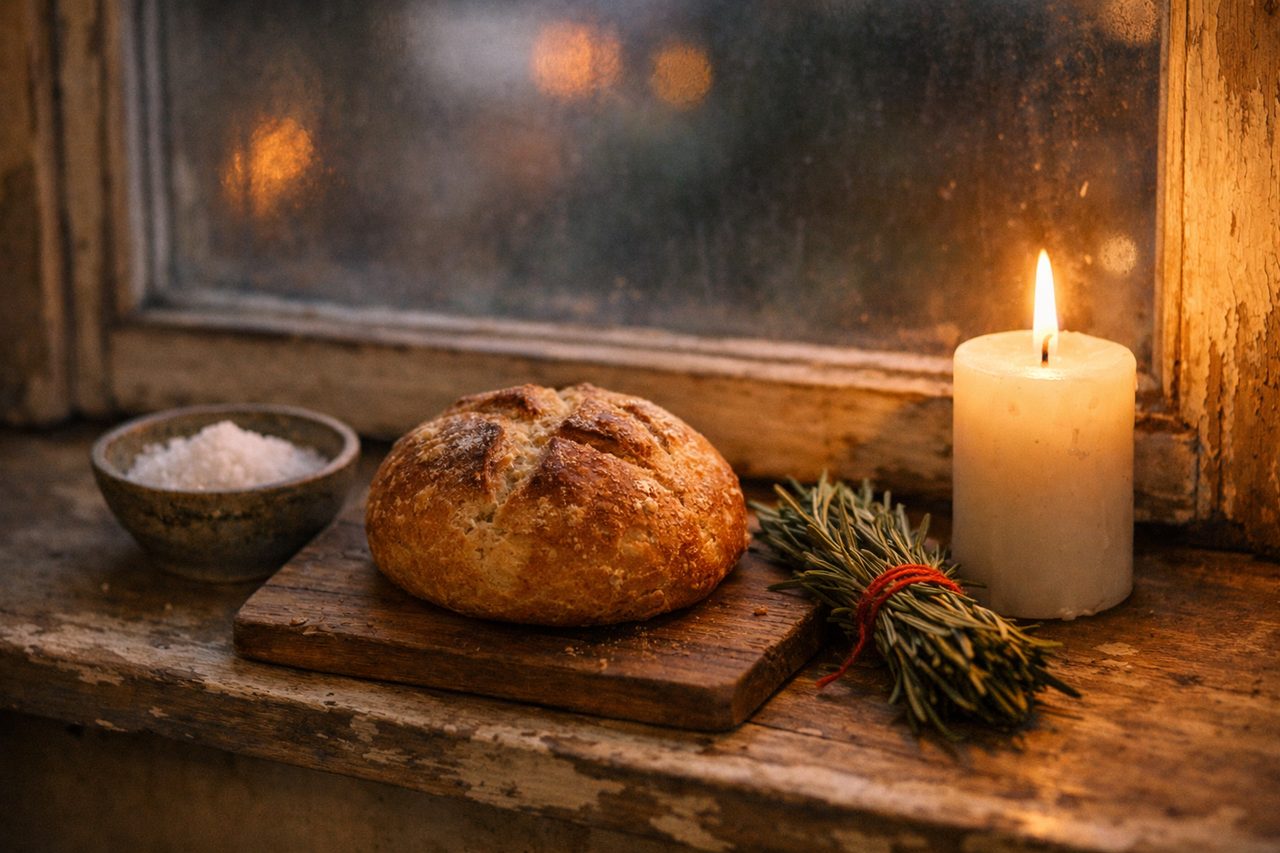
A protection loaf
Add rosemary and an extra pinch of salt, score an equal-armed cross on top and bake. Break the first piece by your front door and say: Bread and salt, salt and bread, safe this house, and all who are fed. It pairs well with the ideas in our protection spells for your home.
A prosperity loaf
Swap some of the flour for oats, add a pinch of cinnamon and a spoon of honey, and score a spiral. Share it with your household and keep a small heel of the loaf on your kitchen altar until it dries out, then return it to the earth.
A welcome loaf
Bake a small loaf or rolls for a new neighbor, a friend who's moving, or the first guest of the holidays. Offer it with a little dish of salt. If you're hosting this season, you'll find more ideas in our guide to protection and calm for family gatherings and a set of Thanksgiving table blessings.
A bread offering
Many witches give the first slice of any sabbat loaf back to the land. Crumble it into the garden, a compost bin or a potted plant with a word of thanks. Keep outdoor offerings small, and don't feed bread to ducks and other waterbirds; it isn't good for them.
Bread Through the Wheel of the Year
Bread has a place at every sabbat, but it shines at the harvest festivals. Lammas is the bread festival itself. At Mabon, braided loaves and cornucopias fill the table. At Samhain, soul cakes and barmbrack (see our Samhain recipes) honor the dead. And at Yule, a sweet spiced loaf welcomes the returning sun. Whenever you bake for a sabbat, write the recipe and your blessing into your Book of Shadows so the tradition grows with you. Our Spell Crafting and Book of Shadows course shows how to build your own spells and record them.
Safety Notes
- Check for allergies before sharing bread, especially wheat, gluten, dairy, eggs, sesame and nuts.
- Use only culinary herbs, and never add essential oils to food.
- Keep candles well away from flour, cloths and paper in the kitchen.
- Don't leave large amounts of bread outdoors for wildlife; it can make birds unwell and attract pests.
Final Thoughts
You don't need to be a skilled baker to make bread magick. A lopsided loaf made with love and a clear intention is far more powerful than a perfect one made in a hurry. Start with the soda bread, say a blessing as you cut the cross, and share the first warm slice with someone you care about.
What will you put into your first magickal loaf? Tell us in the comments!
Sources
Scott Cunningham, Cunningham's Encyclopedia of Magical Herbs (Llewellyn, 1985).
Scott Cunningham, Cunningham's Encyclopedia of Wicca in the Kitchen (Llewellyn, 2003).
Ronald Hutton, The Stations of the Sun: A History of the Ritual Year in Britain (Oxford University Press, 1996).
Rachel Patterson, Pagan Portals: Kitchen Witchcraft (Moon Books, 2013).
Check out our other articles:
Kitchen Magick for Beginners
Lughnasadh Recipes and Foods
What Is a Simmer Pot?
A Thanksgiving Table Blessing for Witches
See All Articles
Love this article? Share the magick with your friends and loved ones!
Bread Magick FAQs
What is bread magick?
Bread magick is kitchen witchcraft that turns baking into a spell. You choose an intention, add ingredients that match it, mix, knead and shape with focus, mark the loaf with a symbol and share or offer it with thanks.
Why is bread sacred in witchcraft?
Grain stands for the harvest and the cycle of life, death and rebirth. Lammas, also called Lughnasadh, takes its name from the Old English for "loaf mass," and bread has long been a sign of welcome and sharing.
What herbs can I add to bread for magick?
Rosemary, dill, caraway and sesame are popular for protection, cinnamon and oats for prosperity, and honey for love and kindness. Use only culinary herbs and never add essential oils to food.
What symbol should I carve into bread?
An equal-armed cross is traditional and stands for protection and the four elements. A pentagram suits blessing, a spiral suits growth, and you can also use your own sigil.
Why do you cut a cross in soda bread?
The deep cross helps a thick soda bread bake evenly. In Irish folk tradition it is also said to bless the bread or to let the fairies out.
Can I leave bread as an offering outside?
Yes, in small amounts. Crumble a little into the garden or compost with thanks. Avoid leaving lots of bread for wildlife and never feed it to ducks or other waterbirds.