Black salt is one of the simplest protection tools a witch can make, and you probably have everything you need for it in your kitchen right now.
It's plain salt darkened with ash, charcoal or a few other pantry ingredients. Witches lay it across doorways, sprinkle it in corners and add it to banishing spells when they want something unwanted to stay out, or to leave and not come back.
Below you'll find what black salt is (and what it isn't), why salt matters so much in Wicca, a simple recipe, the main ways to use it, and how to use it safely around your home, pets and plants.
What Is Black Salt?
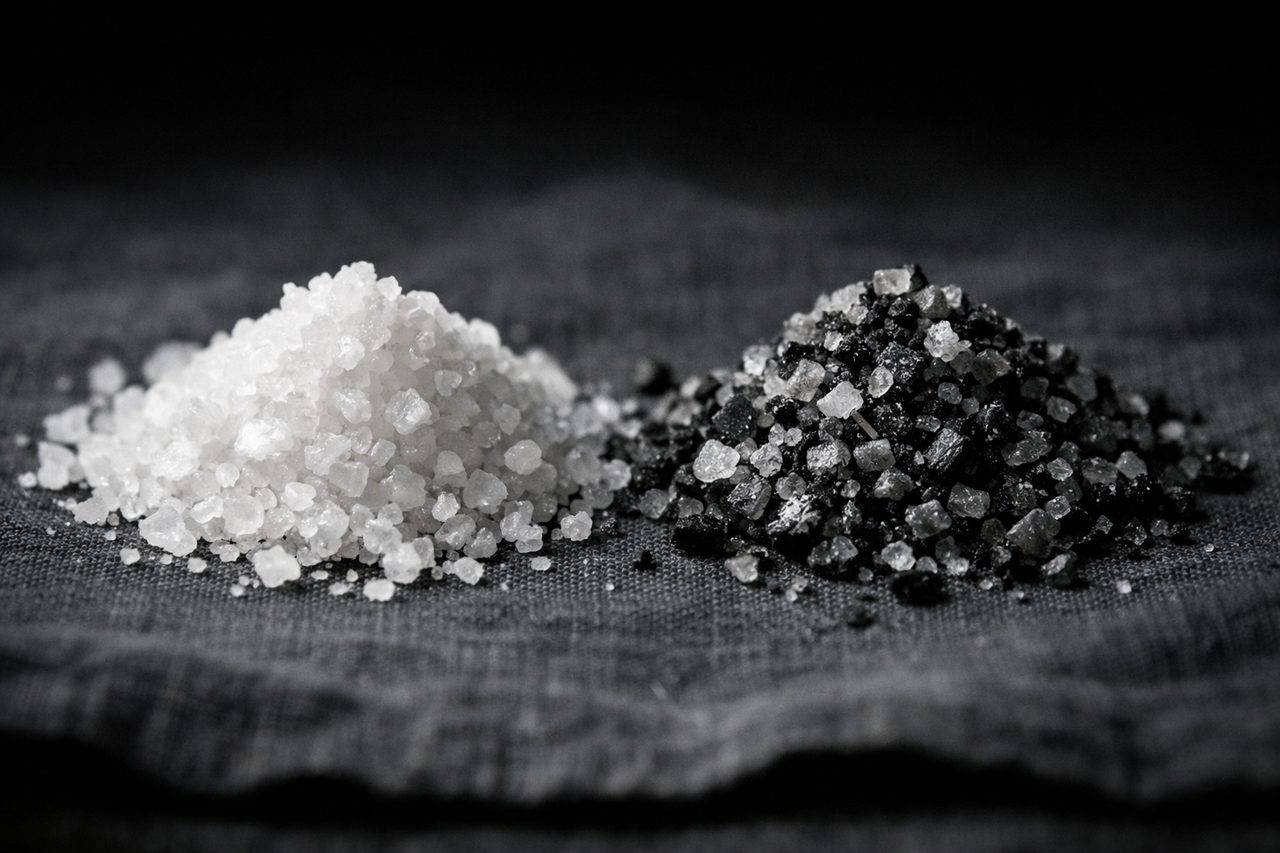
In witchcraft, black salt is a mixture, not a special kind of salt. You start with ordinary salt and blend in something black: ash from incense or a ritual fire, burned herbs, powdered charcoal, scrapings from a cast-iron pan or ground black pepper. You'll also hear it called witch's salt or witches' black salt.
Recipes vary from one practitioner to the next. Black salt turns up in hoodoo and conjure practice as well as in modern witchcraft and Wicca, and you'll find different ingredient lists in different books. There's no single "correct" formula, and nobody can point to one origin for it. What the recipes share is the idea: salt protects and purifies, and the black ingredients add the power to absorb and banish.
Black salt in the grocery store is something else
Don't confuse witch's black salt with the culinary black salts you'll find in shops:
- Kala namak (Indian black salt) is a mineral salt with a sulfur smell, used in South Asian cooking. The lumps are dark brown to black, but it grinds to a pinkish-grey powder.
- Black lava salt (sometimes sold as Hawaiian black salt) is sea salt mixed with activated charcoal, used as a finishing salt.
Both are food. Witch's black salt is not: it often contains ash, charcoal, metal scrapings or burned material, so never cook with it or eat it. Keep it in a clearly marked jar away from your spice rack.
Why Salt Matters in Wicca
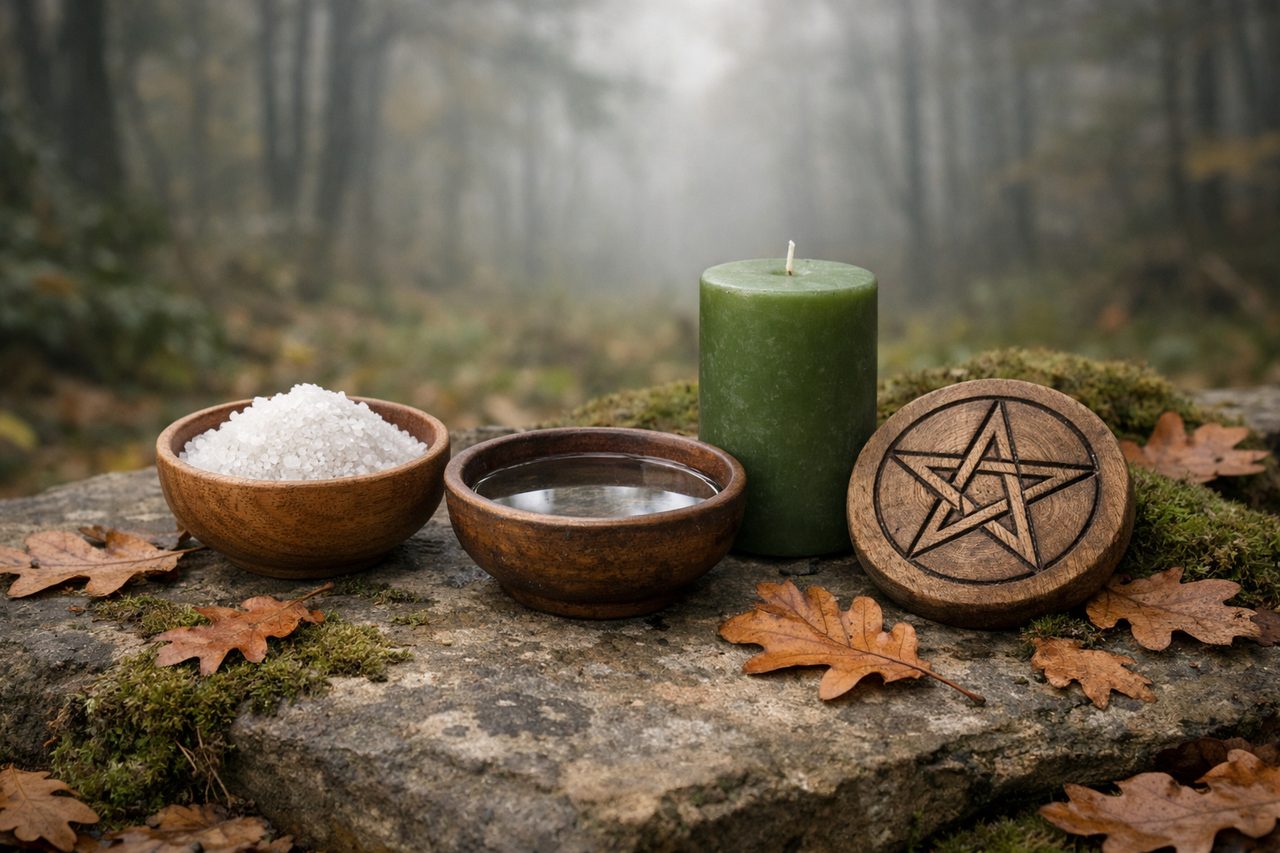
Salt is part of almost every Wiccan altar. In Wicca: A Guide for the Solitary Practitioner, Scott Cunningham describes a small bowl of salt on the altar to represent the element of earth, next to a bowl of water. Many Wiccans mix the two to make consecrated salt water for blessing tools and purifying a sacred space before they cast a circle.
Earth is the element of the body, the home, stability and protection, and salt is about as earthy as you can get: it comes from the ground and from the sea, and for thousands of years people used it to keep food from spoiling. It makes sense that it became a symbol of keeping things clean and safe. If you'd like to understand the elements more deeply, our meditation and elements course works with each one in turn.
Black salt takes that protective earth energy and points it outward. White salt purifies; black salt guards and banishes. Many witches use white salt to cleanse a space and black salt afterward to seal it.
What Goes Into Black Salt
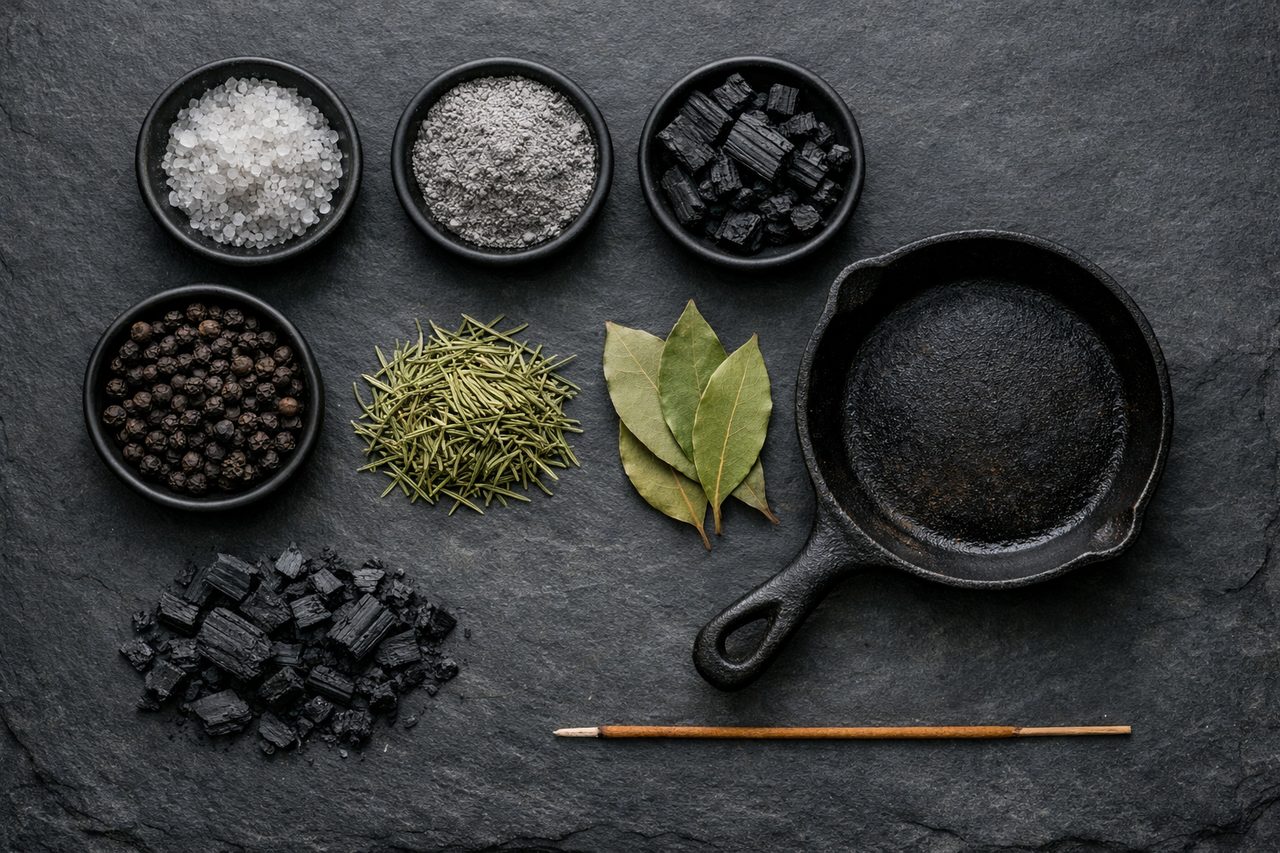
Pick one or two dark ingredients. Simple is fine. These are the most common choices:
- Salt: the base. Coarse sea salt or kosher salt gives the best texture, but plain table salt works.
- Ash: the classic ingredient. Use cooled ash from incense you've burned on your altar, from a candle spell, from a ritual fire or from burned herbs. Many witches like ash from their own spellwork because it carries that intention.
- Charcoal: powdered charcoal (from a crushed charcoal tablet or a bit of wood charcoal) gives a deep black color.
- Cast-iron scrapings: a little dark residue scraped from a well-used cast-iron pan. Iron is a traditional protective metal in European folklore.
- Black pepper: ground black pepper is linked with protection and banishing in many folk traditions, and it adds a little sting.
- Protective herbs: rosemary, bay, sage or juniper, burned to ash or ground fine. Cunningham's Encyclopedia of Magical Herbs lists rosemary and bay among the herbs of protection and purification.
Some recipes add black food coloring or black chalk just for color. It's fine to skip those; the color comes from the ash and charcoal anyway. For more plants you can work with, see our guide to herbs for protection.
How to Make Black Salt
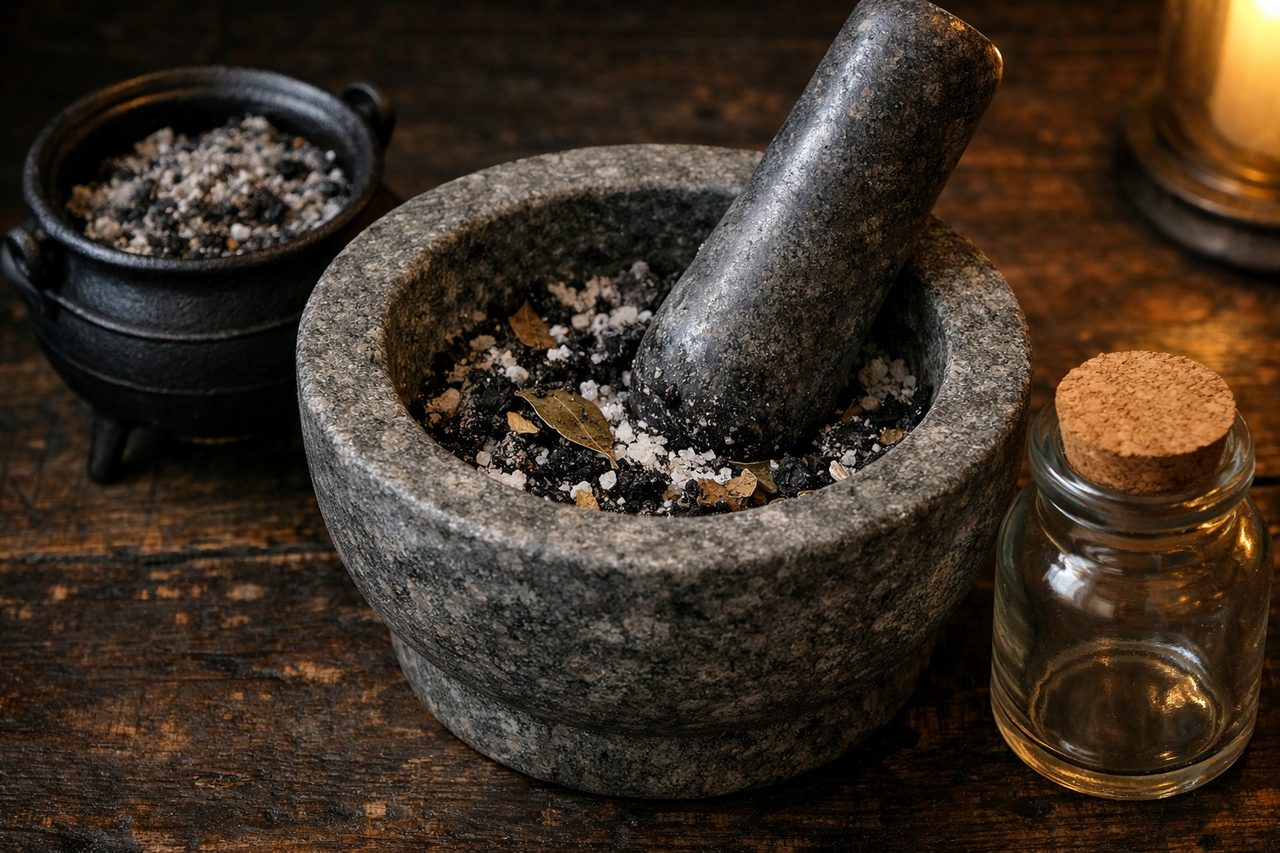
This recipe makes a small jar. A waning moon is a traditional time for banishing and protection work, so you might make it in the two weeks after a full moon, but any time you need it is the right time. Our moon calendar shows the current phase.
You will need:
- About 1/2 cup of coarse salt
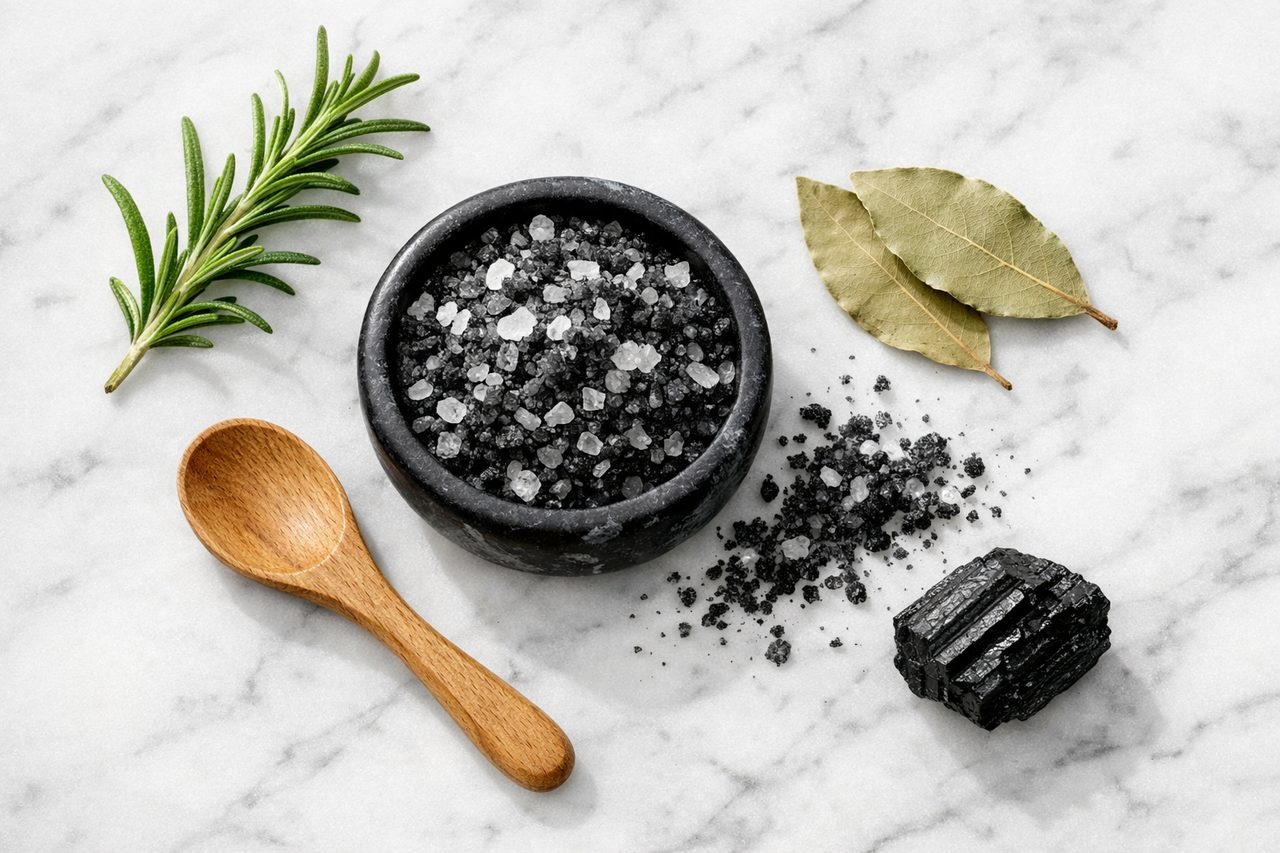
- 2 to 3 dried bay leaves and a sprig of dried rosemary
- A fire-safe dish or small cauldron, and a lighter or match
- 1 to 2 teaspoons of cooled incense ash or powdered charcoal (optional, for a darker color)
- A pinch of ground black pepper (optional)
- A mortar and pestle, or a bowl and the back of a spoon
- A clean jar with a lid
Steps:
- Cleanse your space and your tools in whatever way you usually do. Open a window if you'll be burning herbs.
- In the fire-safe dish, light the bay leaves and rosemary and let them burn down. As they burn, think about what you want kept out of your life or home. Let the ash cool completely.
- Put the ash in the mortar and grind it to a fine powder. Add the incense ash or charcoal and the pepper, if you're using them.
- Add the salt a little at a time and grind it together until it's an even grey-black. Stir counterclockwise if you want to follow the old custom of turning "against the sun" for banishing.
- Hold your hands over the mixture and say: Salt of the earth and ash of the flame, guard my door and guard my name. What would harm me, turn away. By the Goddess and the God, so mote it be.
- Pour it into the jar, close the lid and keep it somewhere dry.
That's it. You can make a fresh batch whenever you finish one, and a jar usually lasts a long time because you only need a pinch at a time.
How to Use Black Salt
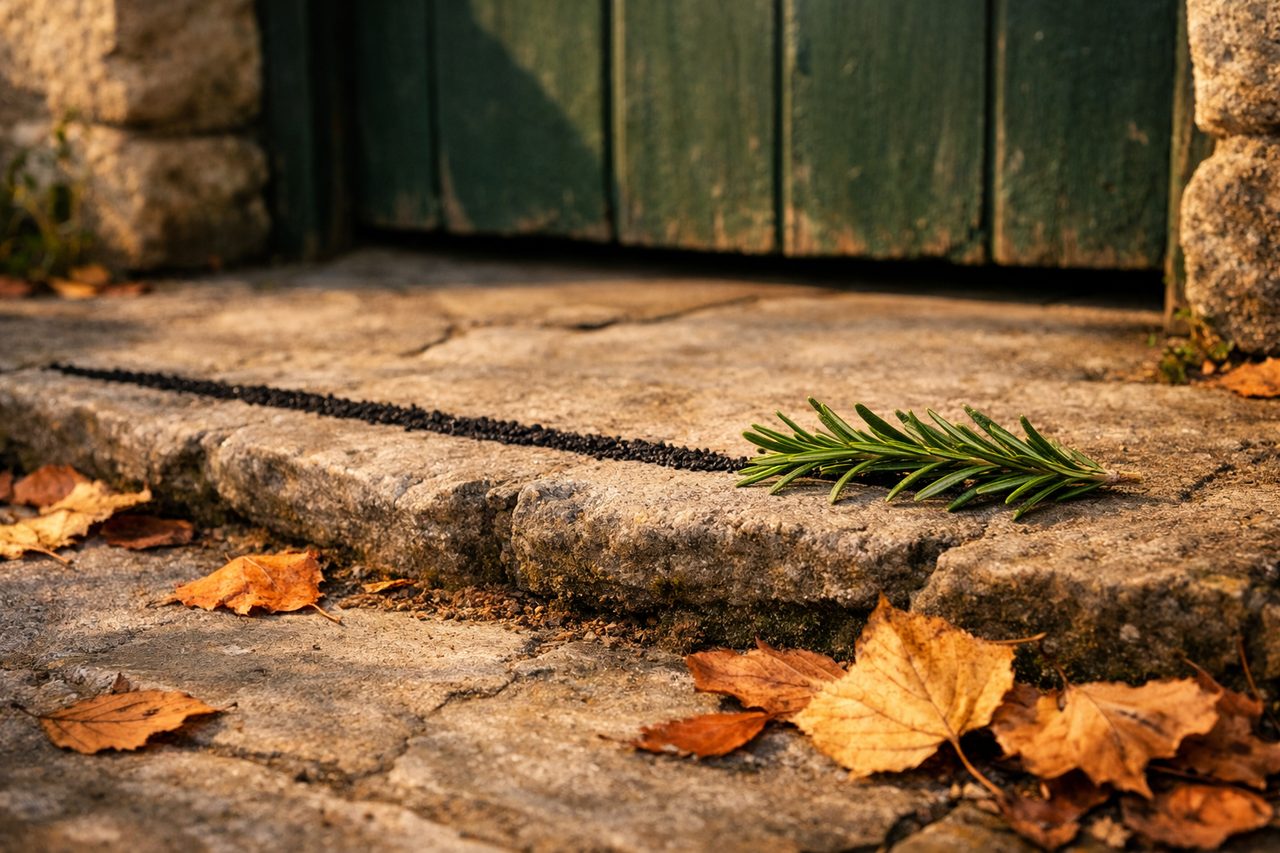
Black salt is used for keeping things out and sending things away. Here are the most common ways to work with it:
- Across a threshold: a thin line across the front doorstep or just outside the door to keep unwanted energy and influences from crossing.
- In the corners: a pinch in each corner of a room or your home to seal it after a cleansing.
- Around a candle: a ring of black salt around a protection or banishing candle on your altar.
- In jars and bottles: as a layer in a protection jar or a witch bottle. Our guide to jar spells shows how to build one.
- After someone leaves: some witches sprinkle a little on the doorstep and sweep it out the door after an unpleasant visitor, asking that their energy go with it.
- For releasing: a pinch on the altar during a cord cutting ritual or other letting-go work.
A Simple Threshold Protection Spell
You will need:
- Your black salt
- A small dish or a cloth pouch (if you'd rather not sprinkle it)
- A broom or dustpan
Steps:
- Sweep your doorstep, inside and out, sweeping the dust out of the house.
- Stand inside the door and hold a pinch of black salt. Picture a calm, firm boundary around your home.
- Sprinkle a thin line across the threshold, from one side of the door frame to the other, and say: Only love and peace may pass this door. All else, turn back and trouble me no more.
- If you can't leave salt on the floor, put the pinch in a small dish on a shelf near the door, or sew it into a pouch and hang it on the doorknob.
- Sweep up the line after a day or two, or renew it every full moon or whenever your home feels heavy.
For more ways to guard your home, try our protection spells for your home, and if you'd like to write your own spells from scratch, our magick and spells course teaches you how.
Storing, Disposing and Staying Safe
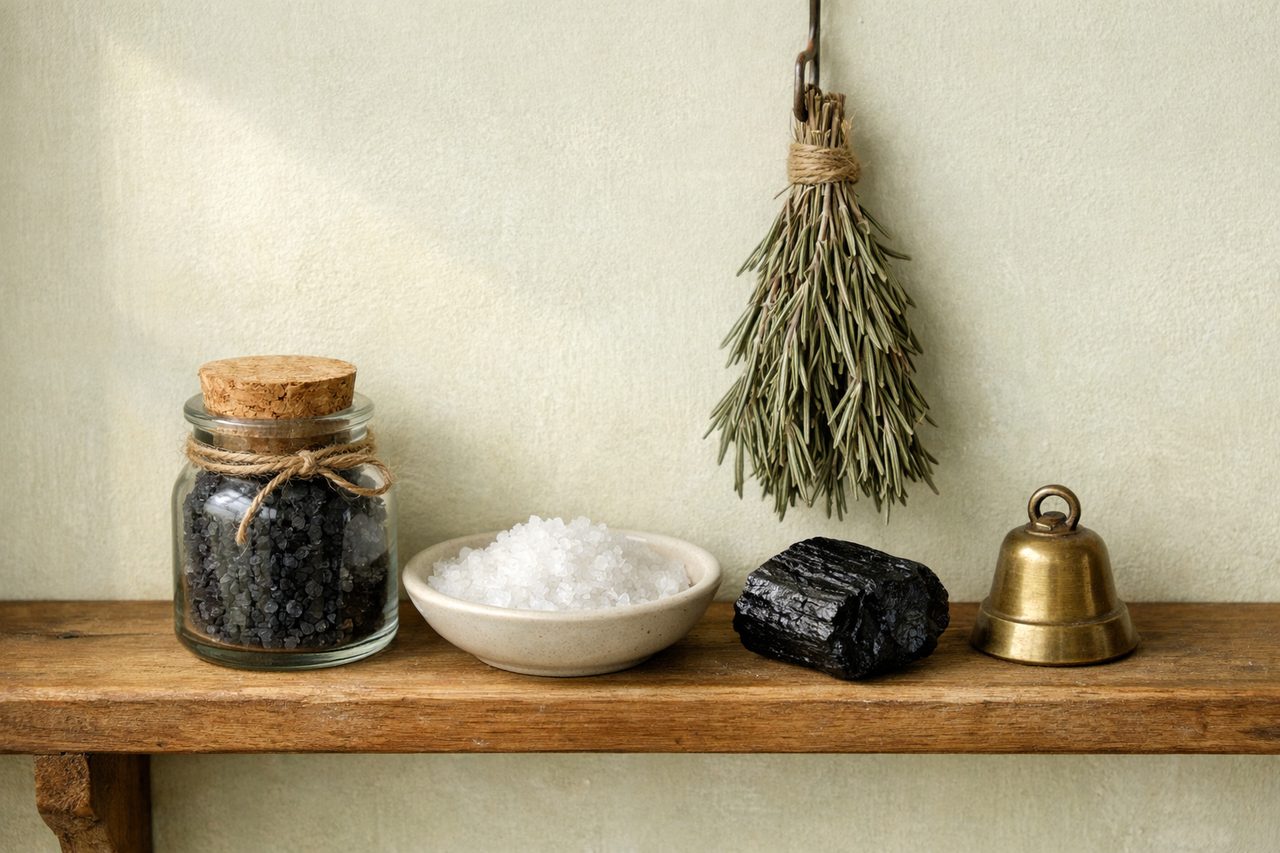
Keep black salt in a sealed jar in a dry place, since salt clumps when it gets damp. Many witches keep it on their altar or near the front door. It doesn't spoil, but if it gets wet or you simply feel it's done its job, make a fresh batch.
When you're finished with used black salt, the tradition is to take it away from your home: sweep it out the door and into the trash, or flush a small amount down the drain with running water. Don't pour it on the garden.
A Few Safety Notes
- Plants and soil: salt harms plants and keeps soil from growing anything for a long time. Never sprinkle it on lawns, gardens, flower beds or near trees.
- Pets: salt can make dogs and cats sick if they lick up enough of it, and ash and charcoal aren't good for them either. If you have pets, use a dish on a high shelf or a sealed pouch instead of a loose line.
- Floors and surfaces: salt can scratch wood, damage natural stone and cause rust on metal. Test a small spot, or use the dish method.
- Fire: burn herbs in a fire-safe container, never leave them unattended, and make sure the ash is completely cold before you handle it.
- Renters: a pouch hung on the doorknob or a tiny dish by the door works just as well as a line on the floor and leaves no mark.
- Not food: label the jar and keep it away from your cooking salt and out of reach of children.
Final Thoughts

Black salt is magick at its most down to earth: a handful of salt, a little ash and a clear intention. You don't need anything expensive or rare. Make a small jar, use it with care, and trust what feels right in your own home. A thin dark line at the door can be a quiet reminder that you're allowed to choose what comes in.
Do you make your own black salt? What do you put in yours? Tell us in the comments.
Sources
Cunningham, Scott. Wicca: A Guide for the Solitary Practitioner. Llewellyn Publications, 1988.
Cunningham, Scott. Cunningham's Encyclopedia of Magical Herbs. Llewellyn Publications, 1985.
Illes, Judika. The Element Encyclopedia of 5000 Spells. HarperElement, 2004.
Vanderbeck, Paige. Green Witchcraft. Rockridge Press, 2020.
Check out our other articles:
Protection Spells for Your Home
Witch Bottles
Spiritual Cleansing
Herbs for Protection
See All Articles
Love this article? Share the magick with your friends and loved ones!
Black Salt FAQs
What is black salt in witchcraft?
Black salt, also called witch's salt, is ordinary salt mixed with something black, such as ash from incense or burned herbs, powdered charcoal, cast-iron scrapings or black pepper. Witches use it for protection, banishing and guarding doorways.
How do you make black salt?
Burn a few dried bay leaves and some rosemary in a fire-safe dish and let the ash cool. Grind the ash in a mortar with a little incense ash or charcoal, then grind in about half a cup of coarse salt until it is an even grey-black. Charge it with your intention and store it in a sealed jar.
Is witch's black salt the same as black salt for cooking?
No. Culinary black salts such as kala namak and black lava salt are foods. Witch's black salt usually contains ash, charcoal or other non-food ingredients, so never cook with it or eat it.
What is black salt used for?
Black salt is used to protect a home and to banish unwanted energy. Common uses are a thin line across the doorstep, a pinch in the corners of a room, a ring around a protection candle, and a layer in protection jars or witch bottles.
Is black salt safe for pets and plants?
Salt can harm pets that lick it up and damages plants and soil, so never put it on the garden. In a home with pets, keep black salt in a dish on a high shelf or in a sealed pouch instead of a loose line on the floor.